
Introduction
Freezing meat is one of the most effective and convenient ways to extend its shelf life, reduce food waste, and save money on household groceries. Whether you buy in bulk, prepare meals ahead of time, or store leftovers, understanding proper freezer storage guidelines ensures that your meat remains safe, nutritious, and full of flavor.
While freezing meat at 0°F (-18°C) keeps it indefinitely safe from bacterial growth according to USDA standards, the quality, texture, and flavor gradually degrade over time due to freezer burn, moisture loss, and ice crystallization. Knowing the ideal storage duration for different types of meat allows you to manage your freezer inventory efficiently.
In this comprehensive food safety guide, we will break down standard freezer storage times for common meats, examine the science of freezing and freezer burn, provide best practices for packaging and thawing, and answer frequently asked questions.
1. Recommended Freezer Storage Times
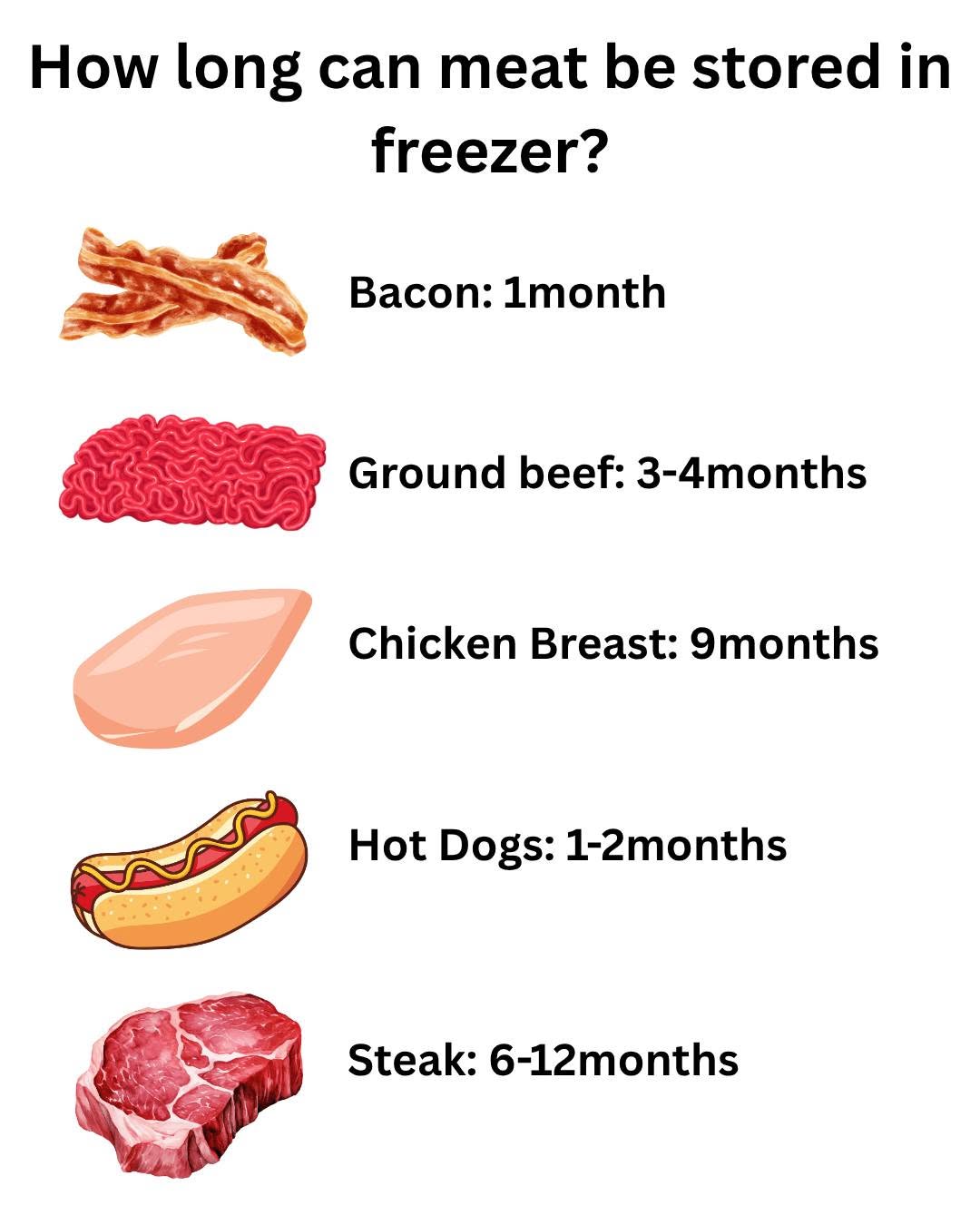
Different cuts and preparations of meat have varying optimal storage windows to maintain peak quality, flavor, and texture.
+--------------------------+------------------------------------------------------+
| Meat Type                | Optimal Freezer Storage Duration                     |
+--------------------------+------------------------------------------------------+
| Bacon                    | 1 Month                                              |
| Hot Dogs & Sausage       | 1 to 2 Months                                        |
| Ground Beef & Turkey     | 3 to 4 Months                                        |
| Steak & Whole Cuts       | 6 to 12 Months                                       |
| Whole Poultry & Breast   | 9 to 12 Months                                       |
+--------------------------+------------------------------------------------------+
Breakdown by Category
- Bacon (1 Month): High salt and fat content causes bacon to undergo oxidation even when frozen, meaning its quality declines faster than raw, unsalted meats.
- Hot Dogs (1–2 Months): Processed meats sealed with moisture undergo gradual textural changes; use within 2 months for best taste.
- Ground Meat (3–4 Months): Grinding exposes more surface area to air, accelerating moisture loss and freezer burn compared to solid whole cuts.
- Steak and Beef Cuts (6–12 Months): Dense muscle fibers in raw steaks and roasts preserve their texture and moisture remarkably well when frozen properly.
- Chicken Breast & Whole Poultry (9–12 Months): Lean poultry cuts maintain excellent structural integrity and flavor profile for up to a full year.
2. The Science of Freezing and Freezer Burn
Understanding how cold temperatures affect meat helps you preserve food quality longer.
How Freezing Works
Freezing pauses microbial activity by converting the moisture inside meat cells into ice crystals. At temperatures continuously maintained at 0°F (-18°C) or lower, bacteria, yeasts, and molds become completely dormant.
Understanding Freezer Burn
Freezer burn occurs when surface moisture evaporates from food and escapes into the cold ambient air, leaving dehydrated, discolored patches. While freezer-burned meat remains safe to eat, the affected areas become dry, tough, and unpleasant in flavor.
+--------------------------+------------------------------------------------------+
| Factor                   | Impact on Frozen Meat Quality                        |
+--------------------------+------------------------------------------------------+
| Air Exposure             | Primary driver of freezer burn and moisture loss.    |
| Temperature Fluctuation  | Causes ice recrystallization and cell wall breakdown.|
| High Salt/Fat Content    | Accelerates rancidity and flavor degradation.         |
+--------------------------+------------------------------------------------------+
3. Best Practices for Packaging and Safe Thawing
Adopting simple packaging and thawing techniques guarantees optimal flavor and keeps your kitchen food-safe.
Packaging Steps to Prevent Freezer Burn
- Use Vacuum Sealing or Double Wrapping: Wrap meat tightly in heavy-duty plastic wrap or aluminum foil before placing it inside a freezer-grade Ziploc bag or vacuum pouch.
- Remove All Trapped Air: Squeeze out as much air as possible from freezer bags to minimize surface oxidation.
- Label and Date Everything: Always write the cut type and freezing date on the package using a permanent marker so you can follow a “first-in, first-out” inventory system.
Safe Thawing Methods
- In the Refrigerator (Best Method): Transfer frozen meat to the fridge 24 hours before cooking. This ensures a slow, safe defrosting process that keeps bacteria at bay.
- Cold Water Submersion: Place sealed meat in a bowl of cold tap water, changing the water every 30 minutes until fully thawed.
- Microwave Defrosting: Use only if you plan to cook the meat immediately afterward, as microwave thawing creates warm spots that can foster bacterial growth.
Conclusion: Maximize Flavor and Eliminate Waste
Freezing meat is a fantastic tool for efficient meal planning, budget savings, and reducing food waste. By tracking optimal storage windows—from 1 month for bacon to up to a year for whole chicken breasts and steaks—and sealing packages tightly against air exposure, you can enjoy high-quality, delicious meals anytime.
Organize your freezer today, label your packages clearly, and make the most of your food storage!
Practical Freezer Tips
- Keep Freezer at 0°F (-18°C): Use a dedicated appliance thermometer to ensure your freezer consistently maintains optimal sub-zero temperatures.
- Freeze in Individual Portions: Separate large packs of chicken breasts or ground beef into single-meal portions before freezing for faster thawing.
- Avoid Overcrowding: Leave room for cold air to circulate freely around newly added items so they freeze rapidly.
- Trim Excess Fat: Trimming thick outer fat layers before freezing helps extend meat quality, as fats oxidize faster than lean tissue.
FAQ Section
Q: Is meat still safe to eat after its recommended freezer time?
A: Yes! The recommended times reflect peak quality and flavor. Meat kept continuously at 0°F (-18°C) remains indefinitely safe to eat, though texture and taste may gradually deteriorate over time.
Q: Can you refreeze raw meat after it thaws?
A: Yes, provided it was safely thawed inside the refrigerator. However, refreezing results in minor moisture loss due to repeated ice crystallization, slightly impacting texture.
Q: What is the fastest way to thaw frozen meat safely?
A: Submerging leak-proof sealed meat in cold tap water thaws it significantly faster than the refrigerator while maintaining food safety standards.
Q: How do you fix freezer-burned meat?
A: Trim away dry, discolored freezer-burned patches with a sharp knife before or after cooking. The remaining unaffected portion is completely fine to consume.
