
Introduction
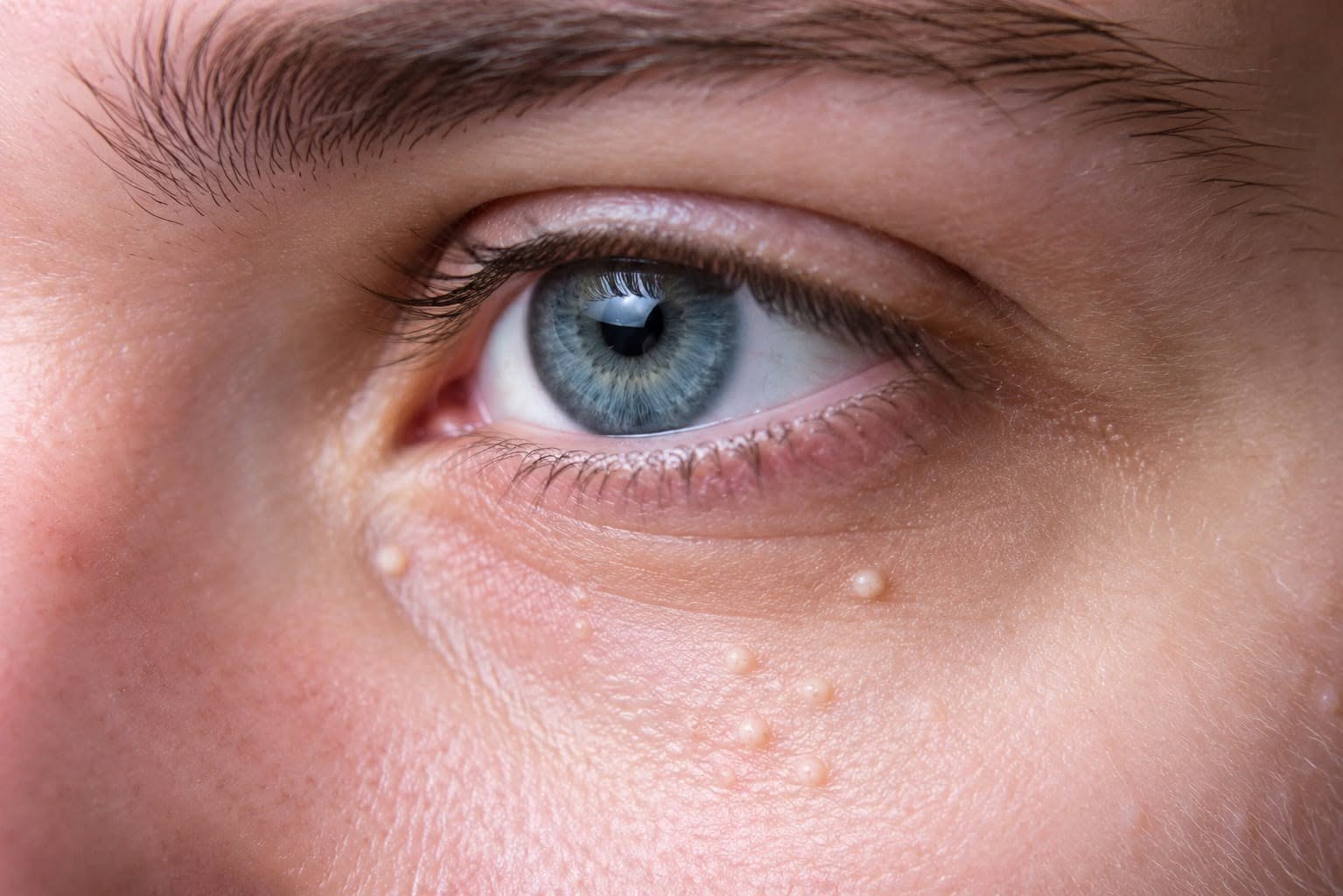
Tiny, firm white or yellowish bumps appearing around the delicate skin of the eyes, eyelids, or upper cheeks are extremely common. Known as milia (singular: milium), these harmless micro-cysts are often mistaken for whiteheads, acne, or tiny pimples.
Unlike pimples, milia are not filled with pus or infected oil, meaning squeezing or popping them like ordinary acne is ineffective and can damage delicate skin tissue. Fortunately, understanding what causes milia allows you to adopt safe skincare routines to smooth your under-eye texture effectively.
In this skincare guide, we will break down what milia are, explore their primary causes, outline safe home and professional removal options, and answer frequently asked questions.
1. What Are Milia and What Causes Them?
Milia form when dead skin flakes (keratin) become trapped under the surface of the skin rather than sloughing off naturally.
+--------------------------+------------------------------------------------------+
| Cause Category           | Underlying Factor                                    |
+--------------------------+------------------------------------------------------+
| Trapped Keratin          | Dead skin cells fail to shed and form keratin cysts.  |
| Heavy Eye Creams         | Occlusive products block pores around delicate skin. |
| Sun Damage               | Thicker skin texture reduces natural exfoliation.    |
| Skin Trauma              | Forms after blistering, laser procedures, or burns.  |
+--------------------------+------------------------------------------------------+
Common Triggers
- Heavy, Occlusive Skincare Products: Using thick, oil-heavy eye creams, petroleum jelly, or heavy moisturizers under the eyes can trap dead skin cells beneath the surface.
- Sun Damage: Chronic UV exposure thickens the outer layer of skin, making natural exfoliation more difficult for your skin cells.
- Incomplete Cleansing: Leaving heavy eye makeup or waterproof mascara on overnight blocks delicate hair follicles and sweat ducts.
- Skin Trauma or Blistering: Secondary milia can develop as the skin heals following friction, superficial burns, laser resurfacing, or chemical peels.
2. Safe Home Treatments & Skincare Habits
Because milia reside beneath a thin layer of skin tissue, they require gentle, chemical exfoliation rather than physical popping.
Recommended Skincare Routine Adjustments
- Switch to Lightweight Eye Creams: Replace heavy, occlusive eye creams with oil-free, gel-based formulations containing hyaluronic acid.
- Incorporate Gentle Exfoliating Acids: Use low-concentration chemical exfoliants like Salicylic Acid (BHA) or Glycolic Acid (AHA) 2 to 3 times weekly to encourage cell turnover without scrubbing.
- Introduce OTC Topical Retinoids: Over-the-counter topical retinoids (such as adapalene) accelerate cellular renewal, helping lift trapped keratin to the surface over time.
- Practice Double Cleansing: Use a mild oil cleanser followed by a gentle water-based cleanser to thoroughly melt away long-wear eye makeup and excess sebum.
3. Professional Removal Procedures
If home skincare routines do not dissolve persistent milia, a licensed dermatologist or aesthetician can remove them quickly and safely in an office environment.
+--------------------------+------------------------------------------------------+
| Professional Procedure   | Removal Method                                       |
+--------------------------+------------------------------------------------------+
| Manual Extraction        | Sterile needle or lancet pierces skin to lift cyst.  |
| Cryotherapy              | Liquid nitrogen freezes and sloughs off the bump.    |
| Chemical Peels           | Professional-grade acids accelerate deep exfoliation. |
| Laser Ablation           | Targeted light therapy dissolves stubborn keratin.   |
+--------------------------+------------------------------------------------------+
Conclusion: Patience and Prevention for Smooth Under-Eyes
While milia can be stubborn, they are completely harmless and often dissolve naturally over time as your skin cell turnover progresses. By switching to lightweight eye products, incorporating mild chemical exfoliants, and avoiding the urge to squeeze, you can restore smooth, healthy skin around your eyes safely.
Adopt a tailored eye care routine today and protect your delicate skin!
Practical Skincare & Safety Tips
- NEVER Pop or Pick at Milia: Attempting to squeeze milia with fingers or fingernails will damage fragile under-eye tissue and can lead to scarring or bacterial infections.
- Apply Daily Sunscreen: Protect delicate under-eye skin with broad-spectrum SPF 30+ daily to prevent sun-induced skin thickening.
- Patch Test New Products: Always patch-test new active ingredients (like retinoids or acids) on a small area of skin before applying near the eye contour.
- Consult a Dermatologist for Eyelid Milia: Milia located directly on the upper eyelid or lash line should only be extracted by an eye care professional or dermatologist.
FAQ Section
Q: Are milia the same thing as whiteheads?
A: No. Whiteheads are filled with trapped sebum and bacteria inside a pore, whereas milia are tiny, hard keratin cysts trapped beneath a thin layer of healthy skin.
Q: How long does it take for milia to go away on their own?
A: In adults, milia can persist for several months or even a year if untreated, though gentler cell-turnover products accelerate their disappearance.
Q: Why do babies often get milia on their nose and cheeks?
A: Neonatal milia affect up to 50% of newborns due to underdeveloped skin glands. Unlike adult milia, newborn milia typically clear up automatically within a few weeks without any treatment.
