
Introduction
Optical illusions and hidden-picture puzzles have captivated minds for generations. Beyond providing a fun visual challenge, these classic brainteasers illustrate how the human brain processes complex visual scenes, shapes, and hidden patterns.
Popular online visual challenges often feature vintage sketches containing concealed figures, faces, or objects. Identifying these hidden images requires visual acuity, spatial reasoning, and figure-ground perception—the cognitive ability to separate an object from its surrounding background.
In this visual brain training guide, we will break down the exact solution to this classic optical puzzle, explore the visual psychology behind hidden images, discuss cognitive benefits of brain exercises, and answer frequently asked questions.
1. Solution to the Optical Illusion
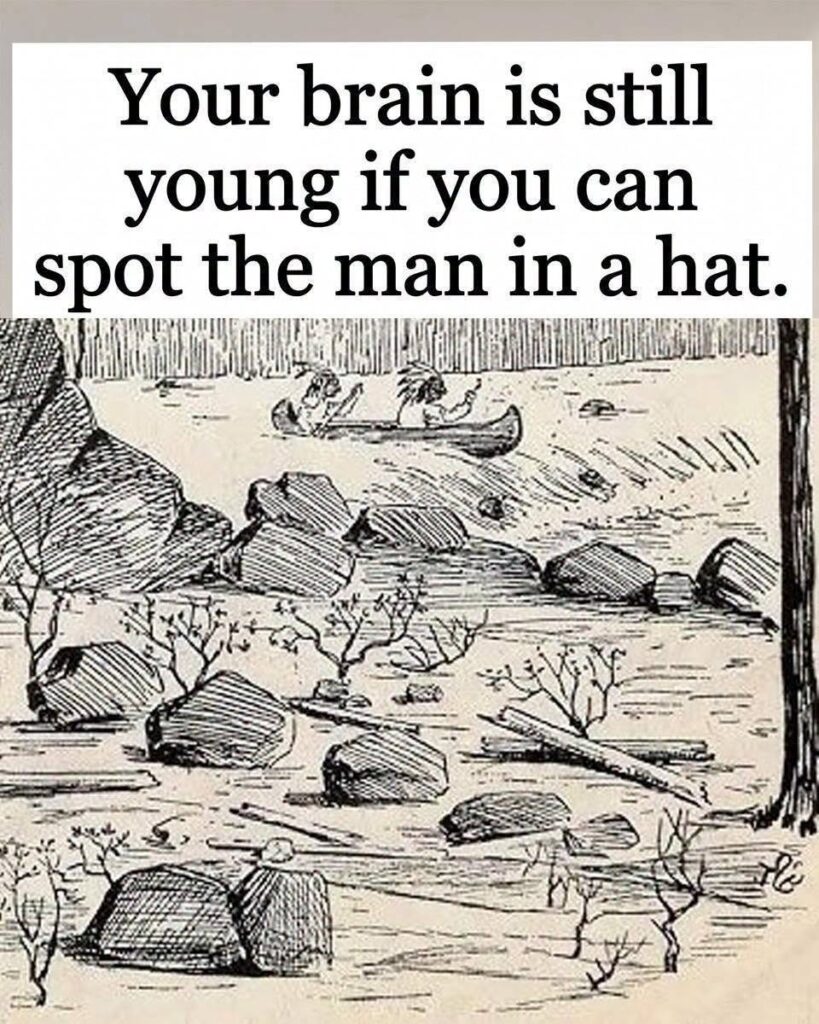
Finding the hidden figure in this vintage illustration requires looking beyond the main scene of people paddling a canoe near a rocky shoreline.
+--------------------------+------------------------------------------------------+
| Element                  | Visual Description                                   |
+--------------------------+------------------------------------------------------+
| Main Visual Elements     | Canoeing figures, rocky shore, trees, floating logs.|
| Illusion Technique       | Pareto / Embedded landscape art (Pareidolia).        |
| Solution Orientation     | Turn the image upside down or focus on negative space.|
+--------------------------+------------------------------------------------------+
How to Spot the Hidden Figure
- Rotate the Image: Turn the image upside down (180 degrees) or tilt your device.
- Examine the Foreground Terrain: Focus on the large rocks and ground contours on the left and center of the illustration.
- Trace the Features: When inverted, the large curved rock formation and surrounding terrain merge to form the profile of a man wearing a wide-brimmed hat, with the rock shading defining his nose, eye, and brim.
2. The Psychology Behind Visual Illusions
Our brains are hardwired to recognize familiar shapes—especially human faces—even in non-human objects or landscapes.
Key Psychological Concepts
- Pareidolia: The psychological phenomenon where the human mind perceives a familiar pattern (such as a human face) where none intentionally exists, such as in clouds, rock formations, or wooden grain.
- Figure-Ground Perception: The visual system’s capacity to simplify a scene into the main object we are looking at (the figure) and everything else that forms the background (the ground).
- Visual Inversion Effect: Rotating an image alters how visual cortex neurons process spatial relationships, making previously hidden patterns immediately recognizable.
+--------------------------+------------------------------------------------------+
| Mechanism                | Impact on Visual Perception                          |
+--------------------------+------------------------------------------------------+
| Pareidolia               | Triggers face detection mechanisms in the brain.     |
| Spatial Inversion        | Shifts visual perspective to break visual bias.      |
| Contrast Sensitivity     | Highlights hidden borders and negative space.        |
+--------------------------+------------------------------------------------------+
3. Benefits of Regular Visual and Cognitive Exercises
Engaging in mental puzzles, visual search tasks, and brainteasers provides healthy stimulation for cognitive function.
Visual & Cognitive Advantages
- Sharpens Attention to Detail: Visual puzzles train your eyes to scan for subtle differences in contrast, texture, and shading.
- Enhances Problem-Solving Flexibility: Illusions encourage you to challenge your initial assumptions and look at problems from new perspectives.
- Promotes Mental Agility: Solving visual games stimulates neural pathways involved in visual processing and spatial awareness.
Conclusion: Keep Your Mind Engaged with Daily Puzzles
Visual riddles and optical illusions are a delightful way to challenge your perception and give your visual cortex a quick workout. Whether you spotted the hidden profile immediately or needed a hint, practicing visual search games keeps your problem-solving skills sharp.
Share this visual puzzle with friends and family to see who can spot the hidden figure first!
Practical Brain Training Tips
- Practice Visual Search Daily: Dedicate 5 to 10 minutes a day to hidden object games, crosswords, or spatial puzzles to stay mentally active.
- Look for Negative Space: When solving visual puzzles, focus on the empty background spaces between objects rather than the main foreground elements.
- Change Your Angle: If you are stuck on a visual riddle, try tilting your head, shifting distance from the screen, or flipping the perspective.
- Combine Mental and Physical Exercise: Physical activity increases oxygen flow to the brain, supporting overall cognitive performance alongside mental games.
FAQ Section
Q: Does failing to spot an optical illusion quickly mean poor cognitive health?
A: Not at all. Visual perception speed varies based on lighting, screen contrast, fatigue, and individual visual processing styles. Illusions are entertaining visual games, not clinical tests.
Q: Why is it easier to see hidden figures when an image is flipped upside down?
A: Flipping an image bypasses your brain’s top-down processing expectations, forcing your visual system to interpret basic shapes and contours without habitual context.
Q: What is pareidolia?
A: Pareidolia is a natural human cognitive tendency to see recognizable shapes or human faces in random everyday patterns, such as rocks, tree bark, or coffee foam.
