
Introduction
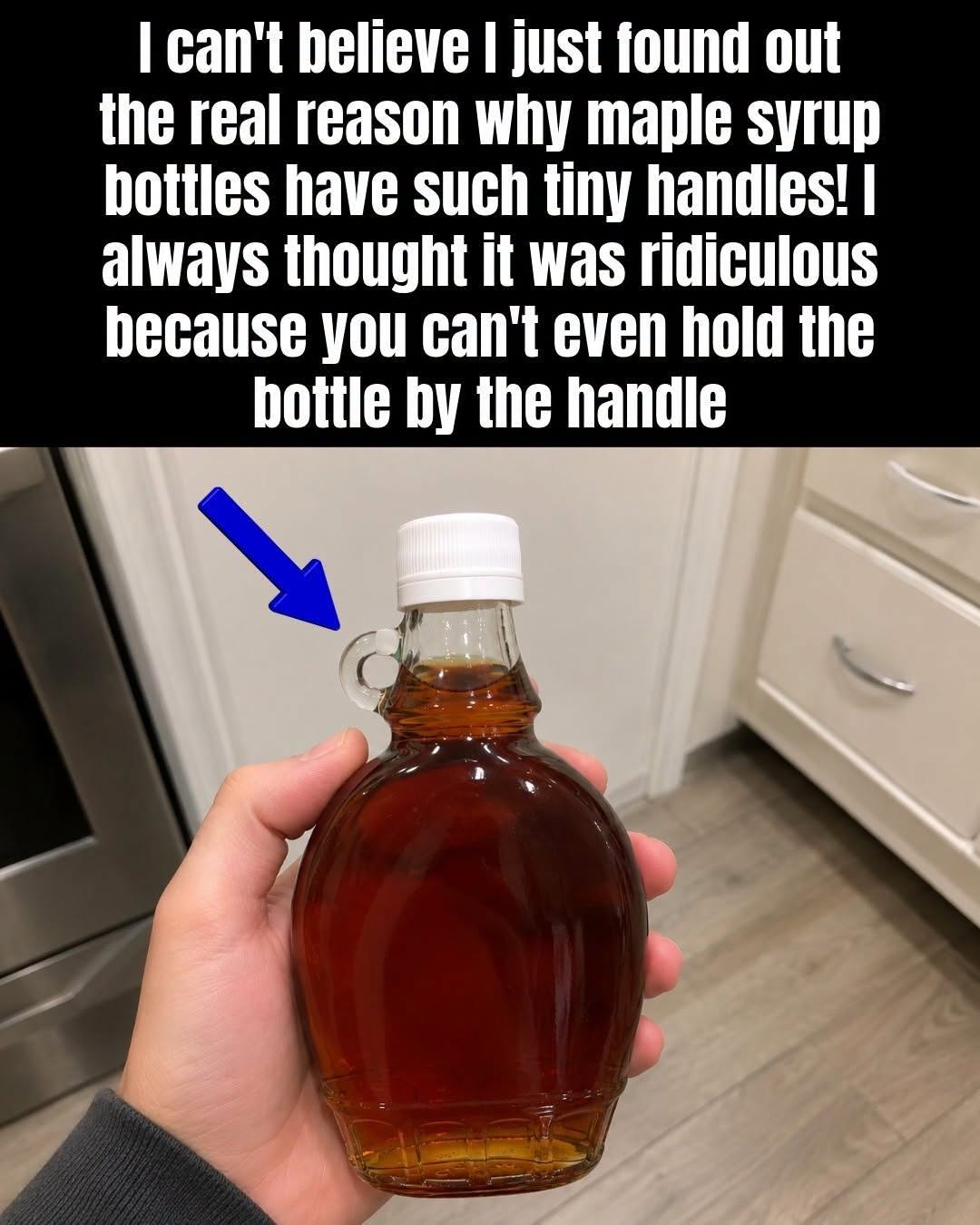
If you have ever bought authentic maple syrup packaged in a traditional glass bottle, you have likely noticed a curious design detail: a tiny, curved glass loop right near the neck of the bottle. At first glance, this miniature handle seems completely impractical—it is far too small for adult fingers to slip through, making it impossible to carry the bottle by the loop alone.
While it might seem like an unnecessary quirk or manufacturing flaw, this tiny handle is actually a historical feature known as a skeuomorph—a design element retained from an earlier era for traditional and aesthetic reasons.
In this food history guide, we will explore why maple syrup bottles feature tiny handles, how stoneware jugs inspired modern packaging, highlight the science of maple syrup storage, and answer frequently asked questions.
1. The Historical Origin: From Stoneware Jugs to Glass Bottles
The miniature loop on modern glass maple syrup bottles pays homage to the large earthenware and stoneware containers used in the 19th and early 20th centuries.
+--------------------------+------------------------------------------------------+
| Era / Container Type     | Handle Function & Historical Context                 |
+--------------------------+------------------------------------------------------+
| 19th Century Jugs        | Heavy ceramic/earthenware jugs required a functional |
| (Large Stoneware)        | finger loop to carry and pour heavy liquids.         |
| Modern Glass Bottles     | Miniature decorative loop preserved as a traditional |
| (Skeuomorphic Design)    | visual cue signaling authentic maple syrup.          |
+--------------------------+------------------------------------------------------+
The Evolution of the Syrup Container
- Practical Stoneware Jugs: Before lightweight glass bottles and plastic containers became widespread, liquid products like maple syrup, molasses, and moonshine were stored in heavy ceramic or earthenware jugs holding a gallon or more. These large containers featured a sturdy finger loop at the neck so farmers and merchants could carry or hook them easily with one finger.
- The 1930s Marketing Transition: During the Great Depression in the 1930s, glass manufacturers began mass-producing glass maple syrup bottles. To distinguish real maple syrup from cheaper corn syrups, bottle designers deliberately kept a tiny replica of the traditional jug handle on the glass neck.
- Skeuomorphic Tradition: Over time, consumers began recognizing the small handle as a symbol of authentic, high-quality maple syrup. Glassmakers retained the miniature loop as a decorative tradition that endures today.
2. What Is a Skeuomorph?
In design terminology, the tiny syrup bottle handle is a classic example of a skeuomorph—an ornamental design element that mimics a functional feature from an older version of an object.
Everyday Examples of Skeuomorphic Design
- Digital Shutter Sounds: Modern smartphones emit a mechanical click sound when taking a picture, mimicking mechanical camera shutters.
- Faux Stitching on Synthetic Leather: Plastic car dashboards and vinyl furniture often feature molded faux stitching to evoke handcrafted leathercraft.
- Rivets on Denim Jeans: Small copper rivets originally reinforced pocket stress points on heavy work pants, but remain today largely as a classic design aesthetic.
3. How to Properly Store Pure Maple Syrup
Unlike artificial pancake syrups made of corn syrup and preservatives, 100% pure maple syrup is an unpreserved natural agricultural product that requires proper storage.
+--------------------------+------------------------------------------------------+
| Packaging State          | Recommended Storage Conditions & Shelf Life          |
+--------------------------+------------------------------------------------------+
| Unopened Bottle          | Cool, dark pantry (lasts up to 1 year or more).      |
| Opened Bottle            | Refrigerate continuously (lasts up to 1 year).       |
| Long-Term Storage        | Freeze in airtight containers (lasts indefinitely).   |
+--------------------------+------------------------------------------------------+
Essential Preservation Guidelines
- Refrigerate After Opening: Once the seal on a glass bottle is broken, store pure maple syrup in the refrigerator to prevent mold spores from growing on top of the liquid.
- Freezing for Longevity: Pure maple syrup does not freeze solid due to its high sugar density (66% sugar concentration). Storing opened syrup in the freezer keeps it fresh indefinitely.
- Skim and Re-Boil if Mold Forms: If a harmless surface mold film forms on opened syrup, skim off the top layer, heat the remaining syrup to a gentle boil (180°F / 82°C), pour into a clean container, and refrigerate.
Conclusion: A Small Loop with a Big History
That miniature, seemingly useless handle on your maple syrup bottle is a charming bridge connecting modern packaging with 19th-century agricultural history. It stands as a timeless reminder of traditional craftsmanship and authentic maple harvesting heritage.
The next time you pour maple syrup over your pancakes, share this fun bit of food trivia at the breakfast table!
Practical Culinary & Kitchen Tips
- Warm Syrup Before Serving: Cold syrup from the fridge cools down warm pancakes rapidly. Microwave your syrup for 10 to 15 seconds before pouring for optimal texture.
- Check the Label Grade: Look for “100% Pure Maple Syrup” on the glass bottle to ensure you are buying real tree sap syrup rather than flavored high-fructose corn syrup.
- Wipe Bottle Threads: Wipe the threaded neck of the glass bottle with a damp cloth before screwing the cap back on to prevent sticky, hardened sugar buildup.
FAQ Section
Q: Can you carry a glass maple syrup bottle using the tiny handle?
A: No. The glass loop is purely decorative on modern small bottles. Attempting to hold the bottle by the loop with a single finger or string is insecure and can drop the container.
Q: Why doesn’t pure maple syrup freeze solid in the freezer?
A: Pure maple syrup has a high concentration of dissolved natural sugars (primarily sucrose), which significantly lowers its freezing point well below standard freezer temperatures.
Q: What is the difference between Grade A Amber and Grade A Dark maple syrup?
A: Grade A Amber is lighter in color with a delicate, subtle maple flavor, harvested early in the spring season. Grade A Dark (formerly Grade B) is harvested later in the season and features a robust, caramel-like flavor ideal for baking and cooking.
