
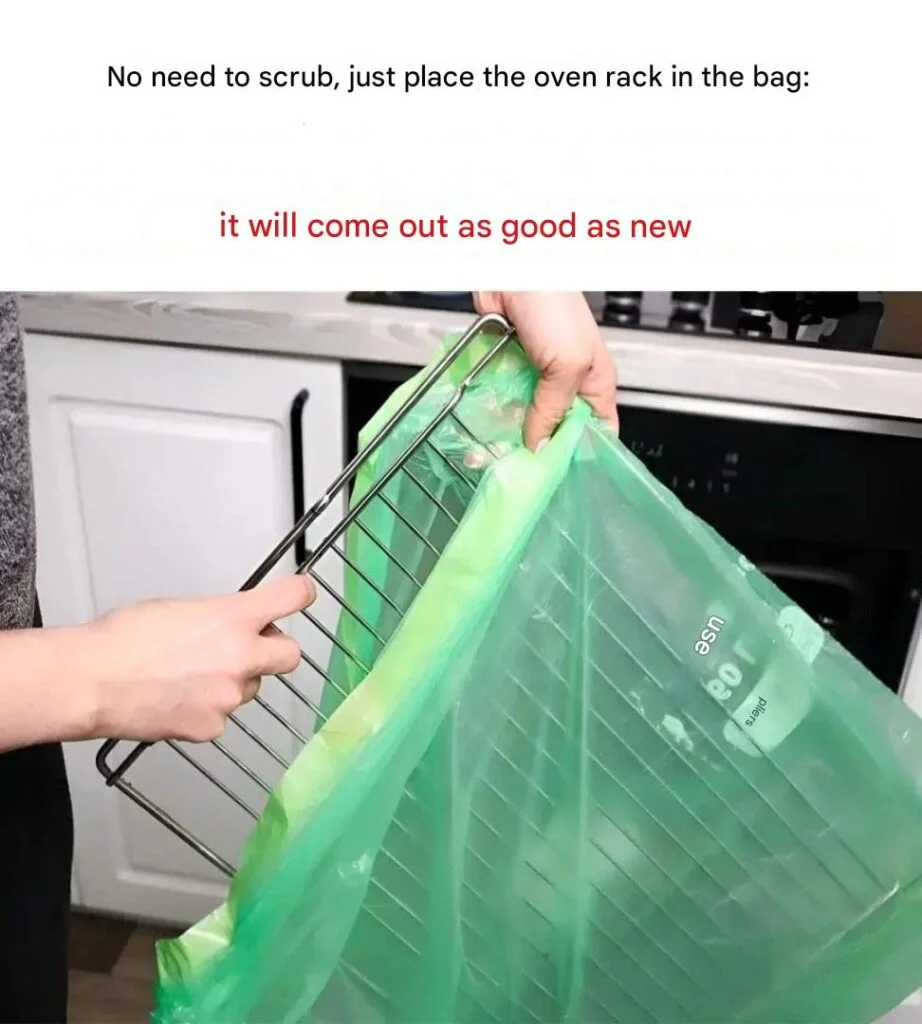
Cleaning oven racks is widely regarded as one of the most tedious, messy, and frustrating kitchen chores. Over months of roasting, baking, and broiling, oven racks accumulate layers of baked-on grease, carbonized food spills, and burnt residue. Because metal racks are bulky, heavy, and awkward to fit inside standard kitchen sinks, many homeowners delay cleaning them for as long as possible.
When it comes time to restore greasy racks, traditional methods usually involve hours of intense scrubbing with abrasive steel wool pads, wire brushes, and harsh commercial chemicals. This labor-intensive process often leads to scratched metal, strained backs, and messy kitchen counters covered in black sludge.
Fortunately, viral home cleaning hacks offer a brilliant, hands-off solution: the trash bag cleaning method. By placing dirty oven racks inside a sealed plastic trash bag with a cleaning solution—such as household ammonia, dishwasher pods, or natural baking soda mixtures—you create a enclosed vapor chamber that dissolves baked-on grease overnight without a single minute of scrubbing.
In this ultimate oven maintenance guide, we break down how the garbage bag cleaning trick works, explore safe chemical and natural cleaning formulas, share step-by-step instructions, and provide practical tips to keep your kitchen appliances looking brand new.
The Science Behind the Trash Bag Cleaning Method
To understand why sealing dirty oven racks inside a plastic bag works so efficiently, it helps to examine the chemistry of baked-on kitchen grease and the power of localized vapor chambers.
Carbonization and Polymerized Grease
When cooking oils, meat fats, and food drippings spill onto metal oven racks at high temperatures (350°F to 500°F), they undergo a chemical process called polymerization. The liquid fats convert into a tough, varnish-like plastic coating that bonds tightly to steel wire frame surfaces. With repeated baking cycles, this layer carbonizes into a hard, dark crust that resists standard soap and hot water.
How a Sealed Vapor Chamber Works
To break down polymerized grease, a cleaning agent needs extended contact time to penetrate the hardened carbon structure. When you apply liquid cleaners to a rack exposed in open air, the liquid quickly evaporates or runs off onto the floor before it can dissolve the grease.
Sealing oven racks inside a thick plastic trash bag creates a micro-environment with several key advantages:
- Vapor Trapping: Volatile active ingredients evaporate into gas phase inside the sealed bag, surrounding every corner, bar, and joint of the wire rack with high-performance cleaning fumes.
- Continuous Moisture: The plastic enclosure prevents cleaning agents from drying out, allowing the formula to continuously soften and saponify (turn fat into soap) baked-on grease over 8 to 12 hours.
- Zero Spills: The heavy-duty plastic liner keeps dirty grease residue completely contained, keeping your bathtub, kitchen sinks, and countertops clean.
Step-by-Step Guide: How to Clean Racks in a Trash Bag
Restoring dirty, greasy oven racks using the bag method requires minimal effort if you follow this step-by-step procedure safely.
Option A: The Ammonia Vapor Method (Most Effective)
Clear household ammonia is exceptionally powerful at stripping carbonized grease through fume action alone.
- Safety First: Put on rubber gloves and protective eyewear. Always perform this setup outdoors or in a well-ventilated patio or garage area, as concentrated ammonia fumes have a strong, pungent odor.
- Bag Preparation: Take two heavy-duty contractor trash bags (3-mil thickness or higher) and double-bag them to prevent accidental punctures from sharp metal corners.
- Insert Racks: Carefully place two to three cool, dry oven racks inside the inner trash bag.
- Add Ammonia: Pour 1 to 2 cups of plain household clear ammonia into the bottom of the bag. You do not need to soak the racks completely; the rising ammonia fumes do all the work!
- Seal Tightly: Push excess air out carefully without inhaling fumes, then tie or seal the top of the bag tightly with a zip tie, twist tie, or strong knot.
- Let It Sit: Lay the sealed bag flat on a flat outdoor surface, patio, or inside a well-ventilated garage for 8 to 24 hours (overnight works best).
- Rinse Clean: Open the bag outdoors, pointing the opening away from your face. Wearing gloves, remove the racks and rinse them thoroughly with a garden hose or under hot tap water. The baked-on grease and black carbon will slide off effortlessly with a standard sponge.
Option B: The Dishwasher Pod & Warm Water Method (Ammonia-Free)
If you prefer not to use ammonia fumes, dishwasher detergent pods combined with warm water offer a gentle, highly effective alternative.
- Bag Setup: Double-bag heavy-duty trash bags as described above.
- Add Cleaner: Place the dirty racks inside, then add 2 to 3 quality dishwasher detergent pods (or 1 cup of liquid dishwasher detergent) and 1 gallon of hot water.
- Seal and Soak: Tie the bag securely and agitate gently so the dissolved detergent coats all wire surfaces. Lay flat in a laundry tub, outdoor space, or clean bathtub for 6 to 8 hours.
- Rinse: Remove racks and wipe away softened grease with a soft cloth or microfiber towel before rinsing with fresh water.
Comparing Popular Oven Rack Cleaning Methods
Different cleaning techniques offer unique balances between manual effort, cost, speed, and safety.
+------------------------------------+------------------+-------------------+-----------------------------------+
| Cleaning Technique                 | Manual Effort    | Total Soak Time   | Best Suited For                   |
+------------------------------------+------------------+-------------------+-----------------------------------+
| Ammonia Trash Bag Method           | Zero Scrubbing   | 8 to 12 Hours     | Heavy, ancient carbonized grease  |
| Dishwasher Pod Bag Soak            | Minimal Wipe     | 6 to 8 Hours      | Moderate grease, sensitive homes  |
| Bathtub Soap & Towel Soak          | Light Scrubbing  | 4 to 6 Hours      | Standard regular maintenance      |
| Commercial Oven Cleaner Spray      | High Scrubbing   | 30 to 60 Minutes  | Quick spot treatments             |
| Steel Wool & Scouring Powder       | Extreme Effort   | Immediate         | Uncoated stainless steel only     |
+------------------------------------+------------------+-------------------+-----------------------------------+
Important Safety and Maintenance Cautions
While the trash bag method is highly effective, respecting material limits and appliance safety keeps your home and equipment protected.
Check Your Rack Material
- Chrome-Plated and Stainless Steel Racks: Safe for ammonia, dish soap, and standard baking soda soaking methods.
- Enamel / Porcelain-Coated Racks: Safe for mild soapy soaks, but avoid harsh abrasive metal scrubbers that can chip enamel coatings.
- Self-Cleaning Oven Warning: Never leave chrome or stainless steel racks inside your oven during a high-heat Self-Clean cycle. The extreme temperatures (over 800°F) in self-cleaning mode will warp metal frames, ruin smooth chrome finishes, and cause sliding racks to stick permanently.
Protecting Your Bathtub
If you rinse your racks in an indoor porcelain or acrylic bathtub after taking them out of the trash bag, lay down an old towel on the bottom of the tub first. This prevents heavy, sharp wire corners from scratching or chipping your tub surface during rinsing.
Financial Considerations: Home Appliance Care and Savings
Maintaining clean kitchen appliances is not just about aesthetics—it protects your household equipment investment and improves energy efficiency.
+---------------------------------+-----------------------------------+-----------------------------------+
| Appliance Factor                | Dirty / Carbonized Racks          | Clean / Maintained Racks          |
+---------------------------------+-----------------------------------+-----------------------------------+
| Heat Reflectivity & Distribution| Poor (Absorbs radiant heat)       | Optimal (Reflects heat evenly)    |
| Food Odors & Smoke Generation   | High (Old fats burn and smoke)    | Zero excess smoke or stale odors  |
| Appliance Lifespan              | Reduced due to excess thermal load| Maximized structural performance  |
| Restoration Cost                | $50 - $120 for replacement racks  | Under $5 in basic household items |
+---------------------------------+-----------------------------------+-----------------------------------+
- Preventing Costly Replacements: Buying OEM (Original Equipment Manufacturer) replacement oven racks can cost anywhere from $50 to over $120 per rack depending on the appliance brand. Restoring original racks for pennies using basic trash bags and household cleaners saves money.
- Energy Efficiency and Home Value: Clean ovens with spotless racks distribute radiant heat more evenly during baking cycles, reducing cooking times and utility electricity usage. Furthermore, clean appliances boost visual appeal during home inspections and real estate open houses.
Fascinating Facts About Ovens and Cleaning History
- The Invention of the Modern Oven: Electric ovens became popular household fixtures in the 1920s, but early models lacked removable racks, making cleaning an arduous task that required crawling inside the oven cavity!
- How Saponification Works: The chemical reaction between strong bases (like ammonia or lye) and animal fat creates literal soap. When you clean greasy oven racks, you are chemically converting burnt grease into water-soluble soap compounds!
- The Self-Cleaning Boom: Patenting of the self-cleaning oven in 1963 revolutionized kitchen maintenance, but manufacturers quickly added warnings instructing owners to remove shiny metal racks before activating high-heat cycles.
Practical Tips for Daily Oven Rack Maintenance
Keeping your oven racks clean between deep treatments requires simple preventive habits:
- Use Baking Sheets and Drip Trays: Place a large rimmed baking sheet or reusable oven liner on the bottom rack when baking pies, casseroles, or roasting meats to catch spills before they hit wire bars.
- Wipe Spills Immediately: Once the oven cools after cooking, wipe up fresh food splatters using a damp microfiber cloth before they undergo multiple baking cycles and carbonize.
- Schedule Seasonal Deep Cleans: Perform the trash bag cleaning method twice a year—once before major holiday cooking seasons and once during spring cleaning—to keep grease from building up into thick layers.
Conclusion
The trash bag oven rack cleaning method is a game-changer for home cooks and busy households. By leveraging the power of trapped vapor inside a heavy-duty plastic bag, you can melt away years of burnt, carbonized grease without damaging your back or spending hours scrubbing with wire pads. Whether you choose the rapid fume action of clear ammonia or the gentle power of dishwasher pods, this simple hack delivers spotless, shiny, as-good-as-new oven racks with minimal effort.
Frequently Asked Questions (FAQ)
1. Will ammonia fumes damage or rust stainless steel oven racks?
No. Clear household ammonia is completely safe for standard chrome-plated and stainless steel oven racks. It dissolves organic grease and oil without causing rust or eroding solid metal surfaces.
2. Can I use this trash bag method indoors?
If using the ammonia method, it is strongly recommended to seal, store, and open the bag outdoors or in a well-ventilated garage to avoid inhaling pungent chemical fumes. If using dishwasher pods and warm water, you can safely perform the soak indoors in a laundry room or bathtub.
3. What should I do if my trash bag gets a small hole during soaking?
Always use heavy-duty contractor bags (3-mil thickness) and double-bag your racks to prevent accidental punctures. Placing the sealed bag inside a plastic storage tote or laundry basin provides extra protection against unexpected leaks.
4. Can I leave oven racks in the oven during the self-cleaning cycle?
No! Never leave standard chrome-plated oven racks inside during a self-cleaning cycle. The extreme heat will discolor the shiny chrome finish, warp the frame, and destroy the smooth glide coating on sliding rack tracks.
