
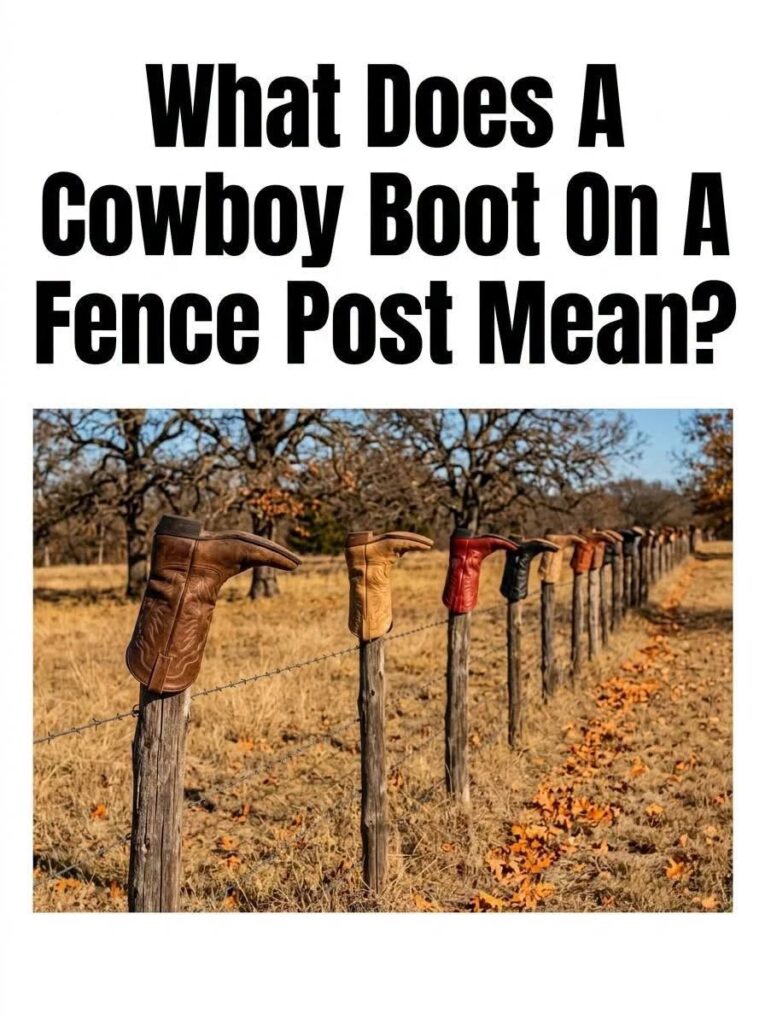
If you have ever taken a scenic drive through the American West, rural Texas, or countryside ranching communities, you may have noticed an unusual sight along property lines: upside-down cowboy boots placed atop wooden fence posts.
As shown in the image—where a long row of worn, colorful leather cowboy boots tops wooden fence posts under the headline “What Does A Cowboy Boot On A Fence Post Mean?”—this unique countryside phenomenon catches the eye of travelers and city dwellers alike.
Is putting a cowboy boot on a fence post just a rustic decorative trend? A secret messaging system between local ranchers? Or a deeply rooted cultural tradition honoring western heritage?
Here is a look at the historical origins, symbolic meanings, practical uses, and modern interpretations behind boots on fence posts.
Traditional Meanings Behind Cowboy Boots on Fence Posts
Ranching lore and rural history offer several distinct explanations for why cowboys place worn leather boots on fence posts.
1. Memorializing a Deceased Ranch Hand or Favorite Horse
The most enduring and heartwarming tradition links boots on fence posts to memorializing loved ones. When a loyal ranch hand, family member, or trusted workhorse passed away, ranchers would turn their boots upside down on the fence post near the main entrance or homestead. Placing the boot upside down signifies that their work on the ranch is complete and their soul has moved on.
2. Signaled That the Rancher Was Home or Available for Work
In early American ranching history—long before phones or modern communication—boots served as visual status indicators along isolated country roads:
- Rancher at Home: A pair of boots placed on the driveway gate posts signaled to passing neighbors that the owner was home and available to socialize, lend a hand, or share a meal.
- Seeking Employment: Wandering ranch hands or cowboys looking for day work would sometimes leave a single boot at the property entrance to signal to the landowner that they were looking for chores.
3. Honoring a Retired Pair of Boots
A good pair of leather cowboy boots takes years to break in and becomes a deeply personal piece of gear. When the soles finally wore through or the leather cracked beyond repair, cowboys often preferred placing them atop a fence post as a sign of respect rather than throwing them in the trash.
Practical Reasons: Protecting Wooden Fence Posts
Beyond symbol and tradition, putting upside-down boots over wooden fence posts offers clever practical utility for property upkeep.
+-----------------------------------------------------------------------------------+
|                        RANCHING FENCE POST PROTECTION METHODS                     |
+-------------------+----------------------------+----------------------------------+
| Protection Type   | Primary Mechanism          | Benefit to Ranch Infrastructure |
+-------------------+----------------------------+----------------------------------+
| Upside-Down Boots | Shields End-Grain Wood     | Prevents Moisture Rot & Cracking |
| Metal Tin Cans    | Water Shedding Cap         | Cheap Weatherproofing Barrier    |
| Plastic Post Caps | Sealed Barrier Protection  | Modern Low-Maintenance Alternative|
+-------------------+----------------------------+----------------------------------+
Preventing Moisture Rot and Wood Splitting
Unsealed, untreated wooden fence posts naturally absorb rainwater through their top exposed end-grain. Over severe winters and hot summers, water penetration causes wood to rot, swell, and split down the center.
Covering the top of the post with a leather boot acts as a natural water-repellent cap, shedding rain and snow off the post and extending the structural lifespan of expensive fencing.
Modern Folk Art and Roadside Attractions
While the origin of boot-capped fence posts lies in early Western history, the practice has evolved into a popular form of regional folk art and community identity.
- Landmark Displays: In several western states, entire miles-long stretches of highway feature hundreds of donated boots submitted by tourists and locals, creating vibrant roadside attractions.
- Rustic Western Aesthetic: Modern homesteaders and rural bed-and-breakfasts frequently use boot-topped fences to add authentic Western charm and nostalgia to their curb appeal.
Financial and Infrastructure Insights for Landowners
Maintaining agricultural fencing is a significant capital investment for cattle ranches and farms:
- Extending Post Lifespan: Replacing wooden fence posts every few years requires significant labor and material costs. Using repurposed items like old boots or post caps to protect the wood end-grain saves time and maintenance expenses over decades.
- Supporting Rural Tourism: Unique roadside traditions create memorable travel landmarks, drawing tourists to local western towns, general stores, and country diners.
Fascinating Facts About Cowboy Boots and Fences
- Why Upside Down? Turning boots upside down prevents rainwater from pooling inside the footbed, which would otherwise rot both the leather and the wooden post underneath.
- The “Boot Hill” Connection: The term “Boot Hill” became famous in the Old West as a common name for cemeteries where cowboys and outlaws died suddenly with their boots still on.
Conclusion: A Timeless Western Symbol
Whether placed as a touching memorial to a departed friend, a practical shield against weather rot, or a playful piece of rural folk art, cowboy boots on fence posts remain a cherished symbol of Western culture.
The next time you spot a row of worn leather boots topping fence posts along a country road, you are looking at a living piece of American history—a nod to hard work, community connection, and respect for the land.
Frequently Asked Questions
Q1: Is there a difference between putting one boot vs. two boots on a post?
A1: Historically, a single boot often indicated a memorial or a signal for day work, while a full pair of boots placed together signaled that the rancher was at home or paying tribute to a specific individual.
Q2: Do people still put boots on fence posts today?
A2: Yes. While modern plastic caps and treated lumber have replaced old weatherproofing tricks, many rural property owners and ranchers continue the tradition to honor loved ones or add rustic character to their land.
Q3: What kind of wood is traditionally used for cowboy fence posts?
A3: Ranchers historically used durable local hardwoods such as cedar, osage orange (hedge), or black locust, which naturally resist rot even longer when capped.
Q4: Can I add my own old boots to a roadside fence display?
A4: On public folk-art fences or designated community landmark fences, travelers are often invited to leave signed old boots. However, always respect private property and avoid adding items to private ranch fences without permission.
Q5: How long does a leather boot last on a fence post?
A5: Depending on weather conditions and sun exposure, a heavy-duty leather work boot can endure on an outdoor fence post for 5 to 10 years before weather softening and breaking down completely.
