
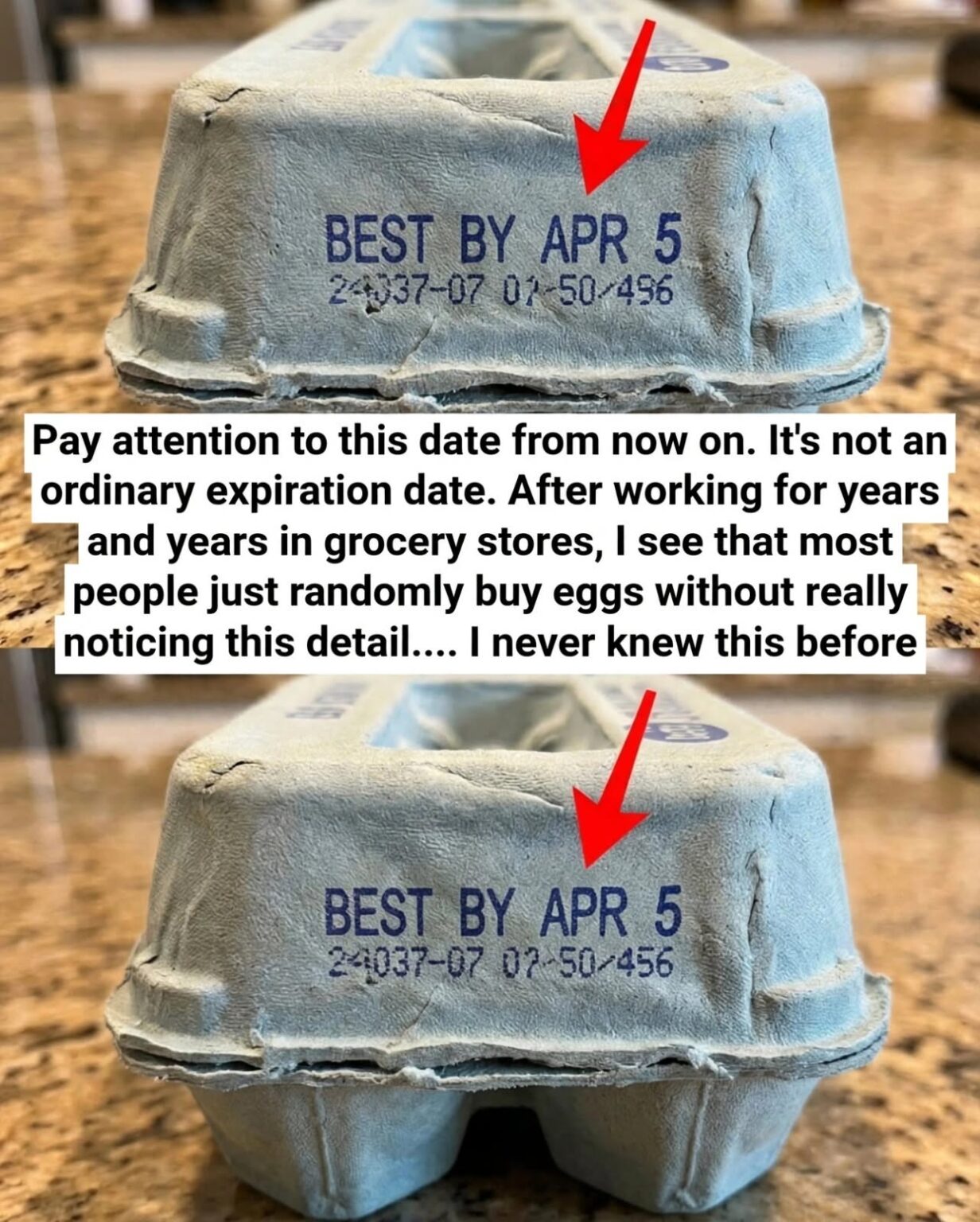
When shopping for eggs at the supermarket, most people quickly check the “Best By” date printed on the side of the carton before tossing it into their shopping cart.
However, an eye-catching viral image featuring an egg carton stamped with “BEST BY APR 5” alongside the text: “Pay attention to this date from now on. It’s not an ordinary expiration date. After working for years and years in grocery stores, I see that most people just randomly buy eggs without really noticing this detail…. I never knew this before” reveals that the printed codes contain much more information than just a sell-by deadline.
Beneath that printed date lies a series of numbers—specifically the Julian date and the plant code—that tell you precisely when the eggs were washed, graded, and packed.
Here is a complete guide to decoding egg carton stamps so you can always pick the freshest carton on the shelf.
What Do the Numbers on an Egg Carton Mean?
An egg carton stamp usually consists of three distinct pieces of information: the standard “Best By” date, a 3-digit Julian date, and a 4-digit plant code starting with the letter “P”.
+-----------------------------------------------------------------------------------+
|                        DECODING EGG CARTON CODES                                  |
+-------------------+----------------------------+----------------------------------+
| Code Component    | Example on Carton          | What It Indicates                |
+-------------------+----------------------------+----------------------------------+
| Best By Date      | BEST BY APR 5              | Maximum freshness quality window |
| Julian Date       | 065 (Numbers 001-365)      | Exact day of the year packed     |
| Plant Code        | P-1405 (or Plant ID)       | Specific USDA processing facility|
+-------------------+----------------------------+----------------------------------+
1. The 3-Digit Julian Date (The Pack Date)
The most important number for checking true egg freshness is the Julian date, printed right next to or below the “Best By” date.
- How it works: The Julian date represents the consecutive day of the calendar year on which the eggs were washed and packed into the carton:
- 001 = January 1st
- 060 = March 1st (on non-leap years)
- 365 = December 31st
- Why it matters: While “Best By” dates can extend up to 30 to 45 days into the future depending on state laws, the 3-digit Julian date tells you the exact day the eggs left the farm processing line!
2. The Plant Code (USDA Plant Number)
Usually preceded by the letter P (e.g., P-1234), this 4-digit code identifies the exact USDA-inspected packing plant facility where the eggs were processed.
- Traceability and Safety: If there is ever a food safety recall, food safety agencies use this plant code to help consumers verify if their specific carton originated from an affected processing farm.
How to Use Julian Dates to Buy the Freshest Eggs
To ensure you get the absolute freshest eggs when grocery shopping:
- Locate the 3-Digit Number: Look at the stamped code line near the expiration date.
- Compare Numbers on the Shelf: If one carton reads
045(February 14) and another reads055(February 24), the second carton was packed 10 days more recently! - Choose the Highest Number: Within any given month, picking the carton with the highest Julian number guarantees you are buying the newest batch delivered to the store.
How Long Do Eggs Stay Fresh?
Properly refrigerated eggs remain safe and high quality far longer than most consumers realize.
- In the Refrigerator: According to USDA guidelines, fresh shell eggs kept at 40°F (4°C) or colder remain safe to consume for 3 to 5 weeks past the pack date (Julian date)—even if that extends past the printed “Best By” date.
- The Water Float Test: If you are unsure whether an older egg is still good, place it in a bowl of cold water:
- Sinks to the bottom & lays flat: Very fresh.
- Stands up on one end: Older, but still safe to cook and eat.
- Floats to the top: The air cell inside has expanded significantly; discard the egg.
Financial Impact: Reducing Food Waste and Saving Money
Understanding egg coding helps shoppers stretch their grocery budgets:
- Avoiding Unnecessary Waste: Millions of safe, edible eggs are discarded prematurely simply because consumers confuse “Best By” quality dates with hard safety expiration deadlines.
- Smart Bulk Buying: Checking Julian dates allows you to buy larger quantity cartons with confidence, knowing exactly how many weeks of shelf life remain.
Fascinating Facts About Eggs and Packaging
- Refrigeration Rules: In the United States, commercial eggs are washed and sanitized, removing their natural protective cuticle (“bloom”). As a result, US eggs must be continuously refrigerated. In many European nations, eggs are unwashed and sold at room temperature.
- Grade Standards: USDA Grade AA eggs have firm, thick whites and high, round yolks, while Grade A eggs have slightly less firm whites—ideal for everyday baking and cooking.
Conclusion: Shop Like an Industry Insider
Next time you visit the dairy aisle, skip the guesswork. Look past the marketing labels, locate the 3-digit Julian code, and pick the carton packed most recently.
Mastering this simple grocery hack ensures you always bring home the freshest eggs for breakfast, baking, and family meals!
Frequently Asked Questions
Q1: Where can I find the Julian date on the egg carton?
A1: The 3-digit Julian date is stamped on the side or end of the carton, usually directly adjacent to or beneath the printed “Best By” or “Sell By” date.
Q2: Is it safe to eat eggs past the “Best By” date?
A2: Yes. As long as the eggs have been continuously refrigerated at 40°F (4°C) or lower and show no signs of cracks, unusual odors, or discoloration, they are generally safe for 3 to 5 weeks past the pack date.
Q3: What does the letter “P” before the plant number mean?
A3: The “P” stands for “Plant” and precedes the USDA code number assigned to the specific egg processing facility that packaged the carton.
Q4: Why do some egg cartons have a 45-day expiration window?
A4: State regulations vary on “Sell By” dates. USDA guidelines allow processors to set “Best By” dates up to 45 days from the pack date, depending on regional commercial policies.
Q5: How does the float test work?
A5: As an egg ages, moisture evaporates through its porous shell and is replaced by air. Older eggs float because their internal air cell has grown larger, while fresh eggs sink because they are denser than water.
