
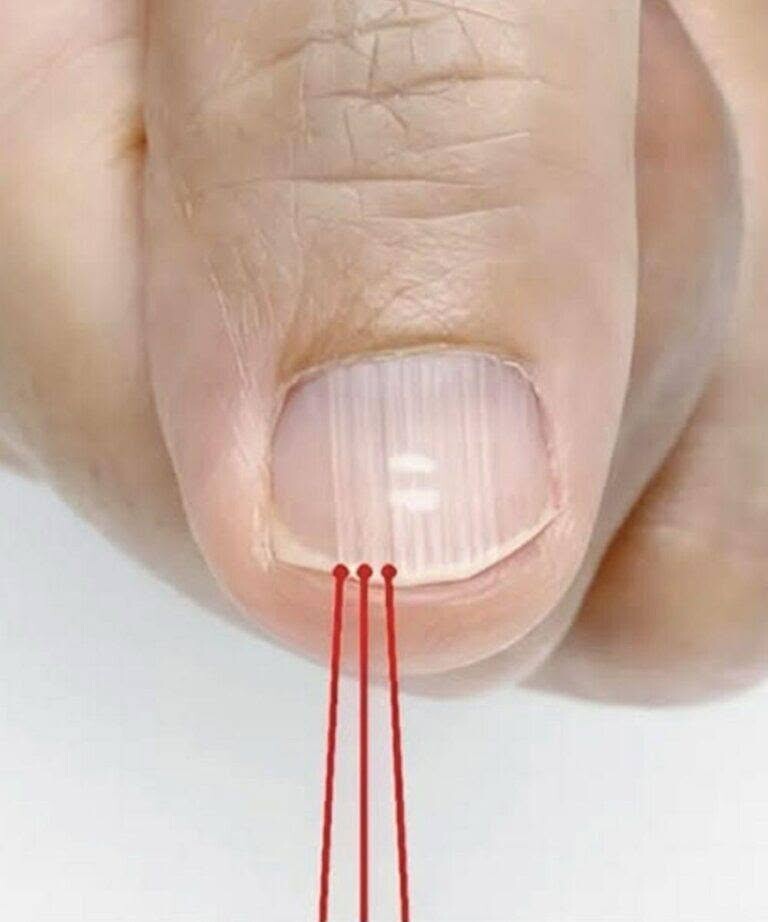
As we age, our bodies undergo subtle physical changes, from fine skin lines to shifts in hair texture. However, many people are surprised to look down at their hands one day and notice fine, raised vertical lines running from the cuticle to the tip of their fingernails.
An educational health visual—titled “What Vertical Ridges on Your Nails Mean After 40”—highlights a close-up image of a fingernail showing faint parallel lines with red indicators pointing to the ridges.
While sudden changes in nail texture can spark concern, the good news is that vertical nail ridges are overwhelmingly normal, harmless signs of aging!
Here is a complete look at why vertical ridges form on fingernails, how they differ from horizontal ridges, and best practices for supporting overall nail health.
Why Do Vertical Ridges Form on Fingernails?
Vertical ridges (known medically as onychorrhexis) extend from the base of the nail matrix up to the free edge. Much like wrinkles appearing on the skin, these ridges develop primarily due to the natural physiological process of aging.
+-----------------------------------------------------------------------------------+
|                        VERTICAL vs. HORIZONTAL NAIL RIDGES                        |
+-------------------+----------------------------+----------------------------------+
| Feature           | Vertical Ridges            | Horizontal Ridges (Beau's Lines) |
+-------------------+----------------------------+----------------------------------+
| Direction         | Cuticle to Tip (Vertical)  | Side to Side (Horizontal)        |
| Primary Cause     | Natural Aging & Dryness    | Illness, High Fever, Trauma      |
| Concern Level     | Benign / Normal            | Requires Medical Evaluation      |
+-------------------+----------------------------+----------------------------------+
1. The Natural Aging Process
As adults reach their 40s and beyond, the body’s natural production of essential structural proteins (like keratin) slows down, and cell turnover within the nail matrix decreases. This shift causes the smooth surface of the nail plate to thin out unevenly, creating raised parallel lines.
2. Moisture Loss and Reduced Oils
With age, the nail matrix produces fewer natural oils, and blood circulation to the extremities slightly decreases. This leads to drier, more brittle nails that naturally accent vertical ridge patterns.
3. Nutrient Deficiencies or Dryness
In a smaller percentage of cases, pronounced vertical ridges can be exacerbated by mild nutritional gaps—such as iron-deficiency anemia, cellular dehydration, or low intake of B-complex vitamins (especially Biotin/B7) and zinc.
Vertical Ridges vs. Horizontal Ridges: What to Watch For
It is vital to distinguish between harmless vertical ridges and potential medical warning signs shown by horizontal ridges.
- Vertical Ridges (Usually Harmless): Running top-to-bottom across multiple nails, these lines rarely indicate serious systemic conditions unless accompanied by severe discoloration or splitting.
- Horizontal Ridges (Beau’s Lines): Running side-to-side across the nail, horizontal deep grooves occur when nail growth is temporarily halted by severe physical stress, high fevers, unchecked diabetes, or major illness. Horizontal ridges should always be evaluated by a medical professional.
Simple Care Tips for Smoothing Vertical Nail Ridges
While aging cannot be stopped, simple hand and nail hygiene practices can help minimize the appearance of vertical ridges and strengthen nail plates:
- Hydrate Cuticles and Nails Regularly: Apply rich moisturizers, jojoba oil, or cuticle creams containing Vitamin E to lock in moisture and protect the nail matrix.
- Gently Buff the Surface: Use a fine-grit four-way nail buffer lightly across the nail plate. Avoid over-buffing, which thins the natural structure.
- Wear Gloves During Chores: Protect hands from harsh cleaning chemicals, dish soaps, and prolonged water submersion by wearing protective rubber gloves.
- Maintain Balanced Nutrition: Consume foods rich in protein, iron, healthy fats, and B-vitamins to provide the raw building blocks needed for healthy keratin production.
Financial Impact: Cost-Effective Hand Care Solutions
Caring for aging nails does not require expensive clinical cosmetic treatments:
- Inexpensive Home Oils: Applying affordable natural oils (like pure jojoba or almond oil) nightly provides the same hydration benefits as high-end boutique serum pens.
- Preventing Brittle Splits: Keeping nails trimmed, rounded, and moisturized prevents painful splits and tears, reducing the need for specialized restorative lacquers.
Fascinating Facts About Human Nails
- Growth Rates: Fingernails grow at an average rate of 3.47 millimeters per month, whereas toenails grow much slower—roughly 1.62 millimeters per month!
- Keratin Composition: Nails are composed of hardened layers of keratin—the exact same structural fibrous protein that forms human hair and outer skin layers.
Conclusion: Embracing Natural Changes
Spotting vertical ridges on your nails after 40 is a normal part of life, much like getting gray hair or fine facial lines.
By keeping hands hydrated, eating a balanced diet, and protecting nails from harsh chemicals, you can maintain strong, healthy, and smooth nails for years to come.
Frequently Asked Questions
Q1: Are vertical nail ridges a sign of a vitamin deficiency?
A1: While vertical ridges are most commonly caused by natural aging and dryness, severe cases can sometimes be linked to deficiencies in iron, zinc, or B-vitamins (such as Biotin).
Q2: Can you permanently get rid of vertical nail ridges?
A2: No. Because vertical ridges stem from structural changes in the nail matrix due to aging, they cannot be permanently reversed. However, moisturizing and light buffing significantly improve their appearance.
Q3: Should I be worried if only one nail has a dark vertical stripe?
A3: Yes. While clear or flesh-colored vertical ridges are benign, a single dark brown or black vertical band (melanonychia) requires evaluation by a dermatologist to rule out subungual melanoma.
Q4: Does nail polish cause vertical ridges?
A4: No, standard polish does not cause ridges. However, frequent use of harsh acetone polish removers can strip moisture from the nail plate, making existing ridges more visible.
Q5: Do toenails get vertical ridges as well?
A5: Yes. Toenails undergo the exact same keratin shifts and moisture loss as fingernails, often developing similar vertical lines over time.
