
Being caught without a can opener during a power outage, camping trip, or emergency situation can be frustrating—especially when you have a pantry full of canned food.
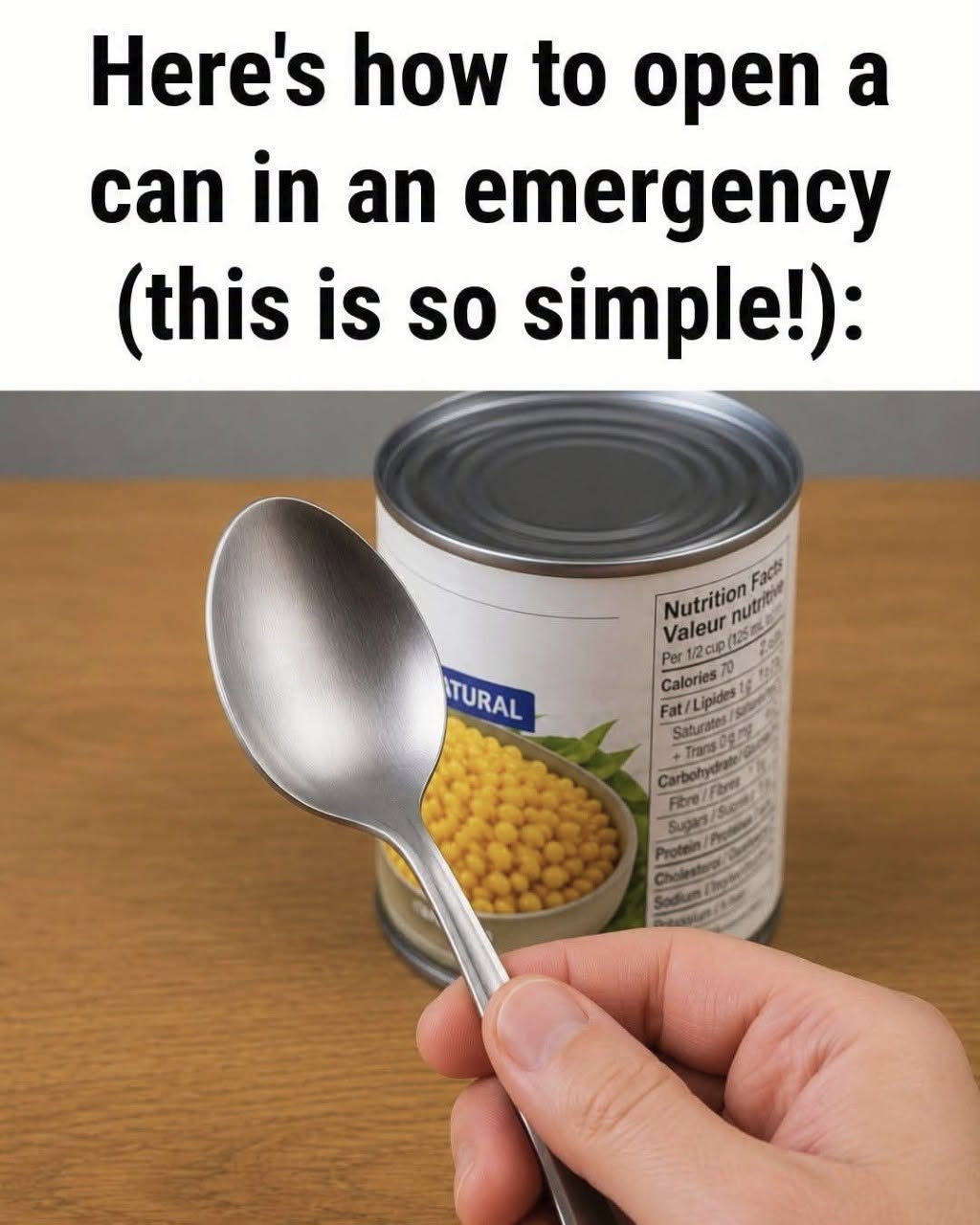
A viral social graphic titled “Here’s how to open a can in an emergency (this is so simple!)” shows a metal food can alongside a standard stainless steel metal spoon, highlighting one of the most effective and accessible emergency food preparation hacks.
Using friction and mechanical force, a basic metal spoon can puncture and slice through thin aluminum or metal tin can lids safely without needing electrical power or specialized tools.
Here is a complete step-by-step guide on how to open a canned good using a spoon, safety precautions to keep in mind, and alternative emergency methods.
Step-by-Step Guide: Opening a Can with a Metal Spoon
Opening a can with a spoon relies on concentrated friction to weaken the metal lid until it punctures cleanly.
+-----------------------------------------------------------------------------------+
|                        EMERGENCY CAN OPENING METHODS COMPARISON                   |
+-------------------+----------------------------+----------------------------------+
| Tool Used         | Primary Mechanism          | Ease & Safety Level              |
+-------------------+----------------------------+----------------------------------+
| Metal Spoon       | Friction & targeted pressure| High safety; moderate effort    |
| Chef Knife / Paring| Puncture & pry             | High risk of slipping/injury     |
| Concrete / Rock   | Abrasive friction grinding | Safe, but can introduce debris   |
+-------------------+----------------------------+----------------------------------+
1. Grip the Spoon Correctly
Hold the metal spoon firmly near the bowl (the scoop end) rather than the long handle. Placing your thumb inside the bowl gives you maximum downward leverage and control.
2. Position the Tip on the Rim
Place the curved tip of the spoon bowl against the inner lip of the can’s top ridge, where the metal lid is thinnest.
3. Rub Back and Forth to Create Friction
Press down firmly with your thumb and rub the tip of the spoon back and forth vigorously across a tiny 1/2-inch area. The continuous friction will rapidly weaken and thin out the metal.
4. Puncture the Lid
Within 20 to 30 seconds of rubbing, the metal will weaken enough for the spoon tip to push completely through, creating a clean puncture hole.
5. Slice Along the Circumference
Insert the edge of the spoon bowl into the hole and slide it around the rim, using leverage to score and cut the lid open until you can bend it up safely.
Safety Precautions to Keep in Mind
While the spoon method is significantly safer than using sharp hunting knives or chef knives, basic precautions prevent injury:
- Watch for Sharp Metal Edges: Punctured tin can lids create jagged metal edges. Always use a cloth or towel to pull back the opened lid.
- Use Sturdy Metal Cutlery: Use a solid stainless steel spoon; thin silver plastic or weak aluminum spoons will bend or snap under pressure.
- Keep Hands Dry: Ensure your hands and the outer surface of the can are dry to prevent slipping during the rubbing process.
Financial Impact: Emergency Preparedness on a Budget
Mastering basic survival and off-grid skills offers real value without requiring expensive equipment:
- Zero Cost Preparation: Knowing how to utilize common kitchen utensils like spoons eliminates the need for expensive multi-tools during sudden power outages or travel emergencies.
- Food Waste Reduction: Emergency readiness ensures long-term pantry storage remains functional and accessible even in unexpected disaster scenarios.
Fascinating Facts About Canned Food and Openers
- The Can Opener Delay: Canned food was patented in 1810 by Peter Durand, but the dedicated rotary can opener wasn’t invented until 1858—nearly 50 years later! Before then, soldiers used hammers, chisels, and bayonets to open rations.
- Modern Pull Tabs: Pop-top pull tabs were introduced in the 1960s, though standard sealed cans remain popular for long shelf life due to superior structural integrity.
Conclusion: Essential Knowledge for Every Home
Opening a food can with a simple spoon is a practical, reliable life skill that guarantees you won’t be locked out of your food supply during an emergency.
Frequently Asked Questions
Q1: Does the spoon hack work on all types of metal cans?
A1: Yes. It works exceptionally well on standard steel and aluminum soup, vegetable, and bean cans with thin metal lids.
Q2: Is it safer to use a spoon than a knife to open a can?
A2: Yes. Knives can easily slip off rounded tin rims, posing severe laceration risks. Spoons lack sharp cutting edges, making accidental slips harmless to hands.
Q3: How long does it take to open a can with a spoon?
A3: Creating the initial puncture takes under 30 seconds, and slicing the entire lid open usually takes 1 to 2 minutes.
Q4: What other household items can open a can in an emergency?
A4: Flat concrete pavement (rubbing the top rim face-down until the seal wears off), a flathead screwdriver, or a heavy-duty pocket knife can also open cans.
Q5: How can you safely lift the lid after puncturing it?
A5: Use the tip of the spoon or a cloth-wrapped finger to gently pry the metal lid upward, avoiding direct contact with raw serrated metal edges.
