
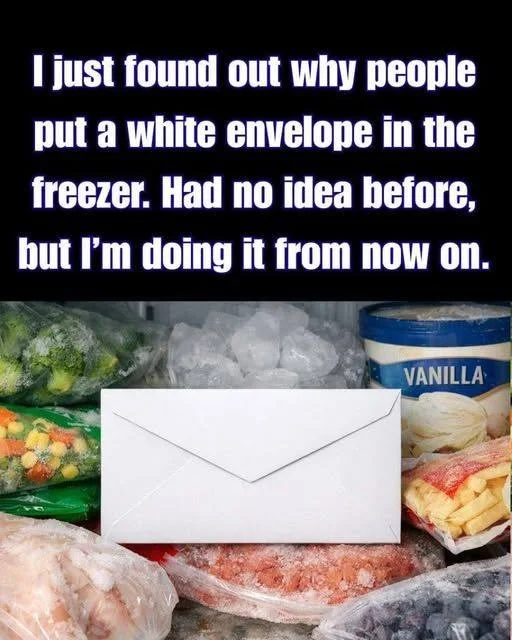
We have all sealed a letter or card only to immediately realize we forgot to include an important document, photos, or a check inside. Ripping open the envelope destroys the paper and forces you to find a replacement.
A viral social graphic—captioned “I just found out why people put a white envelope in the freezer. Had no idea before, but I’m doing it from now on.”—shows a plain white envelope placed inside a home freezer alongside frozen vegetables and ice cream.
This classic household hack relies on temperature changes to break down adhesive bonds, allowing you to open and reseal paper envelopes without leaving a trace.
Here is a full breakdown of how freezing unseals envelopes, the exact step-by-step process, and other clever paper organization tricks.
The Science: How Cold Temperature Affects Envelope Glue
Modern envelope adhesives are made of water-soluble polymers or latex glues that bond strongly when dried.
+-----------------------------------------------------------------------------------+
|                        TEMPERATURE EFFECTS ON ENVELOPE ADHESIVE                   |
+-------------------+----------------------------+----------------------------------+
| Environment       | Effect on Glue             | Result                           |
+-------------------+----------------------------+----------------------------------+
| Freezing Cold     | Hardens, turns brittle     | Glue bond weakens; peels easily  |
| Steam / Heat      | Melts, turns sticky/gummy  | Works, but risks paper smudging  |
| Room Temperature  | Firm, permanent bond       | Paper tears if pulled apart      |
+-------------------+----------------------------+----------------------------------+
- Freezing (Cold Method): Cold temperatures cause the moisture inside the dried adhesive to freeze and crystallize, making the glue brittle and temporarily losing its stickiness.
- Why Freezing Is Superior to Steam: Steam can smear ink, wrinkle high-quality paper, and ruin stamps. Freezing keeps the envelope completely dry and flat throughout the process.
Step-by-Step Guide: How to Unseal an Envelope in the Freezer
Unsealing a sealed envelope using freezing temperatures is straightforward and requires no special tools:
1. Place in a Protective Plastic Bag
Place the sealed envelope inside a clean, dry Ziploc or plastic bag to prevent ice crystals or moisture inside the freezer from dampening the paper.
2. Freeze for 1 to 2 Hours
Leave the envelope in the freezer for at least 1 to 2 hours (or overnight for heavy-duty adhesive seals).
3. Carefully Lift the Flap
Remove the envelope from the freezer and immediately slide a blunt letter opener, butter knife, or fingernail under the flap. The hardened glue will peel open cleanly without tearing the paper fibers.
4. Insert Your Items & Reseal
Insert your missing item. As the envelope returns to room temperature, the adhesive will naturally thaw and regain its stickiness—simply press the flap down firmly or use a tiny dab of glue stick to reseal it!
Financial Impact: Saving Time and Reducing Office Supplies
Simple household tricks offer practical utility for daily home organization:
- Zero Expense Fix: Eliminates the need to throw away damaged envelopes or buy fresh cardstock when correcting minor mailing mistakes.
- Preserving Important Mail: Safely retrieves misplaced checks, legal documents, or sensitive photos without damaging original archival paper.
Fascinating Facts About Envelopes and Mail History
- Origin of Envelopes: The earliest known envelopes were constructed from clay shells in ancient Babylon around 2000 BCE to protect financial records!
- Lick-and-Stick Gum: The adhesive on self-sealing envelopes is made from gum arabic or synthetic starch, making it completely non-toxic and safe for food-grade contact.
Conclusion: A Simple Trick Every Homeowner Should Know
Freezing an envelope is a reliable, mess-free life hack that saves time, prevents paper damage, and ensures your mail stays neat and professional.
Frequently Asked Questions
Q1: How long should an envelope stay in the freezer to unseal?
A1: Most envelopes unseal cleanly after 1 to 2 hours in a standard home freezer.
Q2: Will freezing damage the paper or ink inside the envelope?
A2: No. As long as you seal the envelope inside a plastic bag to shield it from frost, the paper and ink remain completely dry and undamaged.
Q3: Does the envelope stay sticky after it thaws?
A3: Yes. As the adhesive warms back up to room temperature, it recovers its tackiness so you can press it closed again.
Q4: Does this method work on self-adhesive peel-and-stick envelopes?
A4: Freezing works best on traditional lick-to-seal gummed envelopes. Pressure-sensitive rubber peel-and-stick strips may require longer freeze times or gentle prying.
Q5: Can I unseal an envelope using steam instead?
A5: Yes, holding the flap over steam from a boiling kettle softens the glue, but steam can cause ink to run and paper to curl, making freezing the safer choice.
