
Nothing beats a slice of crisp, refreshing watermelon on a warm day. However, picking a dull, watery, or unripe melon at the store can be disappointing.
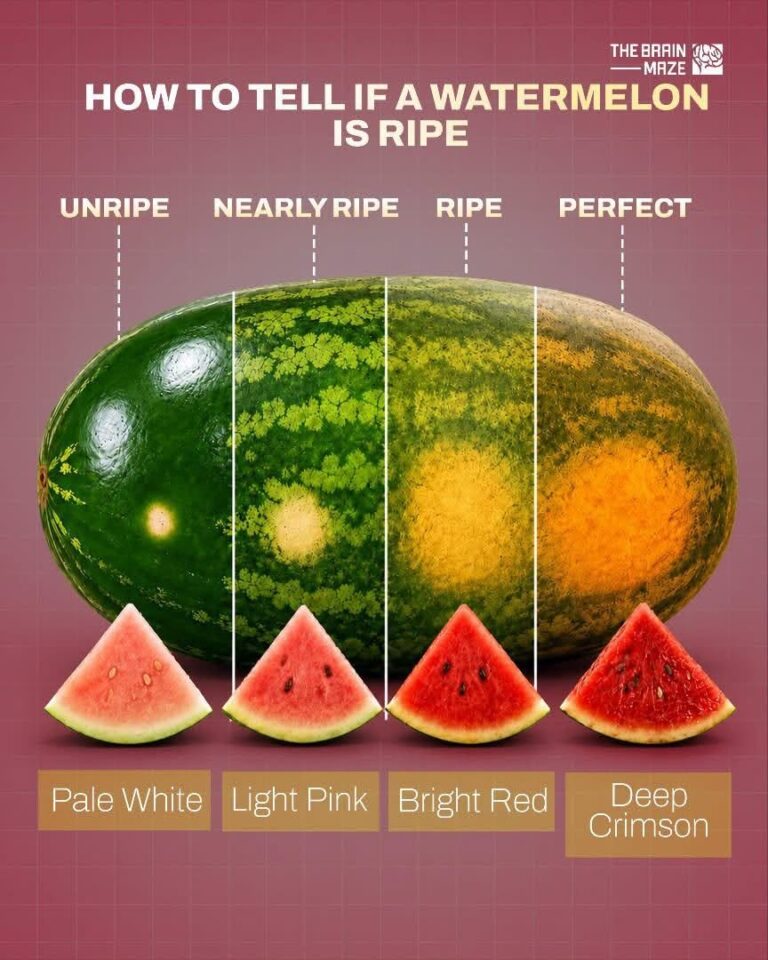
A helpful infographic titled “HOW TO TELL IF A WATERMELON IS RIPE” shows the progression of a watermelon’s ground spot (or field spot)—the underbelly spot where the melon rested on the dirt while growing in the field.
As watermelons mature on the vine, this field spot changes color from pale white to a deep golden yellow, signaling maximum sweetness and full internal ripeness.
Here is a full breakdown of how to identify a perfectly ripe watermelon using field spot colors, hollow sound tests, and essential fruit selection tips.
The 4 Stages of Watermelon Ripeness
The visual guide illustrates how the outer field spot directly correlates to the internal color and sweetness of the flesh:
+-----------------------------------------------------------------------------------+
|                        WATERMELON RIPENESS IDENTIFICATION TABLE                   |
+---------------+----------------------------+--------------------------------------+
| Ripeness Level| Field Spot Appearance      | Internal Flesh Color & Quality       |
+---------------+----------------------------+--------------------------------------+
| Unripe        | Small, pale white spot     | Pale white flesh; dry, sour flavor   |
| Nearly Ripe   | Light cream / pale yellow  | Light pink flesh; mild, subtle sweet |
| Ripe          | Bright creamy yellow       | Bright red flesh; sweet and juicy    |
| Perfect       | Rich golden-orange yellow  | Deep crimson flesh; peak sweetness   |
+---------------+----------------------------+--------------------------------------+
1. Unripe (Pale White Field Spot)
- Field Spot: Small, faint, and pale white.
- Internal Quality: Pale white to soft pink flesh. The melon was picked off the vine far too early and will taste watery, crunchy, and bland.
2. Nearly Ripe (Light Cream Spot)
- Field Spot: Faint yellow or off-white cream color.
- Internal Quality: Light pink flesh. While edible, it lacks the deep sugars and vibrant juice of a fully mature melon.
3. Ripe (Bright Creamy Yellow)
- Field Spot: Distinct bright yellow spot.
- Internal Quality: Bright red, crisp flesh. This melon is sweet, juicy, and ready for immediate consumption.
4. Perfect (Rich Golden Yellow)
- Field Spot: Large, deep golden-yellow or orange-tinged spot with webbing.
- Internal Quality: Deep crimson flesh packed with maximum natural sugars, aroma, and rich flavor.
3 Additional Pro-Tips for Picking the Best Watermelon
While checking the field spot is the most reliable method, pairing it with these classic techniques guarantees success:
- Look for Sugar Webbing: Brown, thread-like web patterns on the skin indicate where bees pollinated the blossom. More webbing usually signifies a sweeter melon.
- The Tap Test (Hollow Sound): Give the watermelon a firm tap with your knuckles. A deep, hollow, deep-toned sound means the melon is full of juice, whereas a dull or flat thud indicates an under-ripe or dry interior.
- Feel the Weight: Pick up two melons of equal size. Always choose the heavier one, as water density accounts for the majority of a watermelon’s juiciness and flavor.
Financial Impact: Getting Maximum Value at the Produce Market
Watermelon is one of the most cost-effective bulk fruits available during peak summer harvesting seasons:
- High Yield per Dollar: A whole 15-pound watermelon yields dozens of servings for under $8, making it a budget-friendly option for family gatherings and meal prep.
- Zero Produce Waste: Selecting a perfectly ripe melon ensures every slice gets eaten, preventing wasted money on bland or inedible produce.
Fascinating Facts About Watermelons
- 100% Edible: Every part of a watermelon is edible, including the nutrient-dense rind (often pickled or stir-fried) and the seeds (rich in magnesium and healthy fats).
- Hydration Powerhouse: Watermelons are composed of approximately 92% water, making them one of the most hydrating natural foods in existence.
Conclusion: Sweet, Perfect Fruit Every Time
By paying close attention to a rich golden field spot, heavy weight, and a hollow tap sound, you can confidently select the sweetest, deepest crimson watermelon every single time.
Frequently Asked Questions
Q1: Do watermelons continue to ripen after being picked?
A1: No. Unlike bananas or tomatoes, watermelons stop ripening the moment they are severed from the vine. Their sugar content will not increase after harvest.
Q2: What causes the white or yellow spot on a watermelon?
A2: The field spot (or ground spot) is the resting area on the bottom of the watermelon that was touching the dirt while growing on the vine shielded from sunlight.
Q3: What does a shiny skin on a watermelon mean?
A3: A shiny exterior usually means the watermelon is under-ripe. Ripe, sweet watermelons typically feature a duller, matte-finish rind.
Q4: Are seedless watermelons naturally genetically modified?
A4: No. Seedless watermelons are created through natural cross-breeding of two watermelon plants with different chromosome numbers, similar to a mule.
Q5: How long does a whole unopened watermelon last at room temperature?
A5: A whole, uncut watermelon can last up to 7 to 10 days at room temperature out of direct sunlight, or up to 2 weeks in a cool refrigerator.
