
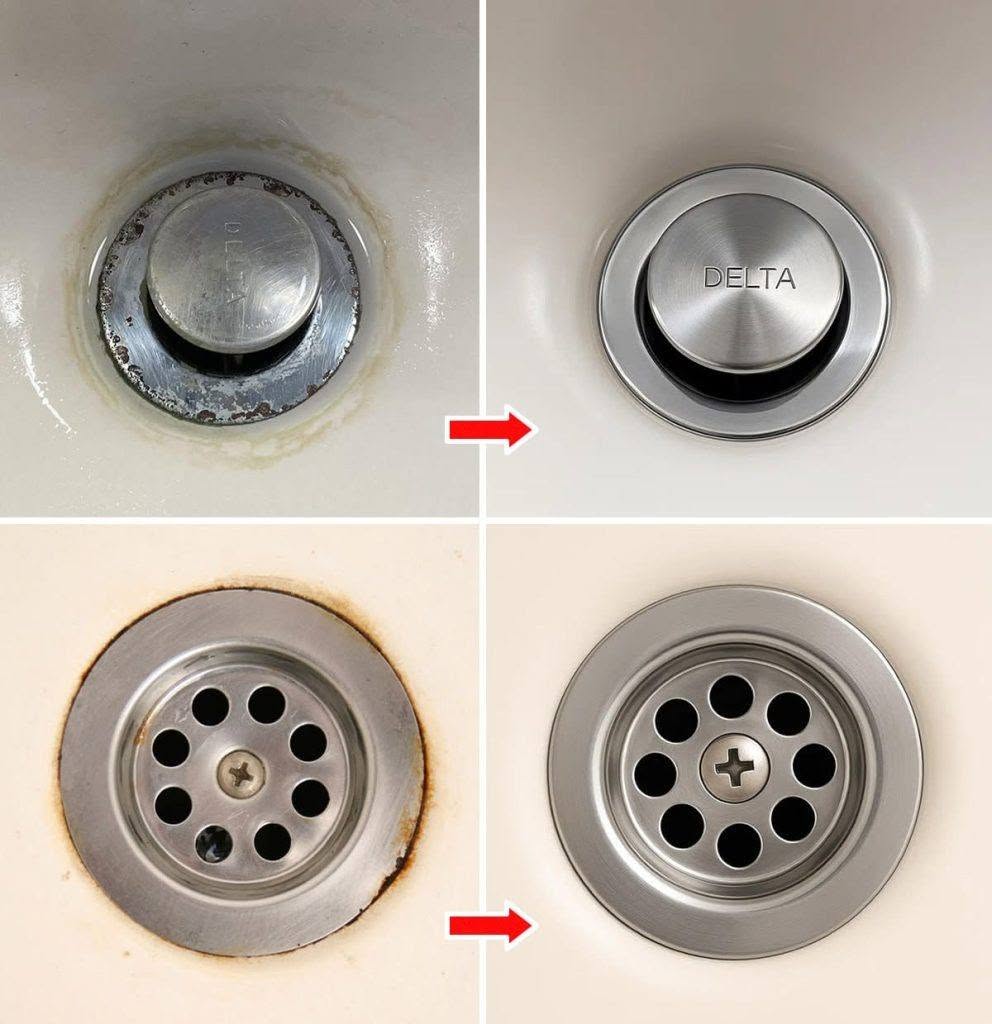
Over time, minerals, soap scum, rust, and hard water deposits build up around bathroom and kitchen sink drains. These unsightly dark rings can make even the cleanest sink look dirty and neglected.
A dramatic before-and-after image shows two sink drains—one pop-up Delta drain and one standard perforated drain—transformed from stained, corroded surfaces into spotless, gleaming fixtures.
The good news is that restoring these metal rims doesn’t require harsh, corrosive chemicals or replacing the drain assembly. With simple household ingredients like white vinegar and baking soda, you can safely dissolve mineral crusts and rust.
Here is a full step-by-step cleaning guide, preventive maintenance tips, and alternative methods for sparkling clean drains.
What Causes Stains Around Sink Drains?
Understanding the root cause of drain discoloration helps you choose the right cleaning method:
+-----------------------------------------------------------------------------------+
|                        SINK DRAIN STAIN TYPES & SOLUTIONS                         |
+-------------------+----------------------------+----------------------------------+
| Stain Type        | Primary Cause              | Best Removal Solution            |
+-------------------+----------------------------+----------------------------------+
| Hard Water Scale  | Calcium & magnesium deposits| White vinegar (mild acid)        |
| Rust / Iron       | Oxidation & mineral water  | Lemon juice & salt / Bar Keepers |
| Soap Scum         | Fatty acids mixed with soap| Baking soda paste & stiff brush  |
+-------------------+----------------------------+----------------------------------+
- Hard Water Deposits (Limescale): Water containing high levels of calcium and magnesium evaporates, leaving behind tough, white-to-brown mineral crusts around the rim.
- Rust and Oxidation: Constant exposure to moisture causes metallic components, worn chrome plating, or iron-rich water to oxidize, forming dark red or black rings.
- Soap Scum Build-up: Residual body wash, hand soap, and oils combine with minerals to trap dirt in hard-to-reach crevices.
Step-by-Step Guide: The Natural Vinegar & Baking Soda Method
This safe, budget-friendly method uses gentle acidity to dissolve mineral buildup without dulling sink porcelain or stainless steel.
1. Soak a Cloth in White Vinegar
Distilled white vinegar contains acetic acid, which breaks down mineral bonds. Saturate a paper towel or microfiber cloth thoroughly with warm white vinegar.
2. Wrap Around the Drain Rim
Pack the soaked paper towel tightly around the circumference of the metal drain rim where stains are worst. Let it sit undisturbed for 30 to 60 minutes.
3. Sprinkle Baking Soda & Scrub
Remove the soaked cloth and sprinkle a generous layer of baking soda over the wet surface. Use an old toothbrush or a stiff-bristled nylon detail brush to scrub in circular motions.
4. Rinse and Polish Dry
Rinse thoroughly with warm water. Wipe the metal flange dry with a clean microfiber towel to reveal a mirror-like shine.
Pro-Tips for Tough Rust or Heavy Corrosion
For stubborn stains that won’t budge with vinegar alone:
- Use Bar Keepers Friend: Formulated with oxalic acid, this gentle cleanser specifically targets tough rust spots on stainless steel and porcelain.
- Avoid Steel Wool: Never use abrasive steel wool or wire brushes on chrome-plated fixtures, as they leave microscopic scratches that accelerate future rusting.
Financial Impact: Restoring vs. Replacing Sink Hardware
Deep cleaning your existing fixtures yields impressive aesthetic upgrades on a micro-budget:
- Massive Cost Savings: A simple vinegar-and-baking-soda soak costs less than $1, saving $150 to $300 in plumbing labor fees to replace a drain flange.
- Protects Appliance Lifespan: Regular descaling prevents mineral corrosion from eroding rubber gaskets, extending the seal life of your sink.
Fascinating Facts About Hard Water & Household Cleaning
- Hard Water Prevalence: Over 85% of homes in the United States have hard water, making limescale removal one of the most common home maintenance tasks.
- Chemical Reaction Power: Combining acidic vinegar with alkaline baking soda creates carbon dioxide gas bubbles, which physically lift trapped grime from tight seams.
Conclusion: Bring the Shine Back to Your Sink
With an hour of dwell time and simple kitchen staples, you can eliminate stubborn drain rings and keep your bathroom or kitchen fixtures looking brand new.
Frequently Asked Questions
Q1: Can vinegar damage chrome or stainless steel sink drains?
A1: Brief exposure (under 1 hour) is completely safe for chrome and stainless steel. Avoid leaving acidic cleaners on delicate oil-rubbed bronze or brass finishes for extended periods.
Q2: Why does the dark stain return around my sink drain?
A2: Stains return as hard water evaporates daily. Wiping the drain area dry after use dramatically reduces mineral accumulation over time.
Q3: How do you clean hard water spots out of a pop-up stopper?
A3: Unscrew or pull out the pop-up stopper assembly, soak it in a bowl of warm white vinegar for 30 minutes, scrub with a brush, and rinse clean.
Q4: Is bleach effective for removing hard water scale?
A4: No. Bleach sanitizes and lightens organic mold, but it does not break down inorganic mineral deposits like calcium or iron rust.
Q5: What brush is best for cleaning tight drain crevices?
A5: A firm-bristled toothbrush or dedicated electric detail brush works best for reaching narrow grooves around drain seals.
