
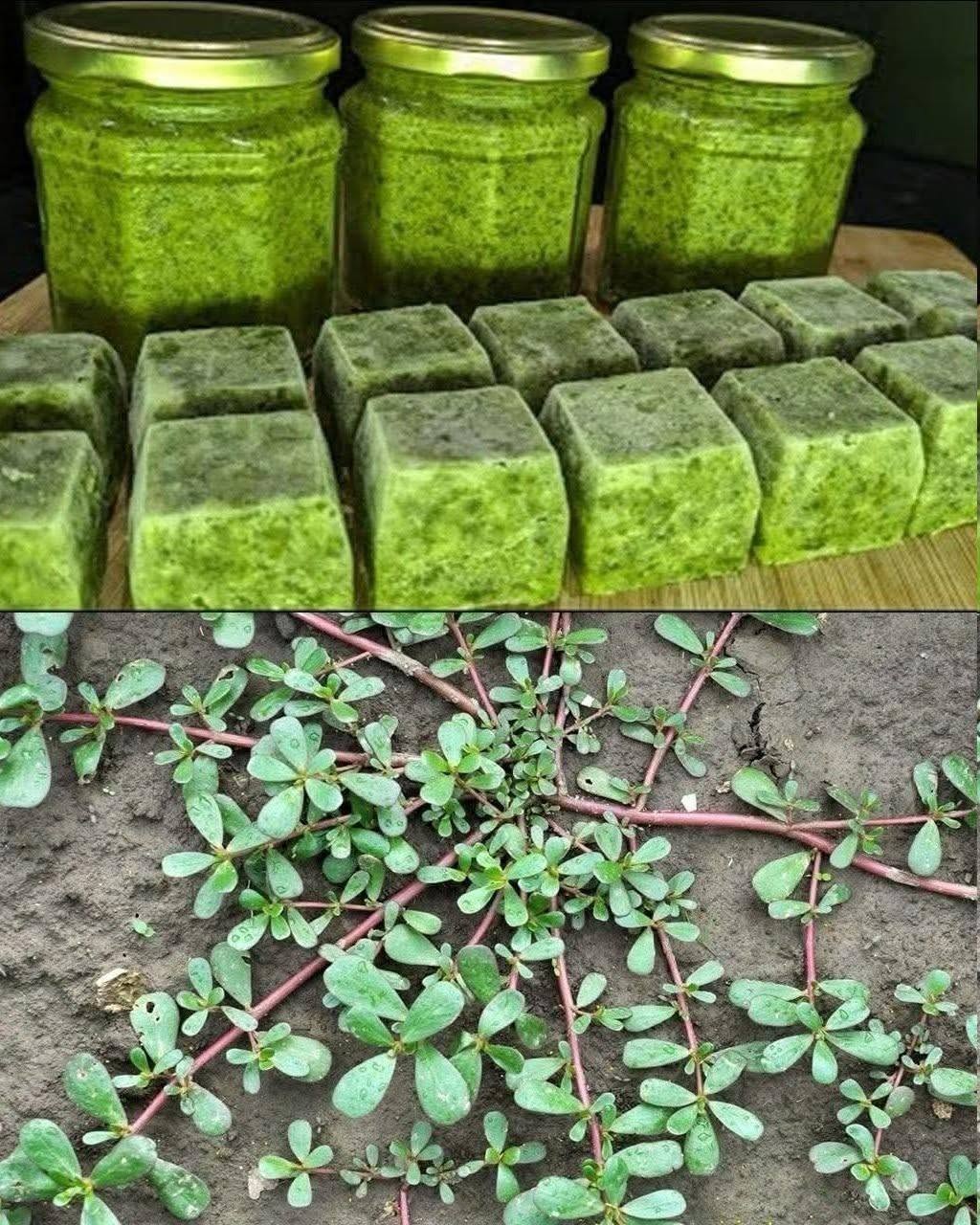
Often dismissed as an invasive backyard weed, purslane (Portulaca oleracea) is actually one of the most nutritious wild greens on the planet. For centuries, traditional Mediterranean, Asian, and Mexican cuisines have celebrated purslane for its crisp, succulent leaves, slightly tangy flavor, and exceptional nutritional profile.
Rather than pulling purslane and throwing it away, home gardeners and food enthusiasts are learning how to harvest, preserve, and prepare this resilient plant in delicious ways, such as freezing green pesto cubes or preserving purees in glass jars for year-round culinary use.
In this comprehensive guide, we explore the nutritional science behind purslane, provide a step-by-step preservation guide, review culinary uses, discuss critical identification and safety guidelines, and share financial considerations for wild foraging.
Nutritional Profile: Why Purslane Is a Superfood
Purslane stands out among leafy greens due to its impressive concentration of essential fatty acids, vitamins, and minerals.
+-----------------------------------+-----------------------------------+-----------------------------------+
| Key Nutrient                      | Nutritional Role                  | Health Benefit                    |
+-----------------------------------+-----------------------------------+-----------------------------------+
| Alpha-Linolenic Acid (Omega-3)    | Essential plant-based fatty acid  | Supports heart & brain health     |
| Vitamin A (Beta-Carotene)         | Powerful fat-soluble antioxidant  | Supports vision & skin integrity  |
| Vitamin C (Ascorbic Acid)         | Immune system support             | Fights oxidative cellular damage  |
| Magnesium & Potassium             | Essential macro-minerals          | Regulates muscle & nerve function |
+-----------------------------------+-----------------------------------+-----------------------------------+
1. Highest Plant Source of Omega-3 Fatty Acids
Purslane contains higher levels of alpha-linolenic acid (ALA)—an essential omega-3 fatty acid—than almost any other leafy green vegetable. Regular intake of ALA helps support cardiovascular wellness and reduces systemic inflammation.
2. High Antioxidant Content
Packed with vitamins A, C, and E, along with plant pigments like betalains, purslane helps protect cellular structures from free radical damage.
How to Preserve Purslane: Pesto and Frozen Cubes
Preserving purslane at peak freshness allows you to enjoy its nutritional benefits well beyond its summer growing season.
Purslane Pesto Cubes
- Harvest & Wash: Collect fresh purslane stems and leaves. Wash thoroughly under cold water to remove dirt and grit.
- Blend: Place $4\text{ cups}$ of fresh purslane into a food processor with $2\text{ cloves}$ of garlic, $0.5\text{ cup}$ of olive oil, $0.25\text{ cup}$ of toasted nuts (pine nuts or walnuts), and a pinch of salt. Blend until smooth.
- Freeze: Portion the pesto into silicone ice cube trays and freeze until solid.
- Store: Transfer frozen green cubes into airtight freezer bags. Drop individual cubes directly into warm soups, sauces, pasta, or stir-fries for a quick nutrient boost.
Critical Foraging Safety: Purslane vs. Lookalikes
Before harvesting wild greens, ensuring proper plant identification is vital for health and safety.
+------------------------------------+-----------------------------------------------------------+
| Identification Feature             | True Purslane (*Portulaca oleracea*)                      |
+------------------------------------+-----------------------------------------------------------+
| Stem Structure                     | Thick, smooth, reddish-brown succulent stems              |
| Leaf Texture                       | Fleshy, paddle-shaped, tear-drop succulent leaves         |
| Plant Sap                          | Clear, watery juice inside broken stems                   |
| Toxic Lookalike Distinction        | **Hairy Spurge** has thin stems with milky white sap      |
+------------------------------------+-----------------------------------------------------------+
Toxic Lookalike Warning: Hairy Spurge
Always check the stem sap before eating wild plants. Toxic spurge species often grow alongside purslane but feature thinner stems that secrete a milky white sap when broken. True purslane always secretes clear juice.
Financial Considerations: Foraging vs. Grocery Shopping
Incorporating wild or cultivated purslane into your kitchen offers clear financial and dietary advantages.
- Zero Grocery Expense: Harvesting wild purslane from untreated garden beds provides fresh organic greens completely free of cost.
- Low-Maintenance Cultivation: Cultivated purslane seeds cost less than $3\text{ to }5$ per packet, requiring minimal water and thriving in nutrient-poor soils where other vegetables fail.
- Preservation Savings: Making homemade purslane pesto cubes costs a fraction of store-bought specialty herb pastes while locking in seasonal nutrition.
Practical Daily Tips for Enjoying Purslane
- Eat It Raw in Salads: Add young, tender leaves directly to fresh green salads or tomato-cucumber bowls for a refreshing, slightly lemony crunch.
- Sauté as a Spinach Substitute: Briefly sauté purslane stems in olive oil with garlic and lemon juice as a side dish, or mix it into omelets and frittatas.
- Harvest Before Flowering: Gather purslane early in the morning when leaves are most succulent and hold the highest moisture content.
Conclusion
Rather than treating purslane as an unwanted weed, recognizing its immense nutritional value turns garden maintenance into a rewarding harvest. Rich in plant-based omega-3s, vitamins, and antioxidants, purslane is a versatile, cost-free superfood. Whether enjoyed fresh in crisp summer salads or frozen into pesto cubes for winter cooking, this hardy green deserves a prime spot in your kitchen routine.
Frequently Asked Questions (FAQ)
1. Can you eat the stems of purslane or just the leaves?
Both the leaves and tender stems of purslane are completely edible and crisp. Older, thicker stems can be chopped finely or blended into soups and pestos.
2. What does purslane taste like?
Purslane has a mild, slightly salty, and tart or lemony flavor with a crisp, juicy texture similar to spinach or cucumber.
3. Is purslane high in oxalates?
Yes. Like spinach and swiss chard, purslane contains naturally occurring oxalates. Individuals prone to calcium-oxalate kidney stones should consume purslane in moderation or cook it lightly to reduce oxalate levels.
4. Is it safe to eat purslane from any backyard?
Only harvest purslane from yards or garden beds that have not been treated with chemical herbicides, pesticides, or lawn fertilizers, and avoid harvesting near busy roadsides where runoff occurs.
