
Food safety awareness is vital when preparing fresh produce at home. However, sensationally worded viral posts often exaggerate risks to cause unnecessary panic about everyday ingredients.
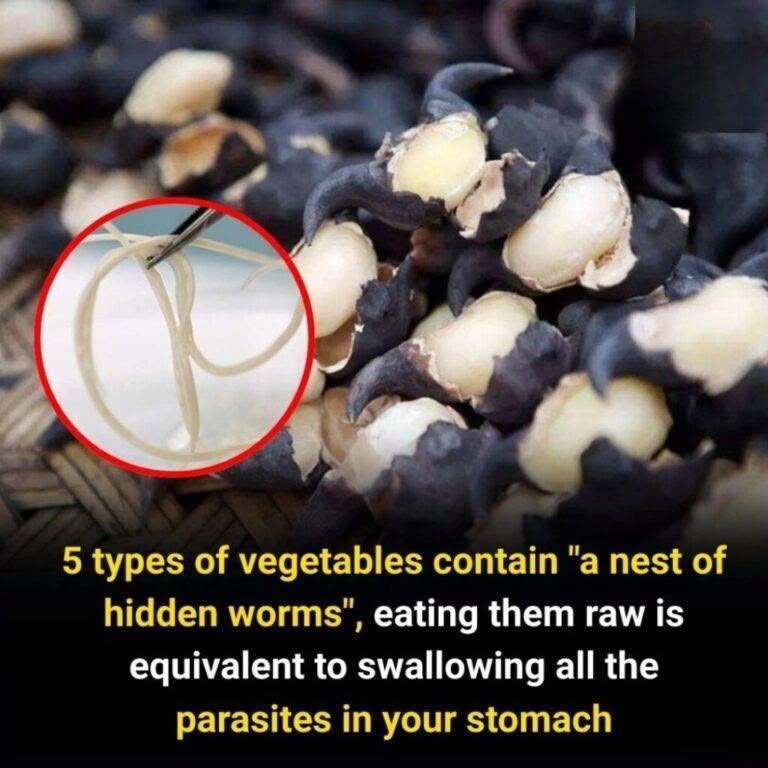
A viral social graphic shows dark horn-shaped water caltrops (often called water chestnuts) alongside a red circle inset displaying parasitic worms held by tweezers. The text overlay reads: “5 types of vegetables contain ‘a nest of hidden worms’, eating them raw is equivalent to swallowing all the parasites in your stomach”
While the claim of “a nest of worms” inside every vegetable is sensationalized sensationalism, aquatic plants and certain raw produce can indeed host microscopic parasitic cysts—most notably the giant intestinal fluke (Fasciolopsis buski)—if harvested from contaminated water and consumed unwashed or raw.
Here is a full breakdown of the real parasite risks associated with aquatic vegetables, how foodborne parasites spread, and essential food preparation safety steps.
The Real Parasite Risk Behind Aquatic Vegetables
+-----------------------------------------------------------------------------------+
|                        AQUATIC VEGETABLES & PARASITE RISKS                        |
+-------------------+----------------------------+----------------------------------+
| Vegetable Type    | Primary Parasite Threat    | Transmission & Risk Factor       |
+-------------------+----------------------------+----------------------------------+
| Water Caltrop     | Giant Intestinal Fluke     | Parasitic metacercariae cysts    |
| (Ling角 / Caltrop)| (*Fasciolopsis buski*)    | attach to outer skin in water    |
| Water Calamus /   | Fasciolopsis /             | Encrusted larvae ingested when   |
| Water Bamboo      | Liver Fluke encystment     | peeling raw skin with teeth      |
| Watercress        | Liver Fluke                | Wild stream harvesting near      |
|                   | (*Fasciola hepatica*)      | livestock grazing pastures       |
+-------------------+----------------------------+----------------------------------+
1. Water Caltrops and Water Chestnut Skins
The horn-like aquatic seeds featured in the image are water caltrops (Trapa natans). Because these plants grow in shallow, slow-moving ponds and marshy waters, their outer hulls can become encrusted with larval cysts (metacercariae) of the giant intestinal fluke (Fasciolopsis buski).
- The Hazard: Ingestion occurs when people peel the raw, tough outer skin using their teeth or fail to wash the nuts before cooking.
- The Solution: Cooking or boiling water caltrops completely destroys parasite larvae and makes the flesh safe to eat.
2. Watercress and Fresh-Water Greens
Wild watercress growing near agricultural livestock runoff can carry Fasciola hepatica (liver fluke) larvae attached to its stems and leaves. Consuming raw, unwashed wild watercress is a primary route of human liver fluke infection.
3. Soil-Borne Produce Contamination
Root vegetables (such as carrots, radishes, and taro) and low-lying leafy greens can carry soil-transmitted helminth eggs (such as Ascaris lumbricoides) if fertilized with untreated manure or washed with non-potable water.
How to Eliminate Parasite Risks from Produce
Preventing foodborne parasitic infections is straightforward with proper kitchen hygiene:
- Thorough Washing under Running Water: Wash all fresh fruits and vegetables thoroughly under clean, potable running water to dislodge surface dirt, eggs, and larvae.
- Never Peel Aquatic Produce with Your Teeth: Always use a clean metal knife or vegetable peeler to peel water caltrops, water chestnuts, or lotus roots.
- Cook Aquatic Vegetables Completely: Boiling, steaming, or stir-frying aquatic greens and water nuts for several minutes completely neutralizes any parasite larvae or bacterial pathogens.
- Avoid Raw Wild Stream Foraging: Do not gather wild watercress or aquatic greens downstream from pastures where cows, sheep, or pigs graze.
Financial Impact: Preventing Foodborne Medical Costs
Adopting simple produce safety habits protects both public health and household budgets:
- Avoiding Preventable Hospitalization: Parasitic infections like fasciolopsiasis cause abdominal pain, chronic diarrhea, and anemia, requiring expensive antiparasitic medications (such as praziquantel) and hospital visits.
- Safer Commercial Grocery Purchasing: Commercially farmed aquatic vegetables raised in regulated clean water reservoirs carry minimal parasite risks compared to unmonitored wild foraging.
Fascinating Facts About Parasite Biology
- Complex Life Cycle Requirements: Parasites like Fasciolopsis buski require fresh-water snails as intermediate hosts to multiply before releasing swimming larvae (cercariae) that attach to aquatic plants.
- The Power of Heat Neutralization: Parasitic encysted larvae are highly sensitive to heat and perish rapidly when exposed to temperatures above 140°F (60°C) during cooking.
Conclusion: Practice Food Safety Without Panic
While sensational headlines use alarming phrases like “a nest of hidden worms,” the real risk lies in consuming unwashed or raw aquatic plants harvested from contaminated water. Washing produce thoroughly and boiling aquatic vegetables completely removes all parasite dangers.
Frequently Asked Questions
Q1: What vegetable is shown in the image?
A1: The image features water caltrops (Trapa natans), a horn-shaped aquatic seed commonly cooked and eaten in Asian cuisine.
Q2: Can parasites live inside cooked vegetables?
A2: No. Proper cooking (boiling, steaming, or frying above 140°F / 60°C) completely kills parasitic cysts, eggs, and larvae.
Q3: How do people catch giant intestinal flukes from water plants?
A3: People contract the parasite by eating raw aquatic plants or peeling the raw hulls of water caltrops/chestnuts with their teeth, swallowing encysted larvae.
Q4: Is vinegar or salt water enough to kill plant parasites?
A4: Soaking in salt water or vinegar helps loosen dirt and surface eggs, but thorough cooking is the only guaranteed way to eliminate encysted larvae.
Q5: Are store-bought water chestnuts safe to eat?
A5: Yes. Commercially processed, canned, or thoroughly washed and cooked store-bought water chestnuts are safe for consumption.
