
Every week, millions of households face the same daily kitchen dilemma: opening the refrigerator, grabbing a carton of eggs, and wondering whether they are still safe to cook. Eggs are one of the most versatile, nutrient-dense, and widely consumed foods in the world. Whether you rely on them for high-protein breakfasts, bake them into wholesome recipes, or use them as a staple for meal prep, knowing how to test their freshness is an essential kitchen skill. Consuming spoiled poultry products poses serious health risks, while throwing away perfectly fresh eggs inflates your household grocery budget unnecessarily.
Understanding food safety and kitchen economics goes hand in hand. Managing everyday household expenses effectively, protecting your health, and understanding consumer safety principles can safeguard both your family and your personal finances. In this comprehensive guide, you will learn the exact science behind the famous egg float test, additional ways to check freshness, how egg storage affects quality, and smart grocery practices to stretch your kitchen investment further.
The Science of Egg Freshness: Why Do Eggs Float?
To understand why the water float test works, it helps to examine the natural anatomy of an egg. An eggshell is not completely solid; rather, it is semi-permeable, containing thousands of tiny microscopic pores. These pores allow oxygen to enter and carbon dioxide and moisture to escape over time.
When an egg is freshly laid, it contains a very tiny air pocket, known as the air cell, located at the wide end of the shell between the inner and outer membranes. As the egg ages:
- Moisture Evaporates: Water inside the egg gradually evaporates through the porous shell.
- Air Expansion: As fluid leaves, air flows inside to fill the empty space, causing the internal air cell to enlarge.
- Density Decreases: Fresh eggs are denser than water, causing them to sink. As the air pocket expands, the overall density of the egg decreases until it becomes lighter than the displaced volume of water, causing it to float.
Understanding this biological mechanism empowers you to immediately assess the relative age of your eggs without breaking the shell.
Step-by-Step Breakdown of the Egg Float Test
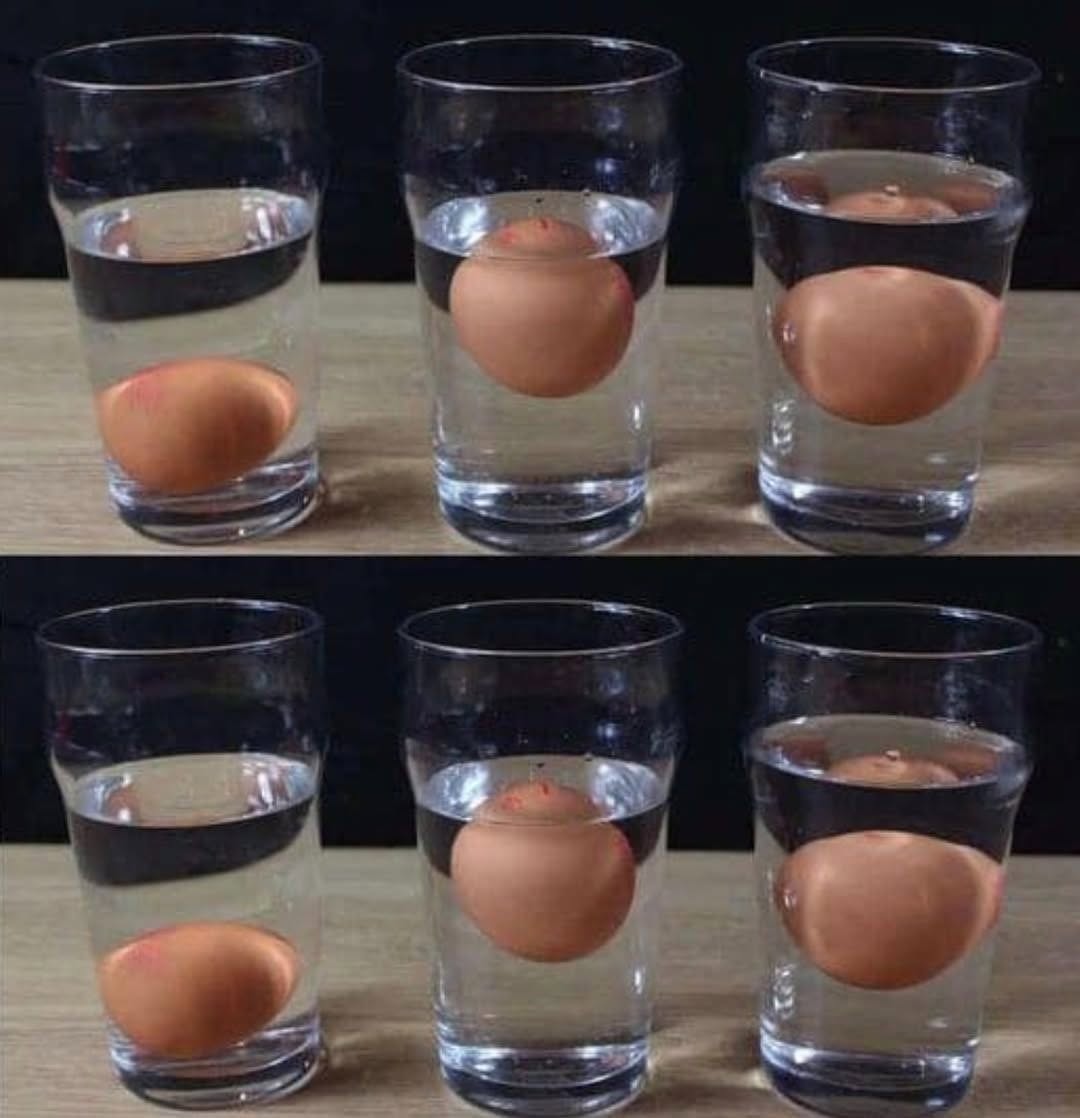
The water test is one of the simplest, most effective home experiments you can perform. All you need is a deep glass or bowl filled with cool tap water and the eggs in question. Gently place the egg into the glass and observe its position.
+-------------------+--------------------------------+----------------------------+
| Position in Water | Freshness Level                | Culinary Usability         |
+-------------------+--------------------------------+----------------------------+
| Sinks to Bottom   | Extremely Fresh (1-7 days)     | Ideal for all cooking types|
| Stands Upright    | Slightly Older (2-3 weeks)     | Perfect for hard-boiling   |
| Floats to Top     | Stale / Potentially Spoiled    | Discard immediately        |
+-------------------+--------------------------------+----------------------------+
1. The Egg Sinks Flat to the Bottom
If the egg sinks directly to the bottom of the glass and lies completely flat on its side, it is at peak freshness. The air pocket inside is minimal, and the egg contains maximum moisture content. These eggs are ideal for frying, poaching, or making sunny-side-up dishes where firm yolks and thick whites matter.
2. The Egg Stands Upright at the Bottom
If the egg rests on the bottom of the glass but tilts upward or stands straight on its pointed end, it is no longer brand new, but it is still completely safe and delicious to eat. This position indicates that the air pocket has grown slightly. Interestingly, eggs at this stage are actually superior for hard-boiling because the enlarged air cell makes peeling the shell significantly easier.
3. The Egg Floats to the Very Top
If the egg floats freely near the surface or sits at the top of the water line, it is old. While floating does not automatically mean the egg is infected with harmful bacteria, it indicates significant gas accumulation and fluid loss. To avoid foodborne illness or unpleasant odors, floating eggs should generally be discarded.
Alternative Ways to Test Egg Freshness
While the float test is remarkably accurate for checking physical density, you can use several other complementary methods to verify egg quality before cooking.
The Sniff Test
The most reliable indicator of a bad egg is smell. Spoiled eggs emit a sharp, sulfurous odor caused by hydrogen sulfide gas produced as organic compounds break down. If an egg smells off—whether raw in the shell, cracked open, or already cooking—discard it immediately.
The Plate and Crack Method
Crack the egg onto a flat white plate or bowl to visually inspect the yolk and egg white (albumen):
- Fresh Egg: The yolk is raised, round, and bright, while the surrounding egg white is thick, compact, and clings tightly around the yolk.
- Older Egg: The yolk is flatter, easily breaks, and the egg white is runny and liquid-like.
The Candling Method
Candling is an industry technique used by commercial distributors, health inspectors, and farm operations to assess internal quality. By holding an egg in front of a concentrated light source (such as a bright flashlight) in a dark room, you can clearly view the size of the air cell, the clarity of the white, and the position of the yolk without breaking the shell.
Health, Safety, and Consumer Protections
Ensuring food safety at home is directly tied to preventative health care and consumer safety guidelines. According to public health standards and medical guidelines, raw poultry products can harbor microorganisms like Salmonella enteritidis. Preventing contamination requires proper handling, temperature control, and awareness.
Symptoms of Foodborne Illness
Consuming undercooked or spoiled eggs contaminated with bacteria can lead to food poisoning. Common medical symptoms include:
- Severe abdominal cramping
- Nausea and vomiting
- Diarrhea and fever
- Dehydration
If symptoms persist or worsen, consulting a healthcare professional or medical specialist is vital. Practicing proper food safety is the most effective form of preventative health management in your kitchen.
How to Properly Store Eggs to Maximize Shelf Life
Extending the shelf life of your ingredients helps maintain household budget efficiency and reduces food waste. Implement these simple storage techniques to keep your eggs fresh as long as possible:
- Maintain Consistent Cold Temperatures: Refrigerate eggs at or below 40°F (4°C). Cold temperatures significantly slow bacterial growth and fluid evaporation.
- Keep Eggs in Their Original Carton: The cardboard or plastic carton protects eggs from absorbing strong odors from nearby foods (like onions or cheese) and prevents moisture loss.
- Store on Main Shelves, Not the Door: Avoid storing eggs in the built-in egg trays on the refrigerator door. The door experiences frequent temperature fluctuations every time it is opened, which speeds up egg spoilage.
- Orient Eggs Pointy-End Down: Storing eggs with the rounded end facing up keeps the air cell positioned at the top, helping the yolk stay centered and fresh.
Practical Kitchen Hacks for Leftover Whites and Yolks
When baking or cooking specialized meals, you may end up with unused egg parts. Managing food resources wisely minimizes kitchen waste and stretches your grocery investment.
- Freezing Whites: Egg whites freeze exceptionally well. Place whites in an ice cube tray, freeze until solid, then transfer them to an airtight freezer bag. They can last up to 12 months for future protein-packed omelets or meringue recipes.
- Preserving Yolks: Egg yolks can also be frozen, but they require slight preparation to prevent gelation. Whisk yolks with a pinch of salt (for savory dishes) or a touch of sugar (for baking) before freezing.
- Repurposing Eggshells: Cleaned eggshells are rich in calcium carbonate. You can crush them and mix them into garden soil to boost plant growth, feed backyard chickens, or add them to compost bins.
Surprising Facts About Eggs
- Shell Color Does Not Affect Quality: The color of an eggshell (white vs. brown) is determined entirely by the breed of the hen. It has no bearing on nutrition, flavor, or freshness.
- Natural Protective Coating: Freshly laid eggs feature a natural protective barrier called the “bloom” or cuticle, which seals the pores and prevents bacteria from entering. In many nations, commercial washing processes remove this layer, requiring refrigeration.
- Yolk Color Varies by Diet: The deep orange or bright yellow color of a yolk is driven by the hen’s dietary intake of carotenoids, found in yellow corn, alfalfa, and green plants.
Smart Household Economics: Managing Food Waste
Food waste represents a quiet tax on household finances. According to consumer economics research, average families lose hundreds of dollars annually discarding food prematurely. Learning simple verification methods like the float test directly supports better household financial health.
When consumers understand expiration dates—distinguishing between “Sell By,” “Best Before,” and actual spoilage—they make informed decisions that save money, support sustainable practices, and maximize their purchasing power.
Frequently Asked Questions (FAQ)
Can you cook and eat an egg that floats?
It is best to avoid eating floating eggs. While floating primarily indicates age rather than bacterial contamination, old eggs carry a higher risk of spoilage, loss of flavor, and structural degradation.
How long do fresh eggs last in the refrigerator?
When stored properly in their original carton at or below 40°F (4°C), raw shell eggs typically remain high quality for 3 to 5 weeks past the pack date or sell-by date.
Does the float test work on hard-boiled eggs?
No, the float test is designed specifically for raw, intact eggs. The boiling process alters the internal structure and moisture balance, rendering the float test unreliable for cooked eggs.
Why do store-bought eggs require refrigeration in the US?
In the United States, commercial eggs are thoroughly washed to eliminate potential surface pathogens. This process removes the natural protective cuticle, making refrigeration necessary to block bacteria from penetrating the porous shell.
Conclusion
Understanding how to quickly evaluate the freshness of your food is an invaluable daily skill that protects your health, elevates your cooking, and guards your wallet against unnecessary food waste. The water float test offers a quick, scientifically backed method to determine whether an egg is at peak freshness, perfect for boiling, or ready for the trash. By combining this simple test with proper cold storage practices, you can confidently cook delicious, safe, and nutritious meals for your household every single day.
