
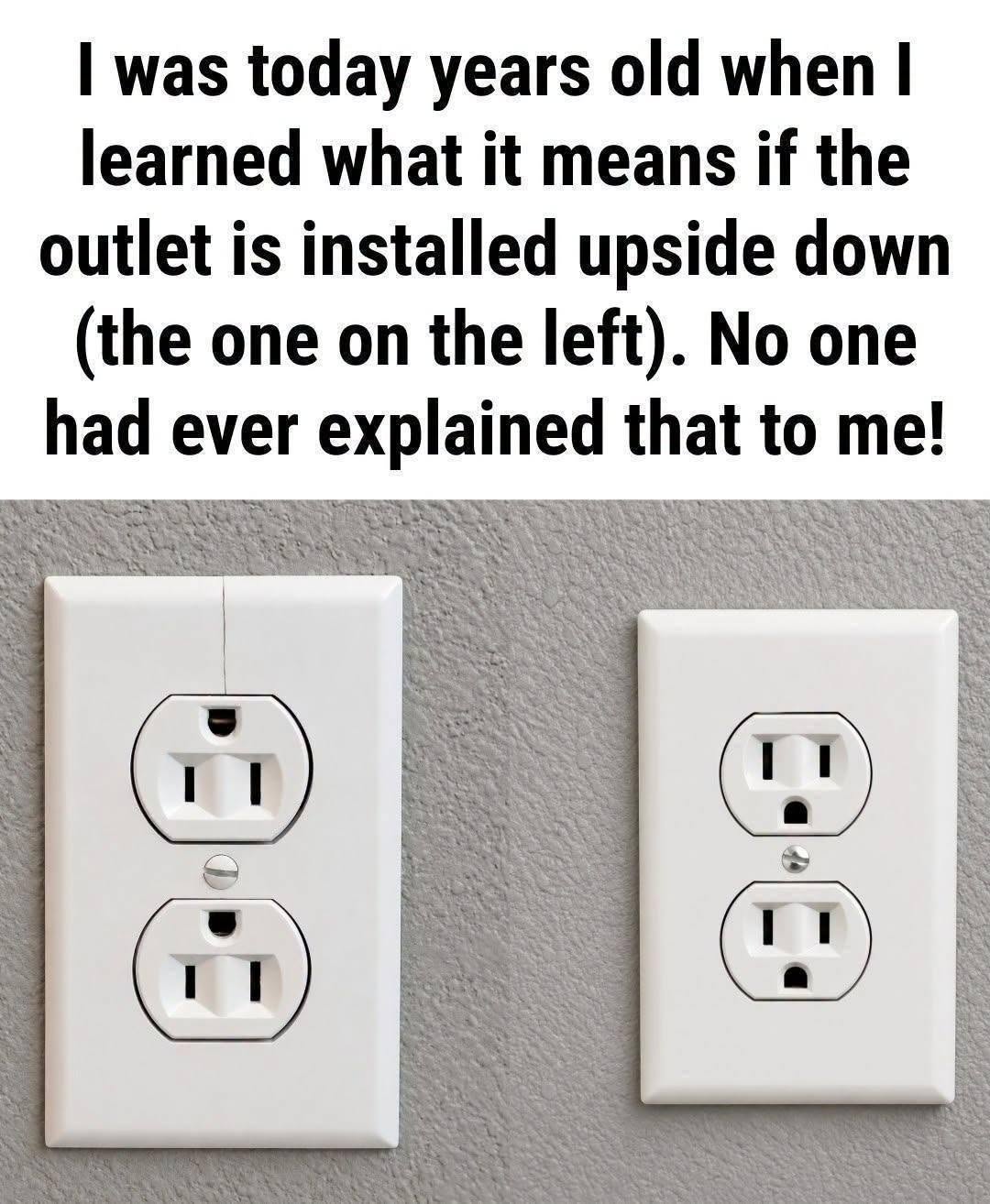
Every day, we interact with the basic infrastructure of our homes without giving it a second thought. We plug in our smartphones, turn on lamps, and power appliances by blindly pushing plugs into wall sockets. Yet, have you ever looked closely at the orientation of your electrical outlets? While most standard wall receptacles are installed with the ground pin pointing downward, you will occasionally spot one installed completely upside down, with the ground pin pointing straight up.
This unusual configuration often sparks curiosity and viral online debate. Is it simply a careless mistake by a distracted electrician, or is there a clever, safety-driven reason behind it?
Exploring the mechanics of everyday household items reminds us how precision and forethought protect us from hazards. Just as understanding your home’s electrical setup ensures safety, making smart, structured decisions in other aspects of life requires careful planning. Whether you are reviewing insurance policies, evaluating mortgage options, consulting a legal professional, or organizing your personal finances, paying attention to the functional details always matters.
Let’s uncover the real reason why some outlets are installed upside down, and what it reveals about safety and building codes.
The Engineering and Purpose of Upside-Down Outlets
Electrical safety is paramount in residential and commercial construction. Standard duplex receptacles feature two slots for current (hot and neutral) and a rounded grounding hole. Traditionally, outlets were installed with the ground pin at the bottom, mimicking a face-like appearance. However, the decision to flip the outlet upside down is rarely arbitrary.
H3: The Safety Advantage of Ground-Pin-Up Orientation
Why would an electrician or homeowner choose to install an outlet upside down? The primary reason is safety, specifically regarding dropped metal objects.
- Preventing Short Circuits from Falling Objects: Imagine a scenario where a plug is partially pulled out of an outlet, leaving the prongs slightly exposed. If a metallic object—such as a coin, a piece of jewelry, a paperclip, or a stray wire—falls down from above, it could potentially bridge the gap between the live hot and neutral prongs, causing a short circuit, sparks, or even an electrical fire.
- The Role of the Ground Pin: When the outlet is flipped upside down (ground pin on top), any falling metallic object hits the top ground pin first. Since the ground pin is safely connected to the building’s grounding system, it prevents the object from making contact with the live current-carrying prongs, neutralizing the hazard.
- Building Codes and Commercial Standards: While the National Electrical Code (NEC) in the United States does not explicitly mandate a specific orientation for standard residential outlets, certain institutional buildings, hospitals, and commercial facilities specify ground-pin-up installations as an extra layer of safety.
H3: Common Misconceptions and Internet Myths
On social media, images of upside-down outlets frequently circulate with viral captions claiming they indicate specialized circuits, controlled switch-wiring, or hidden home automation features. While an upside-down outlet can sometimes be used by electricians to visually designate a switched outlet (where a wall switch controls half the receptacle), its primary safety justification remains the protection against falling conductive objects.
H2: Practical Safety and Risk Management in the Home
The design choices behind electrical fixtures highlight a broader principle of proactive risk mitigation.
H3: Minimizing Household Hazards
Home safety extends far beyond electrical wiring. Just as installing an outlet correctly prevents accidents, maintaining a safe living environment requires a multi-layered approach:
- Electrical and Fire Safety: Regularly inspect cords for fraying, avoid overloading circuits, and ensure smoke detectors are fully operational.
- Insurance Coverage: Protecting your home against unexpected disasters—such as electrical fires, storms, or structural damage—requires robust property and homeowners insurance policies.
- Mortgage and Home Equity Management: Keeping your home infrastructure up to date also preserves its property value, which is vital when managing a mortgage or home equity line of credit.
H3: Professional Standards and Compliance
When performing electrical upgrades or home renovations, relying on certified professionals ensures that all installations comply with local building codes. Attempting DIY electrical work without proper knowledge can lead to severe code violations or safety hazards, making it wise to consult licensed electricians or legal professionals when undertaking major property modifications.
H2: Interesting Facts About Electricity and Household History
- The Invention of the Standard Plug: The parallel-blade electrical plug and receptacle system used in North America was invented in the early 20th century, drastically reducing the reliance on unsafe screw-in lightbulb sockets for household appliances.
- The Ground Pin’s Evolution: The third prong (the ground pin) was introduced to standard household plugs decades after the initial two-prong design to provide a safe pathway for electricity to escape into the earth in the event of an internal fault, preventing user electrocution.
- Global Variations: Different countries utilize entirely different socket standards—such as Type G in the UK or Type C and E in Europe—each engineered with unique safety shutters and configurations to protect users from accidental shocks.
Conclusion: Appreciating Functional Design
The upside-down electrical outlet is a subtle reminder that small details in home construction often serve a vital purpose. Whether it is designed to prevent a short circuit from a falling coin or to indicate a switched receptacle, every element of electrical engineering is built around safety and reliability.
Just as your home requires careful infrastructure planning, managing your broader financial and legal well-being requires attention to detail. Whether you are reviewing insurance policies, securing a mortgage, or organizing your investments, staying informed ensures long-term security and peace of mind.
FAQ Section: Outlets, Safety, and Electrical Design
Q1: Are upside-down outlets illegal or against building code?
A1: No. In most jurisdictions, building codes do not dictate whether the ground pin must point up or down. Both orientations are completely legal and functional.
Q2: Why do hospitals often use upside-down outlets?
A2: Many hospitals and medical facilities install outlets ground-pin-up as an internal safety standard to minimize risks from partially unplugged medical equipment and falling metallic debris.
Q3: Does an upside-down outlet mean it is controlled by a light switch?
A3: Sometimes. Electricians occasionally use the upside-down orientation as a visual indicator to show that the outlet is half-controlled by a wall switch, though this is not a universal rule.
Q4: Why do articles about everyday trivia sometimes mention insurance, mortgages, and legal services?
A4: Content platforms often connect lighthearted curiosity topics with broader themes of home ownership, security, and practical life planning, helping readers explore professional services that support long-term stability.
Q5: Can I flip my own wall outlets upside down?
A5: While changing a faceplate is simple, altering electrical receptacles involves working with live wiring and carries a risk of shock. It is always recommended to hire a licensed electrician for any wiring modifications.
