
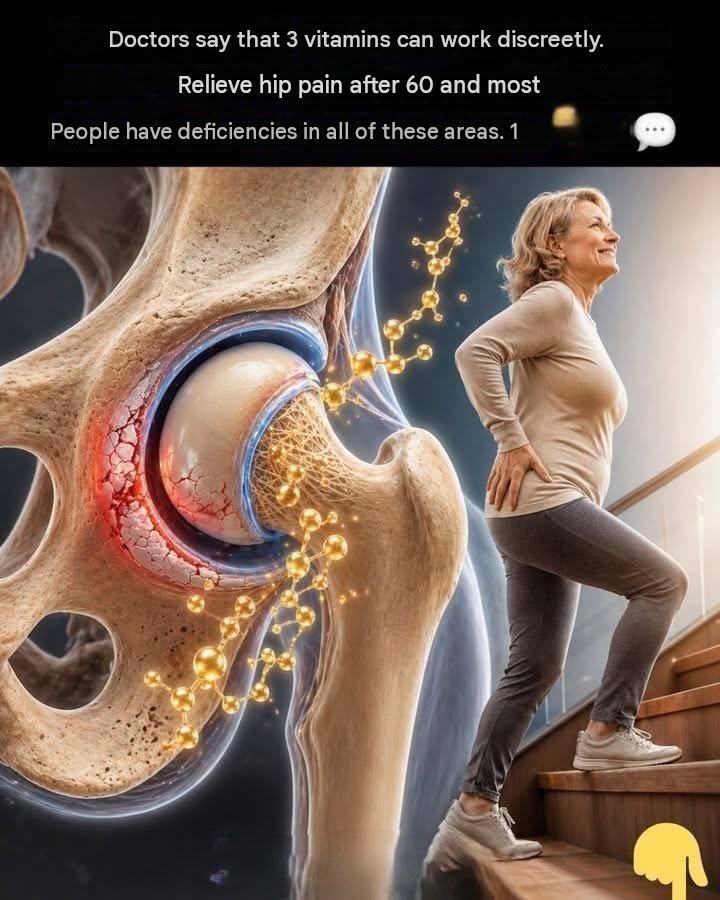
As men and women step into their 60s and beyond, maintaining mobility, joint flexibility, and bone strength becomes a top priority for overall life satisfaction. Hip pain is one of the most frequent complaints among older adults, often impacting simple daily movements like walking up stairs, bending down, or standing after sitting for extended periods. While age-related wear and tear is common, medical research consistently shows that underlying nutrient deficiencies play a significant, yet frequently overlooked, role in escalating joint discomfort and cartilage breakdown.
Addressing these nutritional gaps provides the body with the fundamental building blocks required to repair bone tissue, calm joint inflammation, and support smooth cartilage movement. In this detailed medical guide, we will explore the three essential vitamins crucial for relieving hip pain after 60, how they function inside the joint system, and practical ways to integrate them into your daily lifestyle.
Understanding Hip Pain and Joint Degradation After 60
The hip is one of the largest weight-bearing ball-and-socket joints in the human body. Over decades of constant movement, the cushioning cartilage that prevents bones from rubbing directly together naturally begins to thin.
Key Factors Contributing to Joint Discomfort
- Cartilage Breakdown: Gradual degradation of hyaline cartilage leads to friction, stiffness, and localized swelling within the joint capsule.
- Decreased Bone Mineral Density: Reduced calcium absorption weakens the surrounding bone structures, increasing the risk of micro-fractures and osteopenia.
- Chronic Systemic Inflammation: Low-grade systemic inflammation accelerates joint tissue breakdown and heightens pain sensitivity in nearby nerve endings.
- Nutritional Malabsorption: Aging reduces the digestive system’s efficiency in absorbing key vitamins and minerals from regular meals.
Recognizing these factors helps clarify why simply masking discomfort with temporary pain relievers rarely resolves the core issue. Restoring proper nutritional balance supports long-term structural health.
The 3 Key Vitamins That Support Joint and Hip Health
Medical specialists frequently highlight three specific micronutrients that work synergistically to support bone tissue, cartilage, and joint inflammation management.
+--------------------+----------------------------------+------------------------------------+
| Essential Vitamin  | Primary Joint Function           | Top Natural Food Sources           |
+--------------------+----------------------------------+------------------------------------+
| Vitamin D3         | Calcium absorption & bone density| Salmon, egg yolks, sunlight        |
| Vitamin K2         | Directs calcium into bones       | Fermented foods, hard cheeses      |
| Vitamin C          | Collagen synthesis for cartilage | Citrus fruits, bell peppers, berries|
+--------------------+----------------------------------+------------------------------------+
1. Vitamin D3 (Cholecalciferol): The Bone Building Catalyst
Vitamin D3 is fundamental for bone integrity. Without adequate levels of Vitamin D3, the human body can only absorb a small fraction of dietary calcium. When levels are deficient, the body extracts calcium directly from the bones, leading to weakened hip joints and an increased risk of structural damage.
- Bone Density Support: Keeps the femoral head and pelvic bone dense and resilient under physical pressure.
- Muscle Strength Support: Promotes stability in the surrounding hip muscles, reducing fall risks and uneven joint strain.
2. Vitamin K2 (Menaquinone): Directing Calcium to the Right Places
While Vitamin D3 enables calcium absorption into the bloodstream, Vitamin K2 acts as the traffic controller. It activates proteins like osteocalcin, which binds calcium directly into the bone matrix, while simultaneously preventing calcium from depositing into soft tissues or joint cartilage.
- Synergistic Action: Works alongside Vitamin D3 to ensure calcium strengthens bones rather than causing arterial stiffness or calcification in joint spaces.
- Cartilage Preservation: Protects delicate joint structures from unnatural calcium crystal buildup.
3. Vitamin C (Ascorbic Acid): Essential Collagen Synthesis
Cartilage is composed primarily of collagen fibers. Vitamin C is an indispensable co-factor in collagen synthesis, providing the structural elasticity and cushioning required for smooth hip joint movement.
- Potent Antioxidant: Neutralizes free radicals that cause oxidative damage within joint fluid.
- Tissue Repair: Accelerates the natural maintenance and repair of tendons, ligaments, and cartilage surrounding the hip joint.
Common Signs of Deficiency and High-Risk Factors
Many older adults suffer from silent deficiencies that gradually weaken joint integrity over time without presenting obvious early warning signals.
+---------------------------+-------------------------------------+-------------------------------------+
| Risk Factor               | Potential Impact on Joints          | Recommended Action                  |
+---------------------------+-------------------------------------+-------------------------------------+
| Limited Sunlight Exposure | Reduced Vitamin D3 synthesis        | Daily 15-min sun or supplement use  |
| Processed Diet Intake     | Lack of Vitamin K2 & C micronutrients| Increase whole, fermented foods     |
| Sedentary Lifestyle       | Reduced joint lubrication & density | Gentle, low-impact exercise daily   |
+---------------------------+-------------------------------------+-------------------------------------+
Signs You May Lack Joint-Essential Nutrients
- Persistent Morning Stiffness: Difficulty moving comfortably during the first 30 minutes after waking up.
- Deep Aching in the Groin or Outer Hip: Discomfort that intensifies following physical exertion or prolonged standing.
- Frequent Bone or Muscle Tenderness: Generalized soreness along weight-bearing joints and surrounding leg musculature.
- Slow Recovery Times: Extended soreness following routine activities such as gardening, walking, or climbing stairs.
Practical Tips for Restoring Nutrient Levels and Mobility
Restoring optimal nutrient levels requires a well-rounded strategy combining nutrient-dense nutrition, targeted supplementation, and appropriate daily movement.
1. Adopt a Nutrient-Rich Meal Plan
- Incorporate fatty fish such as wild salmon, mackerel, and sardines twice weekly for natural Vitamin D and omega-3 fatty acids.
- Add fermented foods like natto, kefir, and traditional aged cheeses to increase Vitamin K2 intake.
- Consume fresh, colorful vegetables such as broccoli, bell peppers, kiwi, and citrus fruits daily to supply generous amounts of Vitamin C.
2. Consider High-Quality Supplementation
Because acquiring sufficient Vitamin D3 and K2 solely through modern diets can be challenging, combining a Vitamin D3/K2 supplement is widely recommended by modern health practitioners. Always consult your primary care doctor to determine proper dosage tailored to your current blood levels.
3. Engage in Low-Impact Joint Exercises
Nutrients require physical movement to circulate effectively into joint cartilage, which lacks direct blood vessel connections.
- Swimming and Water Aerobics: Provides resistance without placing pressure on the hip joint.
- Stationary Cycling: Promotes smooth ball-and-socket rotation and joint fluid circulation.
- Targeted Stretching: Gently opens up tight hip flexors and gluteal muscles to relieve strain on the joint.
Health and Financial Security: Protecting Your Future
Taking proactive steps to preserve joint mobility after 60 directly impacts your personal independence and long-term financial stability. Chronic joint conditions often lead to substantial healthcare expenditures, including physical therapy bills, mobility equipment, expensive prescription drugs, and costly surgical interventions like total hip replacements.
+-----------------------------------+-----------------------------------+-----------------------------------+
| Approach                          | Preventive Wellness Care          | Late-Stage Medical Intervention   |
+-----------------------------------+-----------------------------------+-----------------------------------+
| Financial Investment              | Low monthly supplement & food cost| High out-of-pocket medical bills  |
| Impact on Daily Life              | High mobility & independence      | Restrictive pain & recovery time  |
| Long-term Asset Protection        | Preserves retirement savings      | Depletes medical insurance funds  |
+-----------------------------------+-----------------------------------+-----------------------------------+
By prioritizing daily nutritional intake, maintaining proper health insurance coverage, and managing personal wellness early on, individuals avoid unexpected financial strain. Protecting your health ensures that your hard-earned retirement assets and investments remain dedicated to enjoying a comfortable, active lifestyle.
Conclusion
Hip discomfort after 60 does not have to be an inevitable part of aging. By ensuring your body receives adequate levels of Vitamin D3, Vitamin K2, and Vitamin C, you provide your bones and joints with the essential tools required to repair tissue, suppress inflammation, and sustain smooth mobility.
Combining targeted nutritional choices with low-impact physical activity can help keep your joints healthy, allowing you to live an active, pain-free life for years to come.
Frequently Asked Questions (FAQ)
How long does it take to notice improvements in joint health with vitamins?
Nutritional support works gradually. While some individuals notice reduced stiffness and increased energy within 4 to 6 weeks, structural bone and cartilage benefits typically develop over 3 to 6 months of consistent nutrient intake.
Can I take Vitamin D3 without Vitamin K2?
While Vitamin D3 can be taken alone, combining it with Vitamin K2 is highly beneficial. Vitamin K2 helps guide the extra calcium absorbed via Vitamin D3 directly into your bones and teeth, preventing unwanted calcium buildup in arteries and joint spaces.
What is the best type of exercise for hip pain in seniors?
Low-impact exercises that do not pound the joints are ideal. Activities like swimming, water aerobics, stationary cycling, and guided yoga help build supporting muscle strength while maintaining joint flexibility without worsening friction.
Should I speak with a doctor before starting joint supplements?
Yes. It is always wise to consult a healthcare professional or doctor before introducing new supplements, especially if you take prescription medications such as blood thinners or have pre-existing kidney or cardiovascular conditions.
