
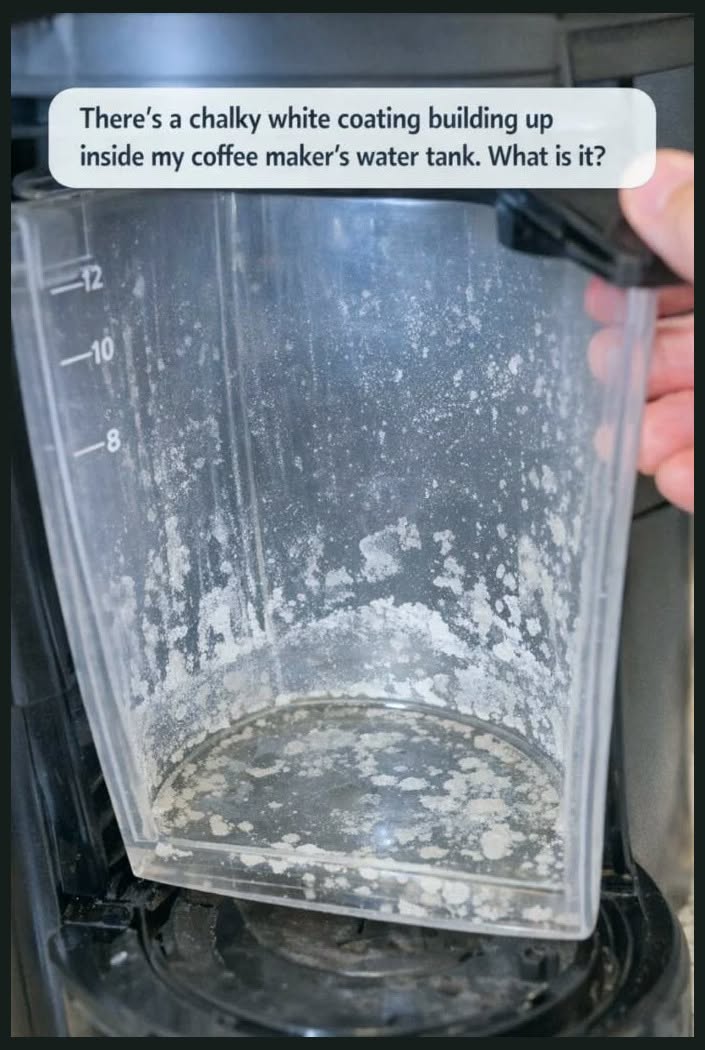
If you have ever noticed a persistent chalky white residue or flaky film coating the inside of your coffee maker’s water tank, you are not alone. This common issue affects millions of households and can make your morning brew taste bitter or flat, slow down brew times, and even cause machine breakdowns if left untreated.
The good news is that this white buildup is not mold, dirt, or deteriorating plastic. It is mineral scale, commonly known as limescale or hard water buildup.
In this complete appliance care guide, we will analyze what causes limescale, examine its effects on your coffee machine, review maintenance and cost considerations, and provide step-by-step instructions to clear it safely.
What Causes the White Chalky Coating?
Understanding mineral buildup is the key to preventing it from damaging your appliances.
1. Calcium and Magnesium Deposits
Tap water contains naturally occurring dissolved minerals, primarily calcium carbonate and magnesium. As water evaporates or gets heated inside the reservoir and internal heating elements, these minerals crystalize and settle on surfaces, forming a white, powdery residue.
2. Hard Water vs. Soft Water
Homes with “hard water”—water containing high mineral concentrations—will experience limescale buildup much faster. However, even moderate water supplies cause gradual mineral buildup over several months of regular use.
How Limescale Affects Your Coffee Machine
Ignoring mineral buildup inside your reservoir and internal heating lines leads to several operational problems:
- Altered Coffee Flavor: Mineral deposits change water pH and extract unwanted bitter tones from coffee grounds, impairing optimal flavor.
- Slower Brewing Speed: Limescale clogs small internal water lines and heating tubes, restricting water flow and making brew cycles take twice as long.
- Machine Failure and Overheating: Accumulated scale acts as an thermal insulator over heating elements, causing the machine to work harder, overheat, or burn out prematurely.
Financial and Maintenance Considerations
Taking care of your coffee maker protects your wallet and keeps appliances running longer.
- Descaling Costs: A basic descaling routine using household white vinegar costs less than $1 per cleaning. Specialized commercial descaling solutions cost $5 to $15 per bottle.
- Replacing vs. Maintaining: High-end drip coffee makers and espresso machines cost anywhere from $50 to $500+. Regular descaling every 1 to 3 months extends appliance lifespans significantly, avoiding costly replacements.
Step-by-Step Guide to Descaling Your Coffee Maker
Restoring your coffee maker’s water tank and internal heating lines requires just a few simple steps:
1. Mix a Descaling Solution
Fill the water reservoir with equal parts white distilled vinegar and clean water (or use a dedicated citric acid descaling solution per package instructions).
2. Run Half a Brew Cycle
Start a standard brew cycle without coffee grounds. Halfway through the cycle, turn off the machine and let the solution soak inside the internal tubes and reservoir for 30 minutes to break down tough calcium deposits.
3. Finish the Cycle and Rinse
Turn the machine back on to complete the brew cycle. Discard the hot vinegar solution, then run two to three full cycles with fresh, clean water to thoroughly rinse away any remaining vinegar smell or taste.
Practical Tips to Prevent Mineral Buildup
- Use Filtered Water: Pouring filtered or bottled spring water into your reservoir drastically slows down limescale formation compared to unfiltered tap water.
- Establish a Regular Schedule: Descale your machine every 30 to 60 days, or whenever you see visible white film appearing in the tank.
- Empty Remaining Water: Avoid leaving standing tap water in the reservoir for extended periods between uses.
Conclusion
The chalky white coating in your coffee maker is simply mineral limescale from your water supply. Performing routine descaling with a simple vinegar solution removes buildup, restores fast brewing speeds, and ensures your morning coffee tastes rich and fresh every day.
Frequently Asked Questions (FAQ)
Is limescale in my coffee maker harmful to consume?
No. Limescale consists of standard minerals like calcium and magnesium found in tap water. While it is not toxic, large flaking pieces can ruin the taste and texture of your coffee and degrade machine performance.
Can I use baking soda to descale my coffee maker?
No. Baking soda is an alkaline cleaner and can create a sludge inside small heating tubes, leading to clogs. Acidic solutions like white vinegar or citric acid are necessary to dissolve mineral scale effectively.
How often should I descale my coffee maker?
If you have hard water, descale your coffee maker once a month. For soft water areas, descaling every 2 to 3 months is sufficient to keep your machine operating smoothly.
