
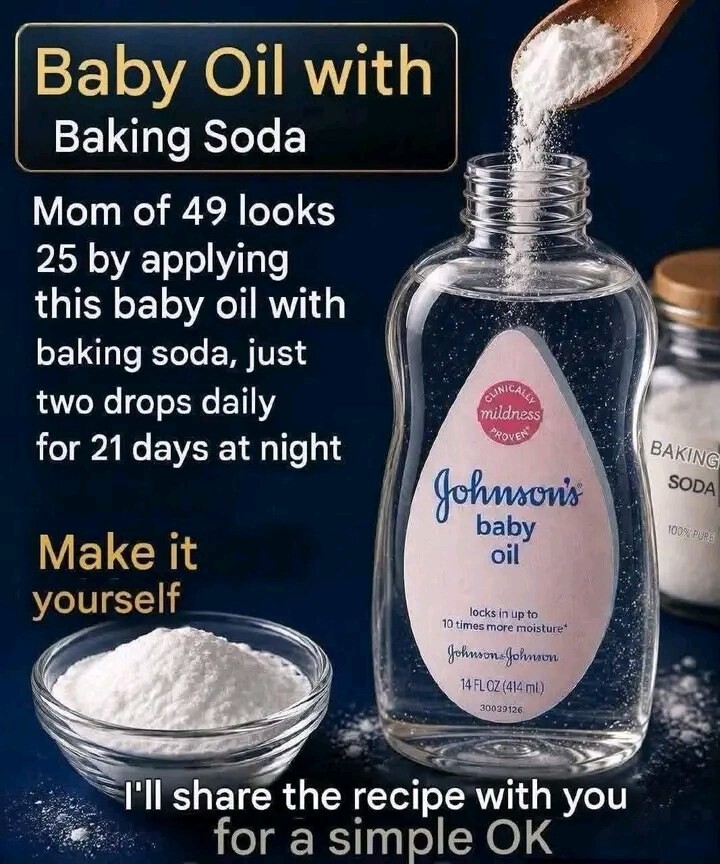
Viral skincare posts frequently promote home hacks combining baby oil and baking soda (sodium bicarbonate), claiming this simple mix can reverse aging, smooth wrinkles, and make mature skin look decades younger in just a few weeks. While DIY remedies can sound appealing and affordable, understanding how these ingredients interact with your skin barrier is critical before trying them.
While mineral oil-based baby oil offers surface hydration, mixing it with abrasive baking soda poses serious risks to long-term skin health.
In this comprehensive skincare breakdown, we will evaluate the claims behind this DIY remedy, examine dermatological risks, review cost-effective alternatives, and share safe tips for maintaining smooth, youthful skin.
Evaluating the Claims Behind Baby Oil and Baking Soda
Social media trends make bold promises about combining household pantry items for anti-aging results.
1. Baby Oil for Surface Moisture
- The Claim: Baby oil locks in deep moisture to plump fine lines and restore a youthful glow.
- The Reality: Baby oil is pure mineral oil, an occlusive agent that forms a seal over the skin to prevent moisture loss. While it softens dry skin, it does not contain anti-aging active ingredients like peptides or retinoids that rebuild collagen.
2. Baking Soda as an Exfoliants
- The Claim: Baking soda scrubs away dead skin cells and brightens hyperpigmentation instantly.
- The Reality: Baking soda is highly alkaline with a pH of around 9, whereas healthy human skin is naturally acidic (pH 4.5 to 5.5). Scrubbing facial skin with baking soda disrupts the protective acid mantle.
Dermatological Risks of Baking Soda on the Face
Applying baking soda directly to delicate facial skin can cause noticeable side effects:
- Disrupted Acid Mantle: Stripping the skin’s natural acidic barrier leaves skin vulnerable to severe dryness, redness, irritation, and bacterial infections.
- Micro-Tears and Irritation: The coarse crystalline structure of baking soda creates physical micro-tears on delicate facial skin, worsening sensitive conditions like rosacea or eczema.
- Clogged Pores: While baby oil is non-comedogenic for many, combining heavy mineral oils with disrupted skin barriers can trap bacteria and trigger breakouts.
Financial and Dermatological Considerations
Achieving healthy, radiant skin does not require risky viral DIY recipes.
- Low-Cost Formulated Exfoliants: Chemical exfoliants like lactic acid or glycolic acid serums cost under $10 and gently shed dead skin without damaging pH levels.
- Preventing Skin Damage Repair Costs: Avoiding harsh physical scrubs saves money on corrective dermatological treatments needed to restore stripped moisture barriers.
Practical Tips for Safe Anti-Aging Skincare
- Use Gentle Chemical Exfoliants: Swap harsh baking soda scrubs for gentle Alpha Hydroxy Acids (AHAs) or Beta Hydroxy Acids (BHAs) to smooth skin texture safely.
- Apply Broad-Spectrum Sunscreen Daily: Daily SPF usage remains the single most effective way to prevent premature aging, sun spots, and collagen breakdown.
- Hydrate and Seal Correctly: Apply water-based hyaluronic acid serums first to hydrate skin, followed by a gentle moisturizer or facial oil to seal in moisture.
Conclusion
While baby oil is a safe occlusive moisturizer for dry body skin, pairing it with abrasive baking soda disrupts your skin’s natural pH barrier and risks severe irritation. Stick to gentle, dermatologically tested ingredients for safe, lasting anti-aging results.
Frequently Asked Questions (FAQ)
Is baking soda safe to use on the face?
No. Dermatologists strongly advise against using baking soda on facial skin due to its high alkalinity (pH 9), which strips natural oils and damages the protective acid mantle.
Does baby oil clog pores?
Baby oil uses cosmetic-grade mineral oil, which is non-comedogenic for most people. However, its heavy occlusive nature can trap dead skin cells and sweat if applied to unclean or acne-prone skin.
What is the best alternative to baking soda for exfoliation?
Gentle chemical exfoliants like lactic acid or mandelic acid provide smooth, radiant skin by dissolving dead skin cells without scratching or irritating the surface.
