
Introduction
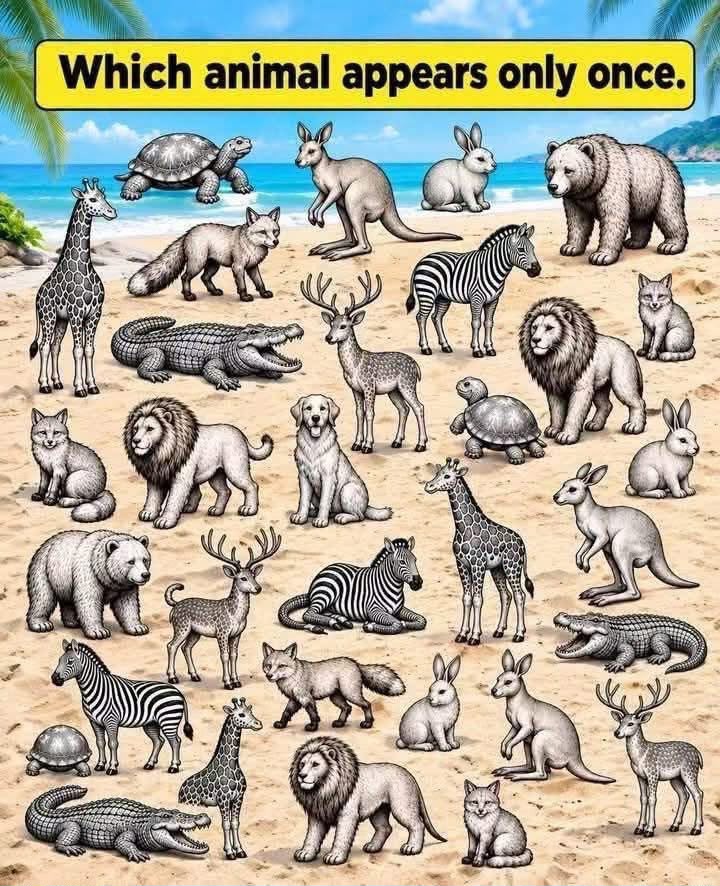
In the vibrant digital landscape of social media, engaging visual puzzles and “find the hidden object” challenges frequently capture public attention. When a user scrolls through their Facebook feed and encounters an intricate beach scene filled with various illustrated animals alongside the question “Which animal appears only once?”, comment sections instantly ignite with curiosity, friendly debate, and shared answers.
Why do visual counting and pattern puzzles hold such powerful appeal? Beyond serving as casual internet entertainment, picture-based challenges tap into our universal love for problem-solving, cognitive testing, and visual scanning. They challenge our observation skills and reward us with a satisfying sense of accomplishment when we successfully solve the puzzle.
However, understanding visual processing and cognitive agility extends far beyond social media fun. In professional sectors such as data analysis, quality assurance, graphic design, neurology, and user experience (UX) research, the ability to rapidly scan information and spot anomalies is critical. Whether a quality control inspector is reviewing production lines, a data analyst is identifying outliers, or a designer is evaluating interface layouts, visual discernment matters. In this comprehensive guide, we will explore the psychology of visual scanning, analyze how counting puzzles stimulate the brain, and discuss how mental exercises benefit cognitive longevity.
The Psychology Behind Visual Counting and Puzzle Challenges
When presented with a grid or scene containing multiple repeated elements, our brains must filter clutter to isolate unique items.
How Our Brains Process Repeating Patterns
- Visual Grouping and Categorization: The human brain naturally seeks patterns, grouping similar shapes, colors, or animal species together. When scanning the beach image, viewers quickly categorize the creatures—turtles, giraffes, kangaroos, bears, foxes, crocodiles, deer, zebras, lions, rabbits, and a dog.
- Elimination and Tallying: To find the sole unique animal, solvers typically count each species one by one, crossing them off mentally until they find the one that doesn’t match the group tally.
- The Solution Reveal: While most animals appear multiple times across the sandy landscape, a careful scan reveals that the dog (sitting near the center) appears only once, making it the unique answer to the puzzle.
Why Visual Puzzles Go Viral
Posts featuring counting or finding challenges thrive on social media because they create an interactive, low-stakes competition. Users eagerly comment with their answers, tag friends to test their focus, and share the post to see who can spot the unique item first.
Professional Applications in Data Analysis, Quality Assurance, and Design
While finding a lone animal in an illustrated beach scene is a fun online pastime, visual scanning and anomaly detection are foundational across professional fields.
Quality Assurance and Inspection
Professionals in manufacturing and software testing rely on sharp visual and structural attention to detail to detect defects, errors, or anomalies in real time.
Data Analysis and Statistics
Data analysts examine large datasets to spot statistical outliers—data points that deviate significantly from other observations, much like finding the single unique item in a visual puzzle.
Graphic Design and User Experience
Visual artists and designers use contrast, placement, and focal points to either draw attention to unique elements or create harmonious repeating layouts.
Practical Tips to Sharpen Your Visual Concentration
If you want to improve your observation skills and cognitive speed, incorporating a few simple habits can make a dramatic difference:
- Practice Puzzles Regularly: Engage with spot-the-difference games, hidden object puzzles, and visual counting challenges to keep your brain active.
- Systematic Scanning: Instead of randomly looking around an image, divide it into quadrants and scan methodically from top to bottom.
- Take Breaks to Reset: If your eyes feel fatigued while searching for a hidden detail, look away for a moment to reset your visual focus.
- Challenge Your Peers: Share puzzles with friends or coworkers to compare observation strategies and discuss different problem-solving methods.
Interesting Facts About Visual Cognition and Puzzles
- Cognitive Agility: Regularly challenging your brain with visual puzzles stimulates neural pathways, supporting sustained attention and mental flexibility as you age.
- The Power of Gamification: Content that asks simple, direct questions combined with visual puzzles consistently achieves massive organic engagement because it encourages immediate participation.
- Human Eye Mechanics: The human eye relies on rapid movements called saccades to jump across different points of an image, assembling a complete visual picture in fractions of a second.
Conclusion
Visual puzzles and finding challenges are much more than passing internet entertainment; they serve as delightful reminders of how actively our brains process complex environments. By challenging our visual focus and observation skills, we enhance our cognitive agility. Whether you are solving brain teasers online, analyzing complex data at work, or simply enjoying a moment of curiosity, keeping an active and observant mind is an invaluable asset. Stay curious, keep exploring, and enjoy the art of visual problem-solving!
FAQ Section
Which animal appears only once in the puzzle image?
The dog (located near the center of the image) appears only once, whereas all other animals shown appear multiple times.
What are the cognitive benefits of solving visual puzzles?
Regularly practicing visual puzzles helps improve attention to detail, pattern recognition, scanning speed, and overall cognitive flexibility.
Why do “find the unique item” posts perform so well on social media?
These posts invite immediate interaction, allowing users to test their skills, debate answers in the comments, and share the fun with friends.
