
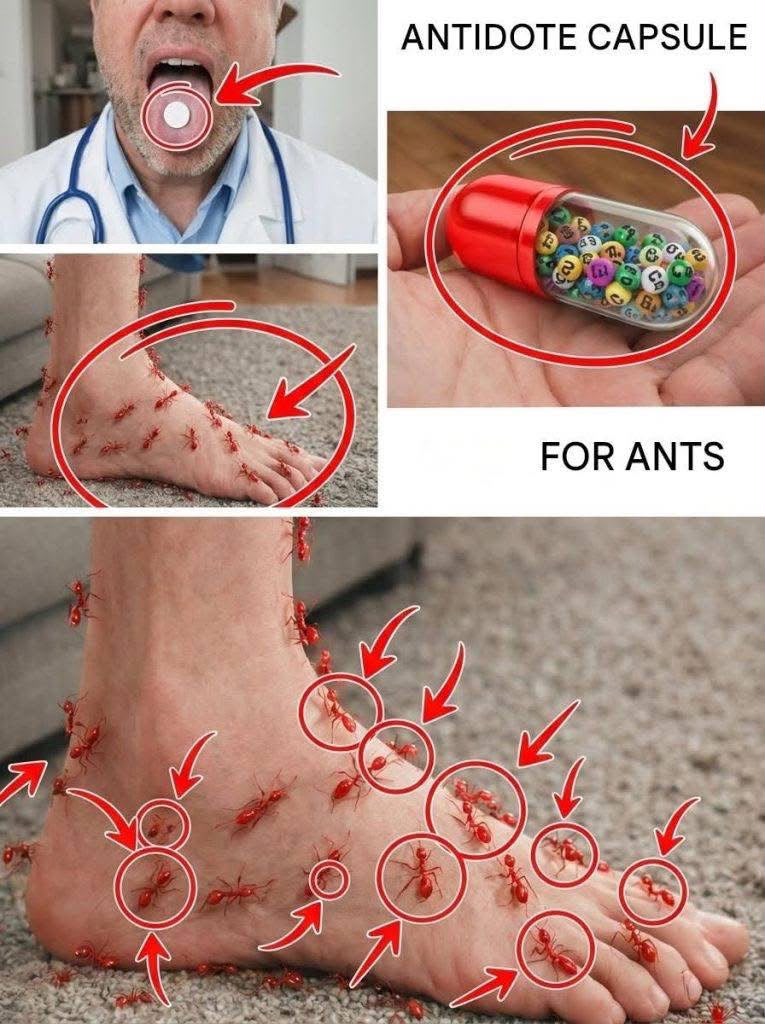
Viral images on social media often blend bizarre concepts with startling imagery to capture our attention. When an unusual graphic circulates showing a capsule labeled “Antidote Capsule for Ants” alongside a foot swarming with red ants, it instantly sparks curiosity, confusion, and plenty of laughs. While the idea of swallowing a pill to cure an ant infestation sounds like pure science fiction, it opens up a fascinating conversation about real pest control, insect bites, and how we handle common household bugs. Let’s take a closer look at the reality behind ant bites, safe pest management, and why strange internet images go viral.
Sorting Fact from Fiction: Can a Pill Treat Ant Bites?
The concept of an ingestible antidote capsule designed specifically to counteract ant swarms is entirely fictional. In reality, insect control relies on external treatments, environmental management, and physical barriers rather than systemic pharmaceutical capsules.
- External Treatments: True remedies for ant stings or bites involve topical treatments like hydrocortisone creams, cold compresses, or antihistamines to reduce itching and swelling.
- Pest Eradication: Controlling ants requires targeted baits, sprays, or professional extermination methods applied directly to nests and trails, not consumed internally by humans.
- The Appeal of Absurdist Humor: Images that mix impossible medical claims with everyday annoyances are designed purely for shock value and engagement, prompting users to share and comment.
Understanding Ant Bites and Common Household Pests
While the viral capsule is a joke, dealing with ants in and around the home is a very real challenge for many homeowners. Understanding the types of ants you might encounter helps ensure safe and effective management.
Common Ant Species
- Odorous House Ants: These small brown or black ants emit a foul odor when crushed and are frequently attracted to sugary foods in kitchens.
- Fire Ants: Known for their reddish-brown color and painful, venomous stings that can cause localized burning and itchy pustules.
- Carpenter Ants: Larger ants that nest in damp wood, potentially causing structural damage if left untreated.
Safe Pest Control Strategies
- Seal Entry Points: Block cracks around doors, windows, and foundations to prevent ants from scouting inside your living spaces.
- Maintain Cleanliness: Wipe up sticky spills immediately, store food in airtight containers, and take out the trash regularly.
- Use Targeted Baits: Safe, slow-acting commercial ant baits allow worker ants to carry poison back to the queen, effectively eliminating the entire colony at its source.
Health, Safety, and Medical Precautions
While ordinary ant bites are mildly irritating, certain species—most notably fire ants—can trigger severe allergic reactions in sensitive individuals.
When to Seek Medical Attention
- Allergic Reactions: If an ant sting causes widespread hives, facial swelling, difficulty breathing, or dizziness, seek emergency medical help immediately.
- Secondary Infections: Excessive scratching of ant bites can break the skin, leading to bacterial infections that require professional medical evaluation and treatment.
Conclusion: Separating Internet Myths from Practical Solutions
The viral image of an ant antidote capsule serves as a humorous reminder to take unusual internet claims with a heavy grain of salt. While you won’t find a magic pill to cure an ant swarm, maintaining a clean home, understanding local insect species, and applying safe pest control methods will keep your living environment comfortable and bug-free.
FAQ Section
Q: Is there an actual capsule or pill you can take for ants? A: No. The idea of an “antidote capsule for ants” is purely fictional and serves as a humorous internet meme.
Q: What is the best way to treat a fire ant sting?
A: Wash the area with soap and water, apply a cold compress to reduce swelling, and use over-the-counter hydrocortisone cream or antihistamines to manage itching.
Q: How can I naturally deter ants from entering my home?
A: Cleaning up food crumbs promptly, sealing entry cracks, and wiping surfaces with a mixture of water and white vinegar can help deter foraging ants.
Q: When should an ant sting be treated as a medical emergency?
A: Seek immediate emergency care if the victim shows signs of anaphylaxis, such as throat tightness, trouble breathing, dizziness, or widespread swelling.
Q: Why do viral memes about pest control spread so quickly?
A: Their absurd, surreal nature catches users off guard, sparking instant curiosity, comments, and shares across social media platforms.
