
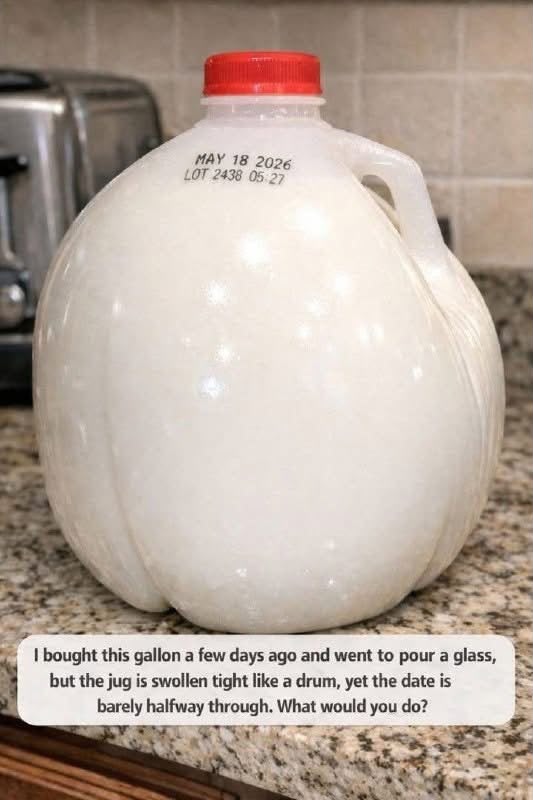
Grocery shopping and food storage are everyday routines, yet unexpected anomalies can sometimes catch us completely off guard. Sifting through household refrigerators often uncovers bizarre packaging issues—quirky container deformations, unexpected pressure buildups, and bulging jugs that defy immediate logic. One such alarming find frequently shared online is a standard plastic gallon jug filled with milk that has swollen tight like a drum, even though the expiration date printed on the bottle is still weeks away.
What causes this strange phenomenon, and what steps should you take when faced with a compromised food container? This comprehensive guide explores the science of food spoilage, microbial gas production, and how everyday kitchen discoveries intersect with food safety, health precautions, and smart household management.
The Origin and Science Behind Bloated Milk Containers
When people encounter a plastic container that has ballooned outward under heavy internal pressure, it indicates a distinct biological or chemical reaction occurring inside the vessel.
1. Bacterial Fermentation and Gas Production
One primary explanation for a swollen dairy container is rapid microbial activity.
- Function of Bacteria: Even pasteurized milk contains trace amounts of bacteria or can be exposed to microbes during handling. When these bacteria multiply—especially if the milk has experienced temperature fluctuations—they ferment the lactose in the milk.
- Gas Buildup: This fermentation process releases carbon dioxide and other gases as a byproduct. Because a sealed plastic gallon jug is airtight, the expanding gas has nowhere to go, causing the flexible plastic walls to stretch and bulge outward tightly.
2. Temperature Abuse and Storage Factors
If a container swells long before its printed sell-by date, environmental factors usually play a major role.
- Cold Chain Disruption: Leaving groceries in a warm car or failing to maintain a proper refrigerator temperature accelerates bacterial growth exponentially.
- Pressure Dynamics: As internal gases accumulate rapidly due to active spoilage, the physical shape of the jug distorts entirely, creating a rigid, drum-like surface.
H2: The Broader Impact: Food Safety, Kitchen Health, and Household Management
Discovering an unexpectedly spoiled or bloated food item in your kitchen sparks a broader reassessment of how we store perishable goods, maintain food safety standards, and handle household waste.
H3: Safety Precautions for Spoiled Dairy Products
Whenever you encounter a bulging container of food or milk, health and safety should be your absolute priority.
- Risk of Foodborne Illness: Consuming milk that has undergone heavy bacterial fermentation and spoilage can lead to severe gastrointestinal distress, food poisoning, and nausea. Never taste or consume milk from a visibly bloated container, regardless of what the printed date says.
- Safe Disposal: Opening a heavily pressurized container can cause spoiled liquid to spray aggressively. Handle bloated jugs with caution, and dispose of them properly without risking splashes.
H3: The Financial and Practical Side of Grocery Management
Managing food spoilage ties directly into business, household budgeting, and smart kitchen organization.
- Minimizing Waste: Understanding why perishable items spoil prematurely helps you optimize your refrigerator settings, check grocery storage habits, and reduce unnecessary food waste.
- Inventory Efficiency: Keeping track of purchase dates ensures that household consumables are used safely before environmental factors compromise their quality.
H2: Practical Tips for Managing Spoiled or Compromised Food Containers
If you discover an unusual or bloated container in your refrigerator, use this step-by-step approach to handle it safely:
- Do Not Open or Taste: Resist the urge to open a tightly swollen jug indoors, as trapped pressure can cause messy and unsantary sprays.
- Check Storage Conditions: Evaluate whether your refrigerator is maintaining a consistent temperature below 40°F (4°C) to prevent premature bacterial growth.
- Dispose Safely: Place the sealed, bloated container directly into an outdoor trash bin or carefully empty it down the drain while rinsing the area thoroughly.
- Examine Purchase Habits: Note how long groceries sit in transit during shopping trips to ensure the cold chain remains unbroken.
H2: Interesting Facts About Food Packaging and Spoilage
- The Power of Microbes: Certain lactic acid bacteria naturally consume milk sugars, turning liquid milk into curdled or gas-producing mixtures.
- Container Engineering: Modern plastic milk jugs are designed to be flexible, allowing them to absorb minor handling shocks, but they lack pressure-relief valves by design to maintain a sterile seal.
- Expiration Date Realities: Printed dates reflect quality estimates under optimal storage conditions, but improper refrigeration can cause food to spoil long before those dates arrive.
- Historical Food Preservation: Humans have battled food spoilage for millennia, leading to modern refrigeration standards that keep dairy products fresh much longer than in the past.
Conclusion
Unearthing a heavily bloated, drum-tight milk jug from your refrigerator is an alarming wake-up call. Whether caused by accidental temperature abuse or unexpected bacterial activity, a swollen container is a clear sign that the product is no longer safe to consume.
Beyond avoiding foodborne illness, recognizing these signs encourages better kitchen safety awareness, proper refrigeration habits, and smart grocery management. The next time you check your fridge, keep an eye out for packaging anomalies—and prioritize safety over expiration dates.
FAQ Section
Q1: Why did my milk jug swell up even though the expiration date is still weeks away?
A: Expiration dates assume optimal refrigeration. If the milk was exposed to warm temperatures during transit or if your fridge runs too warm, bacteria can multiply rapidly, producing carbon dioxide gas that bloats the container.
Q2: Is it safe to drink milk from a bloated plastic jug?
A: No. A swollen container indicates active bacterial fermentation and spoilage. Consuming it poses a high risk of food poisoning and digestive illness.
Q3: What should I do if a pressurized milk jug sprays when opened?
A: Wear gloves and eye protection if handling a suspected pressurized container, point it away from your face toward a sink or trash receptacle, and clean any splashed surfaces thoroughly with disinfectant.
Q4: How can I prevent milk from spoiling prematurely?
A: Ensure your refrigerator maintains a temperature of 37°F to 40°F, store milk near the back of the fridge where it is coldest rather than in the door, and place groceries in coolers during hot weather transit.
Q5: Are bloated containers common with other types of food?
A: Yes, canned goods and sealed containers can also bulge due to bacterial contamination (such as Clostridium botulinum in canned goods), making any swollen food packaging a critical safety hazard.
