
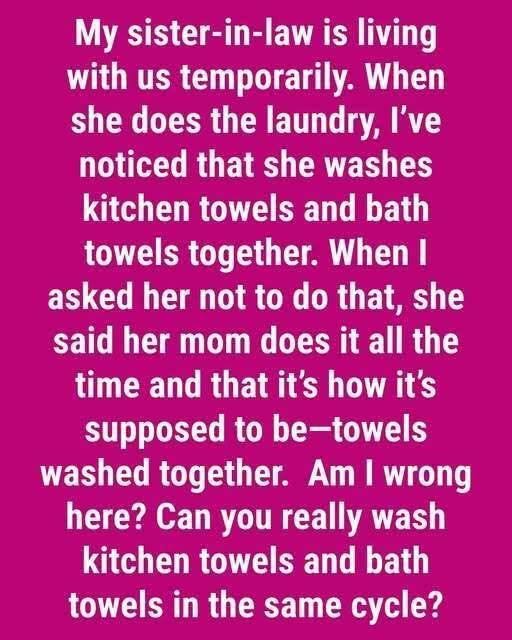
Household chores often spark quiet debates among family members, roommates, and partners. From the correct way to load a dishwasher to whether socks should be washed in cold or warm water, everyday habits can become points of contention. One such debate that frequently divides households centers around laundry categorization: specifically, whether kitchen towels and bath towels can—or should—be washed together in the same laundry cycle.
At first glance, the question seems simple. After all, they are both towels, right? They are made of similar absorbent fabrics, used for drying, and typically laundered in larger loads. However, when you dig deeper into hygiene, cross-contamination, fabric care, and household health standards, the answer becomes surprisingly nuanced.
In this comprehensive guide, we will explore the science of laundry sanitation, examine the distinct types of bacteria and soils associated with kitchen versus bath towels, and offer practical solutions for keeping your home clean and hygienic. Along the way, we will also discuss how managing household routines intersects with broader life considerations, such as maintaining overall health, organizing your living space, and managing household finances efficiently.
Understanding the Difference: Kitchen Towels vs. Bath Towels
To settle the debate, it is essential to understand the different environments in which these two types of towels are used and the specific types of residues they collect on a daily basis.
Kitchen Towels: The Hub of Foodborne Germs
Kitchen towels are workhorses in the culinary space. They are used to wipe counters, dry freshly washed dishes, handle hot pots, and occasionally wipe hands that have been handling raw meat, poultry, fish, or unwashed produce.
Because of this, kitchen towels are frequently exposed to a variety of microorganisms, including foodborne pathogens such as Salmonella, E. coli, Campylobacter, and Staphylococcus aureus. They are also prone to accumulating grease, food particles, oils, and organic matter. Over the course of a day or two in a busy kitchen, a damp towel can quickly become a breeding ground for bacteria, multiplying rapidly in the warm, moist environment of a kitchen.
Bath Towels: Personal Hygiene and Skin Flora
In contrast, bath towels are used exclusively on the human body after washing. Their primary job is to absorb clean water from skin that has just been cleansed with soap.
Consequently, the soils found on bath towels are typically derived from our own bodies. These include shed skin cells (dander), natural body oils, sweat, and normal skin flora (such as staphylococci and various harmless bacteria). While bath towels can certainly accumulate bacteria over several uses—especially if they remain damp in a humid bathroom—they generally do not carry the same spectrum of food-related pathogens or raw food residues found in the kitchen.
The Core Dilemma: Is Combined Washing a Sanitary Risk?
When a person tosses kitchen towels and bath towels into the same washing machine load—as the sister-in-law in our opening dilemma does—several factors come into play.
From a purely mechanical standpoint, modern washing machines and standard laundry detergents are remarkably effective at cleaning and sanitizing fabrics. High-efficiency detergents contain surfactants that lift dirt, oils, and grease, while mechanical agitation helps dislodge particles. Furthermore, if the wash cycle uses warm or hot water, many bacteria are effectively killed or washed away down the drain.
However, microbiologists and laundry experts often advise caution. Washing heavily contaminated kitchen towels (especially those that may have touched raw meat juices or food spills) directly alongside bath towels—which are used on sensitive areas of the body, the face, and around the eyes—introduces the potential for cross-contamination during the wash cycle.
If the water temperature is too low, or if the machine does not achieve proper sanitization, bacteria from the kitchen towels can potentially transfer to the bath towels. When you later use that bath towel to dry your face or body, you could inadvertently expose yourself to food-borne bacteria.
Practical Factors to Consider in Your Laundry Routine
Deciding whether to separate your laundry goes beyond strict microbiology; it also involves practical household management, fabric preservation, and time management. Let’s look at the key factors that should guide your decision:
1. Water Temperature and Sanitization
If you choose to wash kitchen and bath towels together, water temperature is the single most critical factor. Washing in cold water, while energy-efficient and gentle on fabrics, may not kill harmful bacteria. To safely launder mixed towel loads, water temperatures of 140°F (60°C) or higher, or the use of an oxygen-based bleach or laundry sanitizer, are generally recommended to ensure microbial destruction.
2. Grease and Stains
Kitchen towels frequently encounter cooking oils, butter, and food stains that require specialized pre-treatment or heavy-duty degreasing detergents. Bath towels, on the other hand, deal mostly with water and skin oils. Mixing them means your bath towels might be exposed to airborne or waterborne grease particles from the kitchen items, potentially affecting their texture and absorbency over time.
3. Fabric Integrity and Lifespan
Both types of towels are typically made of cotton or cotton-blend terry cloth, meaning they have similar washing durability. However, kitchen towels often undergo harsher treatment—scrubbing counters or wiping up sticky messes—and may wear out faster. Separating loads allows you to use specific cycles, softeners (or avoid softeners, which reduce towel absorbency), and drying settings tailored to each category.
Practical Tips for Optimal Towel Hygiene
Whether you decide to keep your laundry separate or combine loads, adopting best practices ensures your home remains fresh, clean, and safe:
- Wash Frequently: Do not let towels sit in a damp pile. Kitchen towels should ideally be replaced every 1 to 2 days (or immediately after handling raw meat), while bath towels should be washed every 3 to 4 uses.
- Prioritize Hot Water and Bleach: When washing kitchen towels—especially if mixed with other linens—use the hot water setting and consider adding a color-safe or chlorine bleach (depending on fabric color) to eliminate stubborn pathogens.
- Ensure Complete Drying: Never fold or hang up damp towels. Ensure both kitchen and bath towels are thoroughly dried in a high-heat dryer cycle or hung in a well-ventilated area to prevent mold and mildew growth.
- Designate Separate Hampers: Keep a separate hamper or designated bin for kitchen linens to prevent food odors and grease from transferring to your clothing and personal bath linens before washing.
- Avoid Fabric Softener on Kitchen Towels: Fabric softeners leave a microscopic waxy coating on fibers that reduces absorbency—something you definitely want to avoid when trying to dry dishes or hands effectively.
Interesting Facts About Laundry Science and History
- The Invention of the Washing Machine: Mechanical washing devices began appearing in the mid-19th century, transforming what was once a grueling, all-day physical labor process into a manageable household chore.
- Bacteria Growth in Damp Environments: Studies have shown that a damp towel left in a warm bathroom can experience a bacterial population doubling every 20 minutes, which is why proper drying between uses is essential.
- The Evolution of Detergents: Early laundry soaps were made from animal fats and lye. The introduction of synthetic detergents in the mid-20th century revolutionized cleaning by performing effectively even in hard water.
- Microfiber Revolution: Modern microfiber cleaning cloths have largely replaced traditional cotton dish towels in many professional settings because their split fibers trap microscopic bacteria and dust more efficiently than standard weaves.
Conclusion
So, is your relative wrong, or can you really wash kitchen towels and bath towels together? The truth lies somewhere between family tradition and modern hygiene science. While many households combine them out of convenience—and suffer no ill effects thanks to hot water and powerful detergents—keeping them separate is a safer practice to prevent cross-contamination from foodborne pathogens to personal body linens.
Ultimately, managing your household chores efficiently is about balancing practical time-saving habits with health and safety standards. Whether you choose separate cycles or a combined hot-water wash, understanding the science behind your laundry routine helps you keep your home fresh, clean, and healthy.
FAQ Section
Q: Can mixing kitchen and bath towels make you sick?
A: While the risk is relatively low if your washing machine uses hot water and quality detergent, mixing heavily contaminated kitchen towels (those exposed to raw meat juices) with bath towels can theoretically transfer foodborne pathogens to the towels you use on your body, posing a mild health risk.
Q: What is the ideal water temperature for washing towels?
A: To effectively sanitize towels and kill bacteria, dermatologists and hygiene experts recommend washing them in warm or hot water (at least 140°F or 60°C).
Q: How often should kitchen towels be replaced during the week?
A: Kitchen towels should be changed every 1 to 2 days under normal circumstances, and immediately if they come into contact with raw meat, poultry, or egg products.
Q: Does fabric softener ruin towels?
A: Yes, regular use of liquid fabric softeners leaves a coating on cotton fibers that decreases their absorbency, making them less effective at drying dishes or skin.
Q: Is it okay to wash towels with regular clothing?
A: It is generally better to wash towels separately from clothing because towels shed lint and require heavy-duty agitation and high drying temperatures that can wear out delicate garments prematurely.
