
Introduction
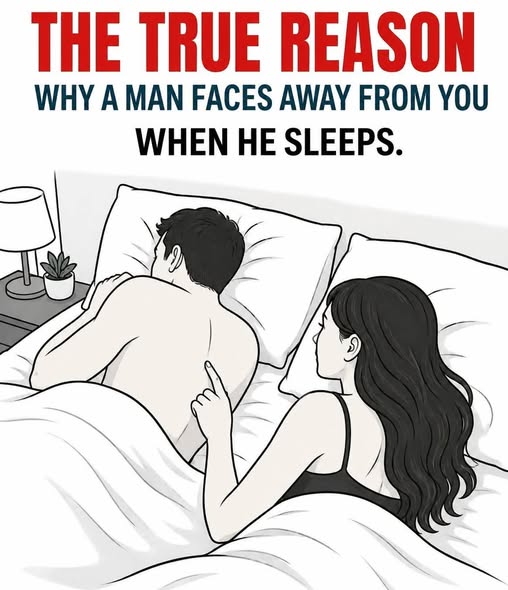
Relationship psychology and sleep habits frequently circulate across social media, offering intriguing interpretations of how couples behave at night. When an engaging graphic appears online claiming to reveal the “true reason” why a man faces away from his partner while sleeping, it instantly catches the attention of readers curious about relationship compatibility.
Navigating intimacy, understanding sleep physiology, and adopting healthy bedtime routines are essential parts of a strong partnership. Furthermore, relying on scientific sleep research rather than generalized internet assumptions ensures a grounded understanding of shared rest. This comprehensive guide explores the realities of sleep positions, relationship psychology, and evidence-based sleep hygiene.
The Reality of Couple Sleep Positions: What Science Says
How couples position themselves during sleep is influenced heavily by physical comfort, temperature regulation, and individual sleep habits rather than hidden psychological meanings.
Why Viral Sleep Claims Are Misleading
While viral posts suggest that turning away during sleep indicates emotional distance or specific relationship issues, sleep studies show that people naturally shift through multiple positions throughout the night for ergonomic comfort and spinal alignment. Restricting movement or over-analyzing nighttime posture ignores the biological necessity of comfortable, undisturbed sleep.
The Importance of Restful Sleep Foundations
Lasting relationship health relies on open daytime communication, emotional support, and mutual respect rather than nighttime sleeping posture.
Practical Tips for Improving Sleep Quality and Relationship Harmony
Nurturing both a restful night’s sleep and a strong partnership involves reliable, evidence-based habits:
- Prioritize Physical Comfort: Choose mattresses, pillows, and sleeping positions that promote proper spinal alignment and reduce physical discomfort.
- Communicate Openly: Discuss any relationship concerns directly during the day rather than reading into nighttime sleeping habits.
- Respect Individual Sleep Needs: Understand that both partners may require different amounts of space or specific blankets to sleep comfortably.
- Consult Sleep Specialists: Seek professional medical advice if chronic sleep disturbances or snoring affect your nightly rest.
- Be Skeptical of Viral Psychology Claims: Recognize that social media posts offering definitive meanings for sleeping postures are designed for entertainment rather than scientific accuracy.
Interesting Facts About Sleep and Body Language
- Studies on couple sleep patterns show that many partners naturally gravitate toward independent sleeping positions over time without any decrease in relationship satisfaction.
- Body temperature regulation plays a major role in sleep positioning, as partners often separate during the night to avoid overheating.
- Sleep cycles involve frequent micro-movements, meaning most people do not stay in the same position all night long.
- Social media engagement thrives on relationship mysteries because they tap into universal curiosities about romance and human behavior.
Conclusion
While viral social media posts use playful relationship hooks to drive engagement, understanding sleep behavior relies on physical comfort, sleep science, and open communication rather than rigid nighttime interpretations. By prioritizing healthy sleep habits and mutual understanding, you can foster both personal well-being and a strong partnership. Relying on verified science ensures true clarity.
Frequently Asked Questions (FAQ)
Does sleeping facing away from your partner mean there is a problem?
No, facing away is extremely common and usually just a matter of physical comfort, temperature control, or finding the best ergonomic sleeping posture.
Why do couple sleep myth graphics go viral online?
They spark curiosity about romance and personal relationships, making them highly engaging and shareable content across social media platforms.
What factors influence how we sleep at night?
Room temperature, mattress support, physical pain, stress levels, and individual habits all dictate how people position themselves while sleeping.
When should couples seek professional relationship guidance?
Couples can benefit from counseling whenever they face persistent communication barriers, emotional disconnection, or unresolved conflicts in their waking lives.
