
Introduction
Life experiences often shape our memories in profound ways, leaving lasting impacts long after our careers have come to an end. For those who dedicate their lives to public service, healthcare, and emergency response, everyday moments on the job blend into decades of quiet sacrifice.
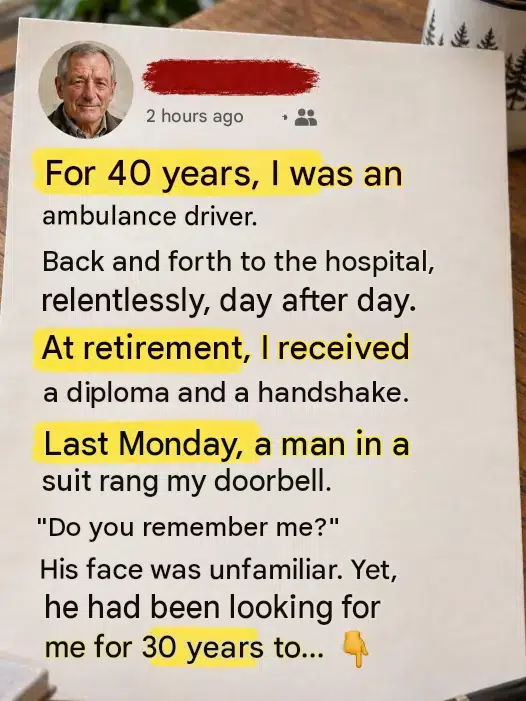
A viral emotional narrative currently circulating on social media shares the moving account of a man who spent 40 years working as an ambulance driver. After retiring with little more than a diploma and a handshake, his quiet routine was interrupted decades later when a mysterious man in a suit rang his doorbell with a decades-old question.
The Realities of Emergency Services and Long Careers
Reflecting on long-term public service careers reveals the immense dedication required of emergency workers.
Key Aspects of Emergency Service Careers
- Decades of Dedication: Ambulance drivers and emergency medical staff work tirelessly around the clock, responding to crises day after day.
- Quiet Sacrifices: Many essential workers spend their entire lives helping others during their darkest hours, often receiving minimal formal recognition upon retirement.
- Lasting Impact: The actions taken by emergency professionals frequently change the course of strangers’ lives in ways they may never fully realize.
The Psychology of Viral Inspirational Stories
Heartwarming anecdotes involving unexpected reunions and emotional gratitude capture widespread attention online.
Why Inspirational Accounts Go Viral
- Emotional Resonance: Readers deeply connect with themes of appreciation, unexpected rewards, and human kindness.
- Suspense and Intrigue: Cliffhangers, such as a stranger searching for someone for 30 years, drive high curiosity and engagement.
- Community Storytelling: These narratives invite users to share their own thoughts, experiences, and words of gratitude in the comment section.
Interesting Facts About Emergency Medical Services
The history and evolution of ambulance services highlight the vital role these professionals play:
- Early Transportation: Modern emergency medical services evolved from basic transport vehicles into sophisticated mobile healthcare units staffed by trained specialists.
- The Toll of Shift Work: Emergency responders experience high levels of physical and mental stress due to demanding shift schedules and crisis exposure.
- The Power of Gratitude: Heartwarming reunions between emergency workers and those they helped serve as powerful reminders of the human bond forged in crisis.
Practical Tips for Honoring Essential Workers
If you want to show appreciation for the emergency personnel and essential workers in your community, consider these thoughtful actions:
- Express Direct Gratitude: Take a moment to thank local paramedics, firefighters, and healthcare workers for their dedication.
- Support Community Health Initiatives: Participate in local programs or fundraisers that support emergency services and medical staff.
- Share Positive Stories: Highlight uplifting accounts of community service to inspire others and recognize everyday heroes.
Conclusion
The poignant story of the retired ambulance driver and the stranger at his door reminds us of the profound, lasting impact of dedicated public service. Even when years pass without recognition, acts of kindness and professional dedication are rarely forgotten.
FAQ Section
What was the background of the man in the viral story?
He spent 40 years working as an ambulance driver, responding to medical emergencies day after day.
What did he receive when he retired?
Upon retirement, he received only a diploma and a handshake.
What happened years later at his home?
Last Monday, a man in a suit rang his doorbell, asking if he remembered him after searching for him for 30 years.
Why do stories about emergency workers resonate so strongly?
They highlight the underappreciated sacrifices made by frontline workers and celebrate moments of unexpected gratitude and human connection.
