
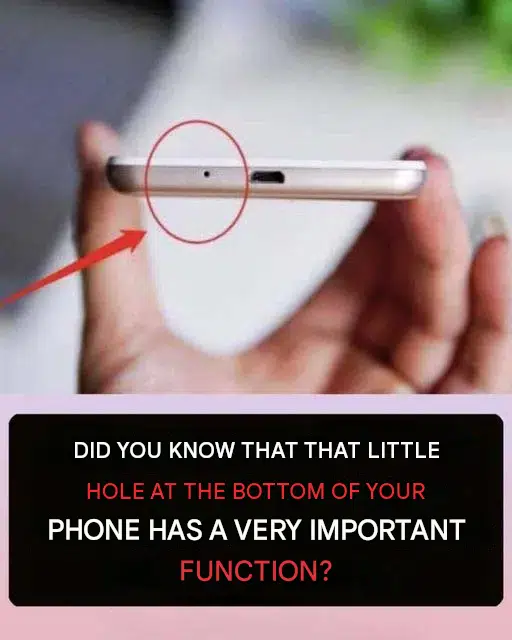
When holding our smartphones, we rarely pay attention to the tiny details etched into the metal or plastic casing along the edges. From charging ports and speaker grilles to headphone jacks, modern phones are marvels of compact engineering. However, if you examine the bottom frame of your smartphone near the charging port, you will notice a microscopic hole that frequently leaves people wondering what purpose it could possibly serve.
Many smartphone owners mistakenly assume this tiny opening is a reset button, a manufacturing defect, or an accidental gap. In reality, that minuscule aperture plays a vital role in ensuring crystal-clear communication and modern device functionality. In this comprehensive article, we explore the acoustic science, hardware design, and maintenance tips behind your smartphone’s hidden features.
The Acoustic Engineering Behind the Tiny Hole
To understand why your smartphone features this tiny opening, it helps to examine how audio transmission works during phone calls and voice recordings.
The Primary Microphone Placement
That tiny hole is actually the primary microphone. When you speak into your phone during a traditional voice call, your voice waves travel directly into this precise opening.
Why Is It a Separate Hole?
You might wonder why the microphone needs its own dedicated hole separate from the larger speaker grille or charging port. Isolating the microphone into a microscopic, acoustically tuned cavity protects the delicate internal components from dust, moisture, and pocket lint while optimizing sound capture sensitivity. When you speak, sound waves enter this aperture directly, allowing the internal diaphragm to convert your voice into clear digital signals.
Secondary Microphones and Noise Cancellation
Many modern smartphones actually feature two or more tiny holes—one at the bottom and another at the top or near the rear camera module.
Active Noise Cancellation (ANC)
The secondary microphone serves a completely different purpose than voice capture: it listens to ambient background noise (such as traffic, wind, or restaurant chatter). The smartphone’s internal processor compares the sounds picked up by the top microphone with the voice picked up by the bottom microphone, automatically filtering out background noise so that the person on the other end of the line hears your voice with absolute clarity.
Financial, Legal, and Maintenance Considerations
Protecting your smartphone’s hardware components involves understanding durability, warranty terms, and maintenance best practices.
1. Warranty and Water Resistance
Modern smartphones often feature IP67 or IP68 water and dust resistance ratings. However, inserting sharp objects like sewing needles, paperclips, or SIM ejector tools into the microphone hole can puncture the delicate acoustic mesh membrane protecting the internal mic, instantly voiding your warranty and causing permanent audio damage.
2. Insurance and Device Protection
Protecting your mobile device with proper protective cases and screen shields prevents accidental drops, while avoiding moisture exposure ensures your internal microphones continue to function properly.
Essential Smartphone Maintenance Tips
To keep your phone’s audio and microphone systems operating at peak performance, follow these simple care guidelines:
- Clean Gently: If dust or lint accumulates inside the charging port or microphone hole, use a soft-bristled, dry toothbrush or compressed air held at a safe distance rather than sharp metal objects.
- Use Protective Cases: A quality case with a slight lip keeps the bottom frame elevated when placed on flat surfaces, preventing debris from clogging the microphone opening.
- Avoid Moisture Exposure: Keep your phone away from excessive humidity, steam, or liquid spills that could seep into acoustic ports.
Fascinating Facts About Smartphone Technology
- Acoustic Mesh Protection: Beneath that tiny hole lies a microscopic, water-repellent acoustic mesh screen designed to let sound waves pass freely while blocking liquid droplets and dust particles.
- Voice Assistant Integration: Modern digital assistants (like Siri or Google Assistant) rely heavily on these multi-microphone arrays to isolate voice commands even in noisy environments.
- Miniaturization: The components inside a modern smartphone microphone are smaller than a grain of sand, utilizing micro-electro-mechanical systems (MEMS) technology.
Conclusion
The tiny hole at the bottom of your smartphone is far from a random design choice; it is a vital acoustic component that ensures your voice is heard clearly on every call. By understanding its true purpose and treating it with care during routine maintenance, you can protect your device’s audio performance for years to come.
Frequently Asked Questions (FAQ)
Can I damage my phone by cleaning the microphone hole with a needle?
Yes. Inserting a needle, pin, or paperclip into the tiny microphone hole can easily puncture the internal acoustic waterproof mesh and ruin the microphone component.
Why does my phone have more than one tiny hole?
The extra tiny holes located at the top or back of the phone are secondary noise-cancelling microphones used to capture ambient background noise and filter it out during calls.
Is the microphone hole the same thing as the SIM card tray hole?
No. The SIM card tray hole is slightly larger and is designed specifically to accept a SIM ejector tool to pop open the internal card carrier tray.
What should I do if my phone microphone sounds muffled?
If your microphone sounds muffled, gently brush away accumulated pocket lint using a clean, dry, soft-bristled brush. Avoid inserting liquids or compressed air directly into the aperture.
