
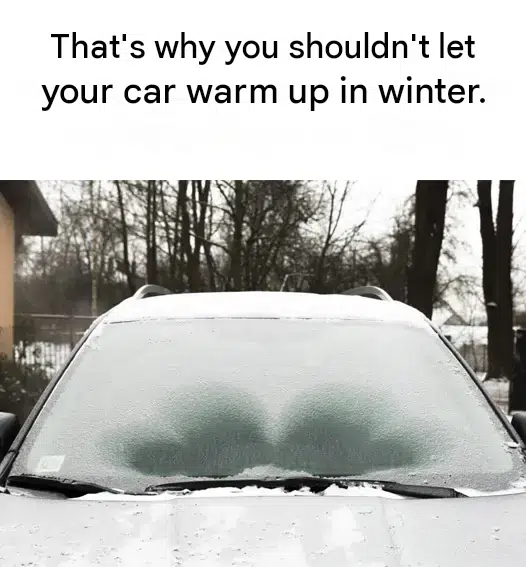
For decades, drivers in colder climates have adhered to a familiar winter routine: step outside into the freezing morning air, start the engine, turn the heater on high, and go back inside for ten or fifteen minutes while the vehicle “warms up.” The logic behind this habit seems sound. A warm engine feels responsive, a warm cabin keeps you comfortable, and defrosting ice off the windshield makes driving safer. However, modern automotive engineering has changed the rules completely.
Allowing a modern vehicle to idle in cold weather for extended periods is not only largely unnecessary, but it can actually accelerate engine wear, waste costly fuel, increase vehicle emissions, and put your personal finances at risk. While the practice made sense during the era of carbureted engines, today’s fuel-injected powertrains operate on an entirely different set of mechanical principles.
In this comprehensive guide, we will explore the science behind cold-weather driving, explain why idling can harm modern engines, review practical winter maintenance habits, and cover key financial strategies—including auto insurance considerations and vehicle loan management—to help keep your car running reliably all winter long.
The Origin of the Warm-Up Myth: Carburetors vs. Fuel Injection
To understand why warming up your car is no longer necessary, it helps to examine how engine technology has evolved over the past few decades.
The Carburetor Era
Before the late 1980s and early 1990s, almost all passenger vehicles relied on mechanical devices called carburetors to mix air and fuel before delivering it to the engine cylinders. In freezing temperatures, gasoline does not vaporize easily inside a cold carburetor. If a driver attempted to drive a cold, carbureted vehicle right away, the engine would frequently stall, sputter, or hesitate.
Drivers had to pull out a choke lever or pump the gas pedal to adjust the fuel ratio, allowing the engine to idle for several minutes until the metal components warmed up enough to ensure smooth fuel vaporization.
The Rise of Electronic Fuel Injection (EFI)
Since the mid-1990s, virtually every car on the road has been equipped with Electronic Fuel Injection (EFI) controlled by an onboard computer called an Engine Control Unit (ECU).
Modern fuel injection systems rely on precise electronic sensors to monitor engine temperature, air density, and exhaust output. When you turn the key or press the start button on a freezing morning:
- Sensors detect the cold ambient temperature instantly.
- The ECU automatically adjusts the fuel-air mixture, delivering extra fuel directly into the combustion chamber to keep the engine idling smoothly without stalling.
- As soon as you begin driving, the system continuously recalculates the optimal fuel ratio in real time.
Because modern engines adjust electronically in milliseconds, long warmup periods are no longer required to keep the engine running smoothly.
Why Long Idling Can Hurt Your Engine
Far from protecting your vehicle, letting your modern engine idle motionless on a driveway during cold weather can lead to unnecessary wear and mechanical strain.
          [ Modern Cold-Start Comparison ]

  Idling on Driveway           Driving Smoothly Right Away
  -------------------          ---------------------------
  • Engine warms slowly        • Engine reaches temp quickly
  • Unburnt fuel strips oil    • Proper oil lubrication
  • Exhaust stays cold         • Moisture burns off fast
  • Wastes fuel & money        • Maximum fuel efficiency
1. Fuel Wash and Oil Dilution
When an engine is freezing cold, the ECU injects extra fuel into the cylinders to compensate for poor combustion. When the car sits idling, the engine warms up very slowly. This prolonged cold period causes unburnt liquid gasoline to wash against the cylinder walls.
Gasoline acts as a solvent. Excess unburnt fuel can wash away the thin protective layer of engine oil lubricating the cylinder walls, leading to increased friction on internal components like piston rings. Over time, this fuel can seep past the rings into the oil pan, diluting your engine oil and reducing its lubricating effectiveness.
2. Slow Temperature Rise
An engine running at idle produces relatively little heat compared to an engine operating under load. When you drive your car gently, the engine works under moderate strain, reaching its optimal operating temperature (typically between 190°F and 220°F) significantly faster than it would while sitting still.
Faster warmups mean the engine spends less overall time running cold, which directly minimizes internal wear and tear.
3. Exhaust System Condensation and Rust
Cold engine exhaust contains high levels of water vapor. When a car sits idling slowly, the exhaust system remains cold for a longer duration, causing this vapor to condense into liquid water inside the muffler and exhaust pipes. Over time, trapped moisture can cause premature internal corrosion and rust, leading to expensive exhaust system repairs.
Financial Impact: Waste, Wear, and Auto Insurance Risks
Abandoning the habit of long winter warmups offers several clear financial advantages, from saving money at the gas pump to reducing repair costs and insurance risks.
Fuel Consumption and Cost Efficiency
Idling gets zero miles per gallon. According to environmental and automotive studies, an idling engine burns between a quarter-gallon to a half-gallon of fuel per hour, depending on engine displacement and heating equipment usage.
If you idle your car for 15 minutes every morning and evening during a four-month winter season, you burn through dozens of gallons of fuel without traveling a single mile. Eliminating extended warmups keeps that money in your bank account or investment savings.
Vehicle Theft Risks and “Puffing” Laws
Leaving an idling vehicle unattended on a driveway with the keys in the ignition—a practice commonly referred to as “puffing”—creates a prime target for auto thieves.
- Insurance Coverage Challenges: If your vehicle is stolen while left running with keys inside, filing an auto insurance claim can become complicated. Depending on your policy terms and regional negligence guidelines, insurance providers may investigate whether reasonable precautions were taken to protect the property.
- Legal Fines: Many municipalities and states have enacted strict anti-idling laws. Unattended idling on public or residential streets can result in traffic citations and fines.
Protecting your vehicle against theft preserves your auto policy’s claims history, helping you maintain lower premium rates over time.
The Recommended Cold-Weather Startup Procedure
Mechanics, automotive engineers, and manufacturer guidelines overwhelmingly agree on the safest, most efficient way to start and drive a modern car in freezing weather.
Step 1: Start and Wait 30 to 60 Seconds
When you start your car after it has been sitting overnight in freezing temperatures, allow the engine to idle for just 30 to 60 seconds. This brief pause gives the oil pump time to circulate synthetic or conventional oil throughout the engine block, ensuring all moving parts are lubricated.
Step 2: Clear Windows and Mirrors Completely
Use a quality ice scraper and snow brush to thoroughly clear your windshield, rear glass, side windows, and mirrors. Never drive with limited visibility, as doing so increases the risk of accidents and collision claims.
Safety Warning: Never pour hot or boiling water on a frozen windshield to melt ice. The sudden thermal shock can instantly shatter or crack the glass, creating an expensive windshield replacement bill.
Step 3: Drive Away Gently
Put the vehicle in gear and drive off smoothly. Avoid harsh acceleration, heavy engine loads, or high-RPM revving for the first 5 to 10 minutes of your journey. Driving gently allows not only the engine, but also the transmission, wheel bearings, power steering fluid, and suspension components to reach proper operating temperatures simultaneously.
Key Winter Vehicle Preparedness Tips
In addition to adjusting your morning startup routine, proper winter maintenance ensures your vehicle stays safe, functional, and efficient throughout the coldest months.
- Check Battery Health: Cold temperatures reduce a car battery’s cranking power by as much as 50 percent. Have your battery and charging system tested at an auto service center before winter sets in.
- Inspect Tire Pressure and Tread: For every 10-degree drop in outside temperature, tire pressure drops by approximately 1 PSI. Underinflated tires reduce traction and worsen fuel economy. Consider installing winter tires if you live in regions with frequent snow and ice.
- Use Synthetic Engine Oil: Modern multi-viscosity synthetic oils (such as 0W-20 or 5W-30) flow much faster at sub-zero temperatures than conventional oils, providing immediate protection to engine components during cold starts.
- Maintain Fluid Levels: Keep your windshield washer fluid topped off with a winter-grade formula that resists freezing down to -20°F or lower.
Auto Loans, Maintenance Budgets, and Vehicle Lifespan
For most households, an automobile is one of the largest financial investments after housing. Protecting the long-term mechanical health of your car preserves its resale value and reduces total ownership costs.
Balancing Repair Costs and Vehicle Loans
If you are currently paying off an auto loan or refinancing a vehicle, maintaining the powertrain in peak working order is essential. Experiencing a major engine failure while still making monthly vehicle loan payments can place severe strain on your monthly budget.
By following proper cold-start procedures and adhering to factory-recommended oil change intervals, you minimize the risk of premature mechanical failures. Pairing responsible driving habits with a dedicated emergency fund ensures that routine winter repairs remain manageable, keeping your broader financial goals on track.
Fascinating Facts About Winter Driving and Engine Science
- Synthetic Oil Flows Faster: Synthetic engine oil can flow at temperatures as low as -40°F, whereas conventional oil thickens rapidly in severe cold, creating higher drag during engine startup.
- Cabin Heaters Rely on Engine Heat: Your car’s cabin heater works by routing warm engine coolant through a small radiator called a heater core. Because engines heat up much faster while driving than while idling, your heater will actually blow hot air sooner if you drive off right away!
- Block Heaters for Extreme Cold: In sub-zero regions like Alaska or Northern Canada, drivers often use electric engine block heaters plugged into external outlets. Block heaters keep the engine coolant warm overnight, facilitating easier starts without excessive fuel usage.
- Tires Need Warming Too: An idling engine does not warm up your vehicle’s transmission fluid, differential, wheel bearings, or tires. Driving gently warms up the entire mechanical driveline evenly.
Conclusion
The idea that you need to let your modern car idle for 10 to 15 minutes before driving in winter is a persistent myth left over from the days of carburetors. Thanks to modern electronic fuel injection, advanced synthetic lubricants, and computerized engine controls, your vehicle is ready to go after just 30 to 60 seconds of idling.
By scraping your windows clear, driving gently for the first few miles, and keeping up with regular preventative maintenance, you protect your engine from unnecessary wear, save money at the pump, avoid legal fines, and lower the risk of auto theft or insurance complications. Changing small habits leads to better vehicle performance and lasting financial savings all season long.
Frequently Asked Questions (FAQ)
1. Is 30 seconds really enough time for a cold engine?
Yes. Modern oil pumps distribute engine oil across critical components within seconds of starting. A 30-to-60-second pause ensures full oil pressure, after which driving gently is the best way to bring the engine and drivetrain up to operating temperature safely.
2. Will turning the heater on immediately slow down the engine warmup?
Yes. Operating the cabin heater at maximum fan speed draws heat away from the engine coolant through the heater core. To help your engine warm up faster, leave the climate control fan on a low setting for the first few minutes of your drive before turning up the heat.
3. What should I do if my car windshield is covered in heavy ice?
Use a mechanical plastic scraper or a dedicated windshield de-icer spray. You can also turn on your vehicle’s front and rear glass defrosters while you clear snow off the roof and body paneling. Never pour hot water on frozen glass, as extreme thermal expansion can cause immediate cracking.
4. Are remote starters bad for my vehicle engine?
Remote starters are convenient for pre-heating the interior, but leaving a vehicle idling for extended periods via remote start carries the same inefficiencies as manual idling. If you use a remote starter, limit the run time to a few minutes rather than letting it idle through a full 10- or 15-minute cycle.
5. Does cold weather affect my electric vehicle (EV) battery?
Yes. Electric vehicles experience reduced driving range in freezing weather because lithium-ion battery chemistry slows down, and cabin heating relies on electric power. Pre-conditioning an EV while it remains plugged into its charger helps warm the battery and cabin without reducing total battery range.
