
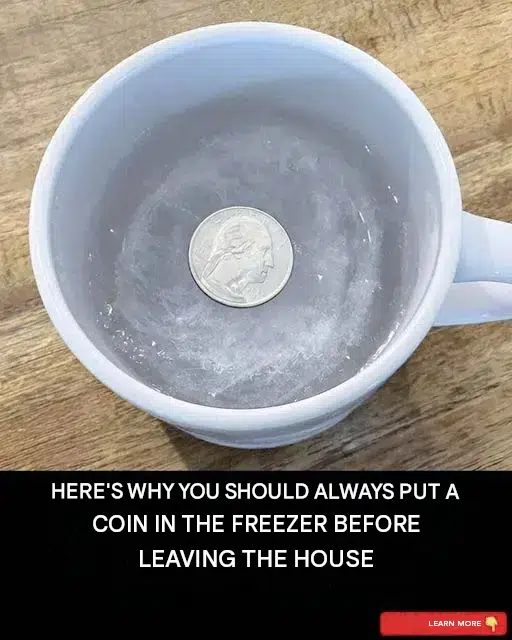
Leaving your home for an extended period—whether for a long weekend getaway, a business trip, or a multi-week family vacation—requires plenty of preparation. From locking doors and setting security systems to adjusting your thermostat and stopping mail delivery, homeowners take numerous steps to ensure their property remains safe while they are away. However, one of the most clever, simple, and unconventional preparation tricks involves something you likely have sitting right in your pocket: a simple coin and a cup of water.
At first glance, placing a cup of frozen water with a coin resting on top inside your freezer sounds like an old wives’ tale or an eccentric internet life hack. In reality, it serves a surprisingly practical and important safety purpose regarding food safety.
In this comprehensive guide, we will explore the real reason behind the “freezer coin trick,” examine how food safety intersects with household management, and provide practical tips for protecting your home while traveling.
The Real Purpose Behind the Freezer Coin Trick
When you leave your house for an extended trip, unexpected power outages can occur due to severe weather, electrical grid maintenance, or local storms. If a power outage lasts for several hours while you are away, your refrigerator and freezer will lose power, causing perishable foods to thaw completely.
The danger arises when power eventually restores itself: frozen items that thawed and warmed up to room temperature can refreeze, potentially spoiling and harboring harmful bacteria without your knowledge. Because frozen goods look normal again once refrozen, consuming them can lead to severe food poisoning.
This is where the coin trick provides a brilliant, fail-safe indicator:
1. The Cup-and-Coin Method
To set up the trick before you leave on vacation, follow these simple steps:
- Fill a cup or small container with water and place it in your freezer until the water is completely frozen solid.
- Take a coin and place it directly on top of the solid block of ice.
- Leave the cup inside the freezer for the duration of your trip.
2. Interpreting the Coin’s Position Upon Return
When you return home, check the cup in your freezer:
- If the coin is still resting right on top of the ice: Your power never went out for an extended period, meaning your freezer stayed cold and your food remained safely frozen.
- If the coin has sunk to the middle or bottom of the cup: The power went out long enough for the ice to melt entirely into liquid water, causing the coin to sink before power restored and the water refroze. This indicates that your perishable food thawed and should be discarded immediately for safety.
+------------------------------------+---------------------------------------+
| Coin Position in Freezer Cup       | What It Tells You About Your Food     |
+------------------------------------+---------------------------------------+
| Coin remains on top of the ice     | Freezer stayed cold; food is safe     |
| Coin sunk to the middle / bottom   | Power outage melted ice; discard food |
+------------------------------------+---------------------------------------+
Food Safety, Health, and Household Management
Protecting your household health extends beyond home security to include proper kitchen hygiene and perishable food management.
1. Preventing Foodborne Illness
Consuming thawed and refrozen meat, seafood, dairy, or prepared meals can cause severe foodborne illness. Using reliable indicators like the freezer coin trick provides peace of mind and prevents accidental food poisoning.
2. Home Insurance and Appliance Monitoring
While the coin trick cannot prevent a power outage, modern smart home appliances and Wi-Fi-enabled thermometers can also alert your smartphone if internal freezer temperatures spike while you are traveling.
Practical Tips for Preparing Your Home Before a Trip
In addition to the freezer coin trick, incorporate these practical steps to keep your home safe and secure while you are away:
Clear Perishables from the Refrigerator
Before leaving on a long trip, consume, freeze, or discard perishable items (like fresh produce, open dairy, or leftovers) that might spoil if a brief power fluctuation occurs.
Unplug Non-Essential Electronics
Protect your home electronics from power surges and reduce phantom energy drain by unplugging non-essential appliances like microwaves, toasters, and televisions.
Secure Doors and Windows
Double-check all entry points, ensure automatic timers are set on indoor lights, and ask a trusted neighbor to collect your mail or packages.
Fascinating Facts About Food Preservation and Freezing
- The History of Artificial Freezing: Mechanical refrigeration was developed in the 18th and 19th centuries, revolutionizing global food supply chains and domestic kitchen storage.
- Bacterial Dormancy: Freezing temperatures do not kill bacteria; they merely render them dormant. Once food thaws, bacteria can resume multiplying rapidly, which is why refreezing spoiled food is dangerous.
- Deep Freeze Standards: Commercial freezers are designed to maintain temperatures at or below 0°F (-18°C) to keep enzymes inactive and preserve food quality over long periods.
Frequently Asked Questions (FAQ)
Does the type of coin matter for the freezer trick?
No, any standard coin (like a quarter, dime, or nickel) works perfectly as long as it has enough weight to sink through melting water.
What should I do if I find the coin at the bottom of the cup?
If the coin has sunk into the ice, it means your freezer lost power long enough for the contents to thaw. For safety, discard all perishable items in the freezer to prevent food poisoning.
Can I use a digital thermometer instead of the coin trick?
Yes, maximum-minimum thermometers or smart Wi-Fi freezer sensors can track temperature fluctuations, but the coin trick is a free, foolproof analog alternative.
How long can food stay frozen during a power outage?
A closed, full freezer will typically hold its freezing temperature for about 48 hours (24 hours if half-full), provided the door remains tightly shut.
Is it safe to refreeze meat after a power outage?
You should only refreeze meat if it still contains ice crystals or feels as cold as if it were refrigerated (below 40°F / 4°C). If it has completely thawed and warmed up, discard it.
Conclusion
Placing a coin on top of a cup of ice in your freezer before leaving town is a simple, brilliant trick that gives you absolute certainty about your food safety upon returning home. By taking two minutes to set up this easy indicator, you protect yourself and your family from consuming spoiled goods after an unexpected power outage.
Combine clever kitchen hacks with thorough travel preparations to enjoy your trip with total peace of mind!
