
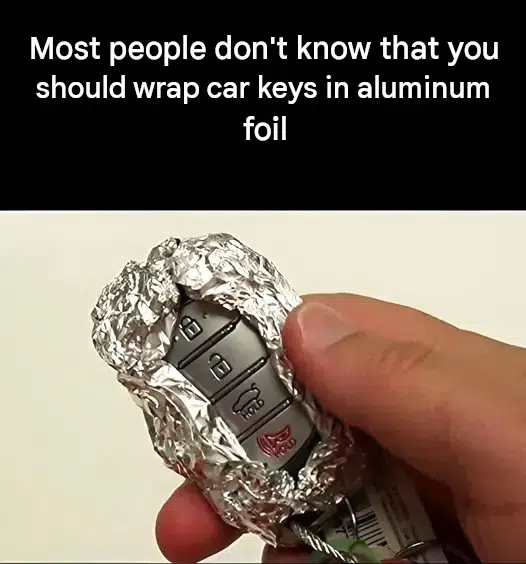
Modern automotive technology has made vehicle ownership significantly more convenient. Features like keyless entry, push-button start, and remote key fobs allow drivers to unlock, start, and drive their vehicles without ever needing to pull a physical key from their pockets or bags. However, this wireless convenience comes with a hidden vulnerability that many car owners overlook: electronic relay theft and signal interception.
As car thieves become increasingly sophisticated, they utilize specialized electronic relay devices to capture, amplify, and duplicate the radio frequency identification (RFID) signals emitted by modern key fobs. This allows criminals to unlock and steal vehicles parked right in your driveway without breaking windows or picking locks.
Surprisingly, one of the most effective, inexpensive, and accessible defenses against this modern security threat can be found right in your kitchen: aluminum foil. In this comprehensive guide, we will explore the science behind key fob signal vulnerabilities, how aluminum foil blocks electromagnetic waves, practical tips for protecting your vehicle, and ways to ensure absolute automotive security.
The Science of Key Fob Signals and Relay Theft
To understand why wrapping a key fob in aluminum foil works, it helps to examine how modern keyless entry systems communicate with your vehicle.
How Key Fobs Communicate
Your car key fob acts as a miniature radio transmitter. It constantly or periodically emits a weak radio frequency signal. When you walk up to your vehicle, the car’s computer detects this signal, verifies the unique security code, and unlocks the doors. Similarly, when you push the start button inside the cabin, the vehicle checks for the fob’s presence within close range.
The Threat of Relay Attacks
Criminals exploit this continuous communication loop using relatively inexpensive wireless signal amplifiers. One thief stands close to your house—such as near the front door or kitchen counter where you usually drop your keys—holding a relay receiver. This device captures the weak signal from your key fob, amplifies it, and transmits it wirelessly to an accomplice standing right next to your car.
The car’s computer is tricked into believing the actual key fob is right next to the door, allowing the thieves to unlock and drive away in seconds.
How Aluminum Foil Blocks Electromagnetic Waves
The principle behind using aluminum foil to protect your car keys is rooted in basic physics known as a Faraday cage effect.
A Faraday cage is an enclosure made of conductive material—such as metal mesh or metal foil—that blocks external static and non-static electric fields. Aluminum is an excellent electrical conductor. When you wrap your key fob completely in aluminum foil, any radio frequency signals emitted by the fob hit the conductive aluminum layer and are reflected or absorbed rather than escaping into the air.
Without an outgoing signal to intercept, tech-savvy thieves holding relay amplifiers outside your home cannot pick up your key’s frequency, rendering their equipment useless.
10 Ways to Protect Your Car and Key Fobs
1. The Aluminum Foil Wrap Method
Wrapping your key fob securely in a layer of household aluminum foil creates a makeshift Faraday shield that instantly blocks radio frequency transmission, protecting your car while parked at home.
2. Using Dedicated Faraday Bags
If wrapping your keys in foil every day feels inconvenient, you can purchase specially designed Faraday key protector pouches or signal-blocking wallets lined with metallic mesh.
3. Storing Keys Away from Exterior Walls
Where you place your keys inside your home matters. Keeping key fobs stored deep inside the house, away from front doors, windows, and exterior walls, makes it much harder for external relay devices to capture their signals.
4. Utilizing Metal Containers or Cookie Tins
Placing your spare and daily key fobs inside a metal tin box, biscuit tin, or small metal safe creates a rigid Faraday enclosure that blocks wireless signals effectively.
5. Turning Off Key Fob Transmitters
Some modern key fobs allow users to manually put the device into “sleep mode” or completely deactivate the wireless transmission feature by pressing a specific sequence of buttons. Check your vehicle owner’s manual to see if your fob includes this option.
6. Reviewing Comprehensive Auto Insurance
Ensuring your auto insurance policy includes comprehensive coverage provides vital financial protection against vehicle theft, vandalism, and unexpected losses.
7. Installing Steering Wheel Locks
Adding a heavy-duty physical steering wheel lock (like a Club) acts as a powerful visual and mechanical deterrent, stopping thieves even if they manage to bypass electronic security systems.
8. Parking in Secure Garages
Whenever possible, parking your vehicle inside a locked garage rather than an open driveway significantly reduces exposure to opportunistic criminals and electronic scanning tools.
9. Upgrading to Motion-Activated Fobs
Many newer vehicle models feature motion-sensitive key fobs that automatically stop emitting radio signals when the key remains stationary for a few minutes.
10. Financial and Legal Preparedness
Maintaining up-to-date vehicle registration, clear title documentation, and reliable roadside assistance guarantees peace of mind while managing automotive assets.
Comparison: Traditional Protection vs. Signal-Blocking Methods
To help you choose the best way to safeguard your car keys, the following table compares different signal-blocking approaches:
| Protection Method | Cost & Accessibility | Effectiveness | Convenience Level |
| Aluminum Foil Wrap | Extremely low cost; found in every kitchen. | High (blocks RF signals completely). | Low (must be unwrapped to use). |
| Faraday Key Pouch | Low cost ($5 to $15 online or in stores). | High (specifically engineered shield). | High (easy pouch slip-in design). |
| Metal Cookie Tin | Free / Household item repurposing. | High (blocks electromagnetic waves). | Medium (convenient storage spot). |
| Motion-Sensitive Fobs | Built into vehicle manufacturer design. | High (stops transmitting when still). | Maximum (automatic activation). |
       ┌────────────────────────────────────────────────────────┐
       │      Understanding Key Fob Relay Theft Vulnerability   │
       └───────────────────────────┬────────────────────────────┘
                                   │
                                   ▼
       ┌────────────────────────────────────────────────────────┐
       │    Implementing Faraday Protection (Foil, Tins, Pouches) │
       └───────────────────────────┬────────────────────────────┘
                                   │
                    ┌──────────────┴──────────────┐
                    ▼                             ▼
       ┌────────────────────────┐    ┌────────────────────────┐
       │ Securing Vehicles via  │    │ Protecting Finances,   │
       │ Garages & Wheel Locks  │    │ Insurance & Assets     │
       └────────────────────────┘    └────────────────────────┘
Practical Tips for Financial and Asset Protection
Safeguarding your vehicle goes beyond preventing theft—it involves protecting your broader household finances and investments:
- Reviewing Insurance Policies: Regularly check your auto insurance coverage limits, comprehensive deductibles, and roadside assistance options to ensure adequate protection.
- Securing Home Perimeter: Installing motion-activated outdoor lighting and security cameras near driveways deters unauthorized visitors and suspicious activity.
- Managing Automotive Budgets: Protecting your vehicle from theft prevents unexpected financial hurdles, preserving your hard-earned savings and credit health.
Fascinating Facts About Electromagnetic Shielding
- The Faraday Cage Origin: Named after English physicist Michael Faraday, who discovered in 1836 that an electrical conductor shields its interior from external electrical fields.
- Everyday Shielding: Microwaves use a built-in Faraday cage (the metal mesh on the glass door) to keep microwave radiation safely trapped inside while letting you see your food heat up.
- Airplane Protection: Commercial airplanes act as Faraday cages when struck by lightning; the metal fuselage safely conducts electricity around the passengers and electronics inside.
- Signal Frequencies: Modern key fobs typically operate on low-frequency (LF) or ultra-high-frequency (UHF) radio bands, which easily pass through standard brick, wood, and glass walls.
Frequently Asked Questions (FAQ)
Does wrapping car keys in aluminum foil actually stop car theft?
Yes. Wrapping a key fob completely in aluminum foil creates a Faraday cage that blocks radio frequency signals from transmitting outward, preventing relay thieves from intercepting and amplifying your key’s signal.
Is aluminum foil a permanent solution for key security?
While effective, wrapping keys in foil is cumbersome because you must unwrap them every time you want to unlock or start your car. For daily convenience, investing in a dedicated Faraday key pouch is often preferred.
Will aluminum foil damage my key fob’s battery or electronics?
No, aluminum foil is a passive conductive barrier. It reflects and blocks radio waves without interfering with the internal battery, circuit board, or button mechanics of your key fob.
What are other easy ways to block key fob signals at home?
Storing your keys inside a metal box, cookie tin, or a dedicated signal-blocking Faraday bag placed far away from exterior doors and windows will achieve the exact same protective result.
Conclusion: Take Control of Your Automotive Security
Protecting your vehicle from modern electronic theft doesn’t require expensive technology. Understanding how relay thieves exploit wireless key fob signals empowers you to take simple, proactive steps—whether using household aluminum foil, metal tins, or Faraday pouches—to secure your car.
Embrace smart security habits, protect your household assets, and enjoy worry-free driving knowing your vehicle is safe from digital interception!
