
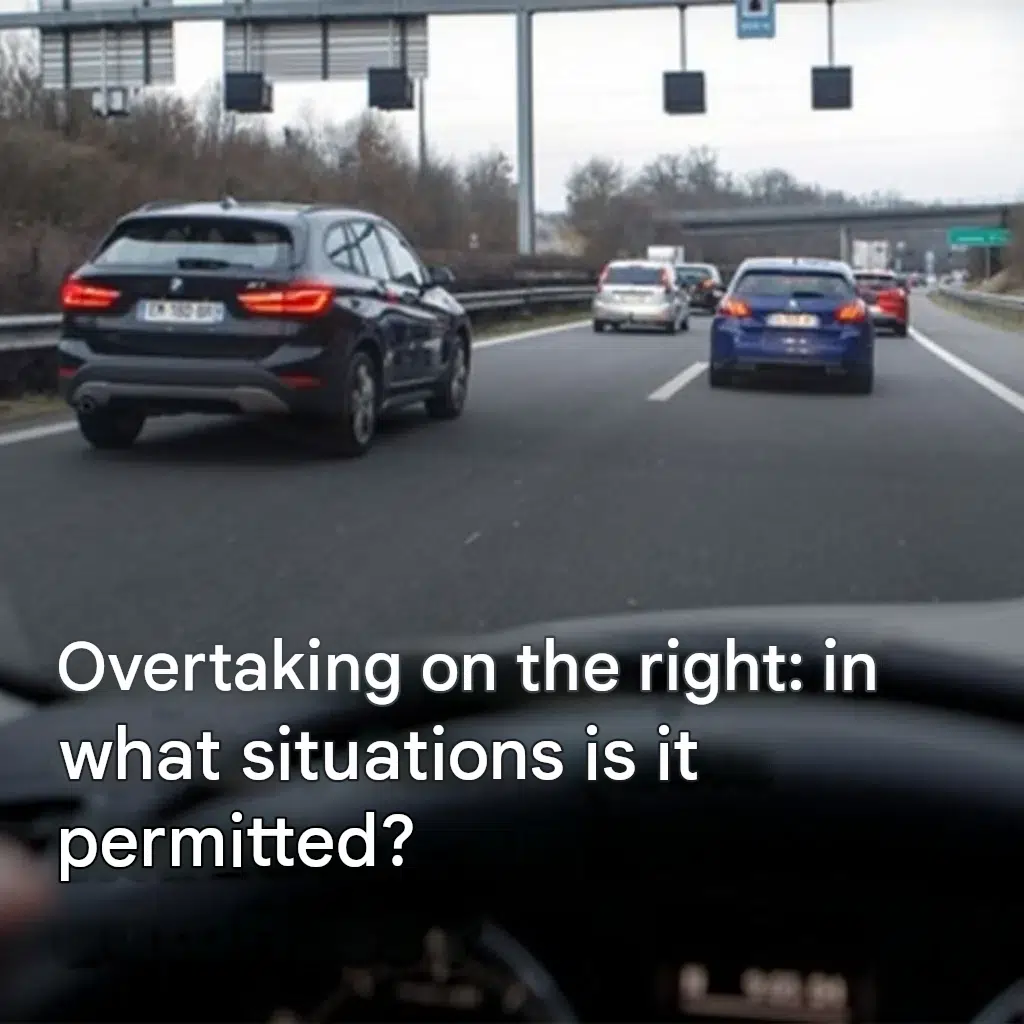
Driving rules and road regulations are established to ensure safety, smooth traffic flow, and order on highways and city streets. One of the fundamental rules taught in drivers education is that overtaking other vehicles should always be done on the left side. Passing on the right is generally restricted to prevent confusion and hazardous lane-swapping maneuvers.
However, road conditions are dynamic, and traffic regulations outline specific, legal exceptions where overtaking or passing on the right is permitted. Understanding these rules is essential for maintaining road safety, avoiding traffic violations, and handling complex driving environments.
In this comprehensive guide, we will explore the traffic laws surrounding overtaking on the right, examine the exact situations where it is legally allowed, review safety tips, and discuss practical ways to protect your driving record and automotive assets.
The General Rule: Why Passing on the Left is Standard
To understand exceptions, it is helpful to review why passing on the left is the global standard. In most jurisdictions, the leftmost lane on multi-lane highways is designated as the passing lane. Slower traffic is expected to keep right, allowing faster vehicles to pass safely on the left. This creates predictable traffic patterns and reduces the likelihood of blind-spot collisions.
When drivers attempt unauthorized passing on the right under normal traffic conditions, it creates severe hazards because drivers do not typically expect vehicles to approach rapidly from their right blind spots.
5 Specific Situations Where Overtaking on the Right Is Permitted
While general passing on the right is prohibited, traffic laws explicitly permit it under specific, controlled circumstances:
1. When a Vehicle Ahead is Turning Left
If a vehicle in front of you has signaled its intention to turn left and is positioned waiting in the center or left lane, you are legally permitted to pass it on the right, provided there is enough space and safe room to maneuver without driving onto the shoulder or sidewalk.
2. Heavy Congestion and Slow-Moving Traffic
When traffic is heavy and moving in dense, parallel columns where all lanes are congested and moving at a slow, steady pace, traveling faster in the right lane than the car to your left is generally permitted. This is commonly referred to as “queuing” or parallel flow rather than formal overtaking.
3. On One-Way Streets
On designated one-way streets with multiple marked lanes traveling in the same direction, drivers are typically permitted to travel and pass in any lane, including the right side, as long as it is done safely and without exceeding speed limits.
4. Multi-Lane Highways with Marked Lanes
On multi-lane freeways or expressways featuring clearly painted lane dividers, if traffic in the left lane is moving significantly slower than the flow of traffic, passing on the right may be permitted under specific regional traffic codes, provided lane-weaving is kept safe and legal.
5. Streetcars and Light Rail Vehicles
In urban areas, when a streetcar or tram is stopped in the center of the road to load or unload passengers, vehicles are often permitted to pass on the right side if there is a designated safety zone or sufficient clearance.
Comparison: Illegal Passing vs. Permitted Overtaking Scenarios
To help clarify when passing on the right is acceptable versus when it is a violation, review the following comparison table:
| Scenario | Legal Status | Conditions & Safety Requirements |
| Normal Highway Speeding on Right | Illegal | Weaving through traffic in right lanes at high speeds. |
| Vehicle Turning Left Ahead | Permitted | Passing safely on the right while the front vehicle waits to turn left. |
| Dense Traffic Queue / Congestion | Permitted | Moving slowly in parallel columns during heavy traffic jams. |
| Multi-Lane One-Way Streets | Permitted | Driving and passing in marked lanes traveling the same direction. |
       ┌────────────────────────────────────────────────────────┐
       │       Understanding Standard Left-Side Overtaking      │
       └───────────────────────────┬────────────────────────────┘
                                   │
                                   ▼
       ┌────────────────────────────────────────────────────────┐
       │   Identifying Legal Exceptions (Left Turns, Traffic)   │
       └───────────────────────────┬────────────────────────────┘
                                   │
                    ┌──────────────┴──────────────┐
                    ▼                             ▼
       ┌────────────────────────┐    ┌────────────────────────┐
       │ Executing Safe Maneuvers│    │ Protecting Driving     │
       │ with Proper Clearance  │    │ Record & Auto Insurance│
       └────────────────────────┘    └────────────────────────┘
Practical Tips for Safe Driving and Legal Compliance
Navigating multi-lane roads requires constant awareness and adherence to traffic laws:
- Check Your Blind Spots: Always use your mirrors and shoulder checks before changing lanes or passing vehicles.
- Maintain Safe Following Distances: Keep adequate space between your vehicle and the car ahead to react safely to unexpected stops.
- Observe Speed Limits: Never exceed posted speed limits when navigating heavy traffic or passing vehicles.
- Review Local Traffic Laws: Traffic codes can vary by region or country; familiarizing yourself with local driving regulations ensures you stay compliant.
Financial, Insurance, and Legal Considerations
Violating traffic laws regarding improper overtaking can lead to serious consequences:
- Protecting Your Driving Record: Avoiding illegal lane maneuvers prevents points from accumulating on your driver’s license, which can lead to higher insurance premiums.
- Insurance and Accident Liability: Unsafe passing on the right is a frequent cause of accidents. Maintaining proper defensive driving habits protects your vehicle, financial assets, and insurance rates.
- Legal Compliance: Staying informed about road rules guarantees safety and peace of mind during daily commutes and road trips.
Fascinating Facts About Traffic Engineering
- Lane Discipline Origins: The rule of driving and passing on specific sides of the road dates back centuries to horse-drawn carriage customs and maritime navigation rules.
- Traffic Flow Efficiency: Traffic engineers design multi-lane highways to balance volume and speed, reducing bottlenecks caused by erratic lane changing.
- Variable Speed Limits: Modern intelligent transportation systems use digital signs to adjust speed limits dynamically based on real-time traffic congestion.
Frequently Asked Questions (FAQ)
Is it ever legal to pass someone on the right on a standard highway?
Generally, passing on the right on a high-speed highway is restricted unless traffic is congested and moving in slow parallel columns, or if the vehicle ahead is executing a left turn.
What should I do if a driver is lingering in the left passing lane?
Instead of aggressively passing them on the right, maintain a safe distance, signal your intent if appropriate, and wait for them to move back to the right lane.
Can improper overtaking result in a traffic ticket?
Yes, weaving through traffic or illegally passing on the right can result in traffic citations, fines, and penalty points on your driver’s license.
Conclusion: Drive Safely and Know the Rules
Understanding when overtaking on the right is permitted is an important part of being a responsible, defensive driver. By respecting traffic laws, maintaining awareness of your surroundings, and practicing safe lane discipline, you ensure a smoother and safer journey for everyone on the road!
