
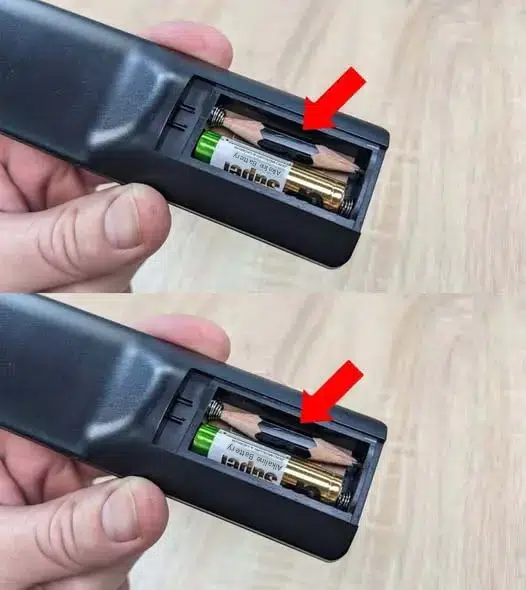
Household gadgets and electronics are supposed to make our lives easier, but they can also be a source of constant frustration. Picture this: you sink into the couch after a long, exhausting day, reach for your TV remote to turn on your favorite show, and nothing happens. The batteries are completely dead, and you don’t have any spares lying around the house.
Running out of batteries at inconvenient times is a universal annoyance. However, clever internet life-hacks and household tricks frequently surface to solve everyday problems in unexpected ways. One viral trick suggests using a small wooden pencil as an emergency fix when your remote control runs out of power.
In this comprehensive guide, we will explore how remote control battery mechanics work, the truth behind the pencil trick, practical tips for powering your devices, and ways to manage household electronics efficiently.
Understanding Remote Control Power and Battery Mechanics
To understand why quick fixes gain popularity, it helps to examine how standard remote controls operate. Most standard television remotes require two AA or AAA batteries connected in series to deliver a total voltage of around 3 volts to the internal infrared transmitter circuit.
When batteries lose their charge, their voltage drops below the minimum threshold required to power the infrared LED. When you are caught without replacement cells, improvising a temporary connection becomes the main challenge.
10 Ways to Manage Remote Controls and Household Batteries
1. The Emergency Pencil Trick
While a wooden pencil cannot generate electricity or replace a chemical battery, some viral hacks use makeshift conductors or foil adjustments in emergencies—though a pencil’s graphite core is primarily a novelty demonstration rather than a true power source.
2. Rolling Existing Batteries
Gently rolling or spinning existing alkaline batteries in their compartment can sometimes shift internal contents and squeeze out just enough remaining charge to turn your TV back on temporarily.
3. Mixing Old and New Batteries Safely
While temporary, placing one fresh battery alongside a partially drained battery can sometimes bridge the voltage gap to restore low-power device functions.
4. Cleaning Battery Contacts
Corrosion, white crust, or dust buildup on the metal springs inside the battery compartment can block current flow; cleaning them with rubbing alcohol restores function.
5. Stocking Rechargeable Batteries
Investing in a pack of rechargeable NiMH batteries and a wall charger ensures you always have a fresh power source ready for household remotes.
6. Storing Spares in a Central Location
Keep a dedicated storage box for extra AA and AAA batteries so you never have to scramble during a sudden power outage or remote failure.
7. Checking Device Power Consumption
Smart remotes with voice search and backlighting drain batteries much faster than traditional infrared remotes; switching to energy-saving settings extends battery life.
8. Reviewing Household Budgets
Buying batteries in bulk or utilizing rechargeable options reduces ongoing household expenses and minimizes trips to the store.
9. Upgrading Electronic Accessories
Using high-quality alkaline or lithium batteries prevents leakage and protects sensitive remote control electronics from corrosive damage.
10. Practical Electronics Organization
Maintaining organized household gadgets ensures your daily entertainment setup runs smoothly without unexpected interruptions.
Comparison: Emergency Fixes vs. Proper Battery Replacement
To help evaluate how to handle a dead remote, review the following comparison table:
| Method Used | Power Output & Reliability | Risk to Device | Best Practice Recommendation |
| Emergency Tricks (Pencil / Rolling) | Temporary, weak, or purely novelty-based. | Low risk, but rarely provides long-term power. | Use only as a brief stopgap until fresh batteries are found. |
| Installing Fresh Alkaline / Rechargeable Cells | Full 3-volt power delivery and reliable long-term performance. | Zero risk; optimal for device health. | Recommended standard practice for all remotes. |
       ┌────────────────────────────────────────────────────────┘
       │        Grabbing TV Remote & Discovering Dead Batteries │
       └───────────────────────────┬────────────────────────────┘
                                   │
                                   ▼
       ┌────────────────────────────────────────────────────────┘
       │     Attempting Emergency Tricks or Inspecting Contacts │
       └───────────────────────────┬────────────────────────────┘
                                   │
                    ┌──────────────┴──────────────┐
                    ▼                             ▼
       ┌────────────────────────┐    ┌────────────────────────┐
       │ Cleaning Corrosion or  │    │ Replacing with Fresh   │
       │ Rolling Old Batteries  │    │ Alkaline Batteries     │
       └────────────────────────┘    └────────────────────────┘
Practical Tips for Immediate Remote Control Rescue
When your remote stops working unexpectedly, try these quick troubleshooting steps before giving up:
- Inspect for Battery Leakage: If you see white powdery corrosion on the metal springs, clean it carefully with a cotton swab dipped in white vinegar or rubbing alcohol.
- Tap the Remote Gently: Sometimes a loose spring or minor misalignment prevents contact; gently tapping the back of the remote can re-engage the circuit.
- Test with Other Devices: Verify whether the dead remote is truly out of power or if the issue lies with the television sensor itself.
Financial, Insurance, and Legal Considerations
Managing household consumables involves smart everyday organization:
- Preventing Corrosion Damage: Leaving dead, leaking batteries inside electronics can permanently ruin appliances; always remove batteries from devices stored long-term.
- Cost-Effective Purchasing: Purchasing multi-packs of reliable batteries online or at wholesale clubs saves money compared to buying individual packs at checkout counters.
- Protecting Electronic Investments: Proper battery maintenance ensures your television remotes and smart home controllers last for many years.
Fascinating Facts About Battery History
- The First Battery: The voltaic pile, invented by Alessandro Volta in 1800, was the first chemical battery, paving the way for modern portable electronics.
- Alkaline Chemistry: Modern household batteries rely on zinc-manganese dioxide chemistry, providing stable energy output suitable for low-drain devices like remote controls.
- The Rise of Smart Remotes: Today’s advanced television remotes incorporate Bluetooth connectivity, microphone arrays, and solar-charging panels to reduce reliance on disposable batteries.
Frequently Asked Questions (FAQ)
Does putting a pencil in a remote control really fix dead batteries?
No. While viral images suggest placing a pencil in the battery slot, a wooden pencil cannot generate electrical power. At best, makeshift items are internet myths or temporary novelty hacks—you ultimately need real batteries to power a remote.
Why do remote control batteries die so quickly?
Remotes that use Bluetooth, voice commands, or motion sensing consume significantly more energy than basic infrared remotes, draining batteries much faster.
How can I stop batteries from leaking inside my remote?
Always use high-quality alkaline batteries, remove batteries if you plan to store the device unused for months, and replace old batteries promptly before corrosion forms.
Conclusion: Power Up Your Home the Right Way
Dealing with a dead remote control can disrupt a relaxing evening, but knowing how to troubleshoot battery compartments keeps you in control. While clever internet tricks make for fun viewing, keeping a stash of fresh backup batteries ensures your entertainment setup never misses a beat!
