
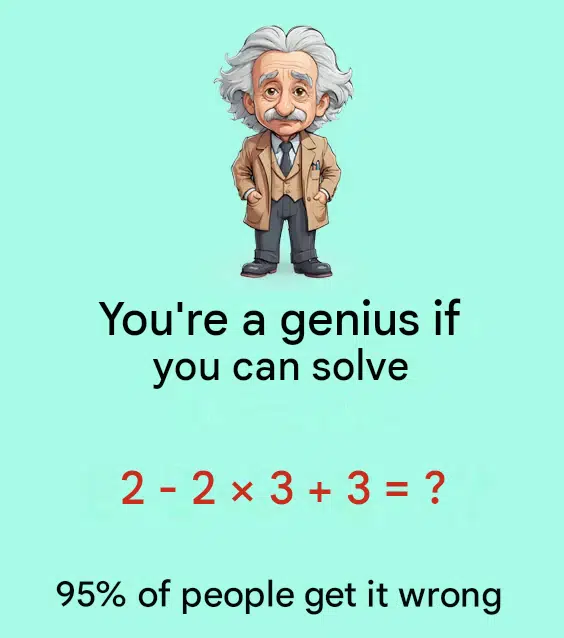
Mathematical puzzles, number sequences, and logical riddles have captivated human curiosity for centuries. Whether encountered in classrooms, competitive examinations, or scrolling through social media feeds, mathematical expressions challenge our cognitive processing, order of operations, and analytical reasoning. Exploring why numerical puzzles are so engaging involves examining human psychology, cognitive science, educational strategies, and the structural ways our brains interpret mathematical logic.
As digital content evolves, blending interactive problem-solving with educational insights provides tremendous value for readers seeking mental stimulation. Furthermore, understanding cognitive function intersects with various professional domains, including technology, education, finance, and investment planning.
The Science of Numerical Perception and Cognitive Processing
When we look at a numerical expression puzzle, such as solving an order of operations problem, our brains instantly engage in complex logical processing. The human mind excels at analyzing mathematical rules and sequential hierarchies.
+-----------------------------------------------------------------------+
|               STAGES OF MATHEMATICAL PUZZLE PROCESSING                |
+-----------------------------------------------------------------------+
|  1. Initial Grouping & Expression Scan                                |
|  2. Multiplication & Division Priority Application                    |
|  3. Addition & Subtraction Final Resolution                           |
|  4. Conclusion & Problem Verification                                 |
+-----------------------------------------------------------------------+
Why Math Puzzles Challenge Our Minds
Puzzles often rely on standard mathematical order of operations rules that test our attention to detail:
- Multiplication Priority: Executing multiplication before addition and subtraction to avoid common procedural errors.
- Sequential Processing: Performing addition and subtraction operations from left to right once multiplication is complete.
- Attention to Detail: Focusing intensely on mathematical signs prevents premature conclusions and encourages rigorous step-by-step verification.
The Benefits of Regular Mental Stimulation and Puzzles
Engaging in regular brain teasers, math puzzles, and cognitive exercises offers numerous mental health and psychological benefits:
- Enhanced Neuroplasticity: Challenging the brain with novel mathematical problems stimulates neural pathways, supporting cognitive flexibility and mental agility.
- Improved Analytical Skills: Regularly working through calculations sharpens logical reasoning, patience, and problem-solving speed.
- Stress Reduction: Immersive puzzles provide a healthy mental distraction from daily anxieties, acting as an active form of cognitive mindfulness.
Integrating Cognitive Health, Financial Planning, and Legal Protections
While keeping the mind sharp through math puzzles is a great hobby, managing overall life stability requires balancing cognitive wellness with practical security, legal foresight, and financial management.
Financial and Legal Foundations for Personal Well-Being
As individuals focus on lifelong learning and mental fitness, ensuring financial and legal preparedness is equally essential:
- Investment and Retirement Strategy: Diversifying financial portfolios, managing loans, and planning for retirement ensures long-term economic independence and security.
- Legal Services and Estate Planning: Collaborating with qualified legal professionals to draft wills, trusts, and power of attorney documents safeguards personal and family interests.
- Insurance Coverage: Maintaining comprehensive health, property, and life insurance policies protects against unexpected life events and liabilities.
Practical Tips for Solving Math Puzzles and Boosting Brain Power
- Follow Order of Operations: Always use standard mathematical hierarchies like PEMDAS/BODMAS to evaluate expressions systematically.
- Double-Check Your Steps: Re-evaluate each line of calculation to ensure no arithmetic errors were made during intermediate steps.
- Practice Daily Cognitive Exercises: Incorporate math logic problems, crosswords, or number games into your daily routine to keep your mind agile.
- Maintain a Balanced Lifestyle: Combine mental stimulation with proper sleep, nutrition, and cardiovascular health to optimize cognitive function.
- Seek Continuous Education: Explore new subjects, financial literacy topics, and technological skills to stimulate diverse areas of the brain.
Fascinating Facts About Mathematical Patterns and Puzzles
- The human brain utilizes specialized parietal lobe networks to process numerical quantities and mathematical relationships intuitively.
- Regular engagement in cognitive challenges and mathematical puzzles has been linked in psychological studies to improved problem-solving efficiency across all age groups.
- Math equations that trigger common order-of-operation debates frequently go viral on social media, demonstrating how online communities collaborate to verify logical solutions.
Conclusion
Numerical puzzles and math challenges do more than just entertain—they test our cognitive limits, sharpen our analytical skills, and provide a fun workout for the mind. By combining lifelong mental curiosity with robust financial planning, legal safeguards, and healthy living, we build a well-rounded foundation for personal growth and lifelong success.
Frequently Asked Questions (FAQ)
How do you solve the expression 2 – 2 * 3 + 3?
First, perform the multiplication: 2 * 3 = 6, modifying the expression to 2 – 6 + 3. Next, calculate from left to right: 2 – 6 = -4, and then -4 + 3 = -1.
Why do math problems often cause arguments online?
Different people sometimes apply the order of operations incorrectly or perform addition before multiplication, leading to passionate debates in social media comment sections.
What role does logical reasoning play in daily life?
Logical reasoning helps individuals evaluate financial decisions, navigate legal documents, solve complex everyday problems, and maintain sharp cognitive processing as they age
