
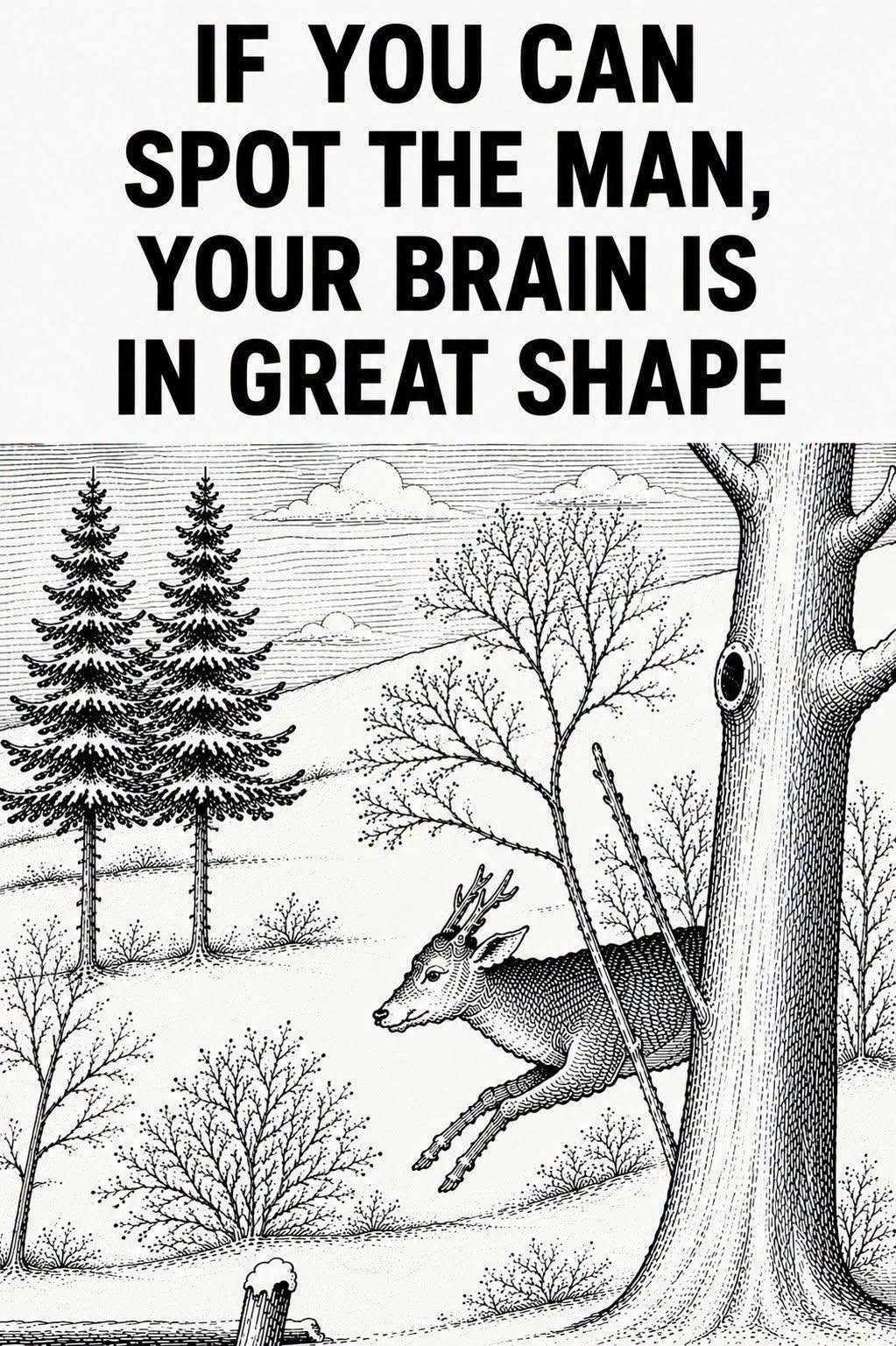
Optical illusions and visual brain teasers have captivated human curiosity for centuries. From classical psychology tests to viral social media challenges, images with hidden elements test our visual perception, cognitive agility, and pattern recognition. When presented with an intricate black-and-white engraving of a woodland scene featuring a leaping deer, two evergreen trees, and a large oak trunk, viewers are immediately challenged to find a hidden human figure concealed within the artwork.
Understanding visual processing and cognitive health is essential for maintaining mental sharpness. Just as individuals carefully structure a financial investment portfolio, consult an attorney for legal services, manage a mortgage, or secure comprehensive health insurance and life insurance policies, keeping your brain active and engaged requires regular mental exercise. Whether you are looking to boost your concentration, test your visual perception, or explore the history of optical puzzles, this complete guide breaks down the science of hidden-image illusions.
The Science of Visual Puzzles and Pattern Recognition
The human visual system is a complex network designed to interpret lines, shapes, shadows, and contours instantly. However, our brains heavily rely on Gestalt principles—tendencies to group elements together and perceive a coherent whole.
In composite or hidden-image puzzles like this woodland scene, the artist intentionally uses negative space, branching structures, and natural textures to disguise a secondary figure. When you first look at the image, your eyes naturally lock onto the most prominent focal point: the large deer leaping past the tree. Overcoming this initial visual bias requires shifting your focus from the whole scene to smaller background contours, compelling your brain to re-evaluate the lines.
Why Visual Teasers Go Viral Online
Brain teasers and hidden-object challenges frequently dominate social media feeds for several compelling reasons:
- The Instant Reward of Discovery: Finding a hidden figure triggers a rush of dopamine, creating a satisfying sense of accomplishment.
- Social Comparison and Engagement: People love testing their friends and family members by asking, “Did you see it right away?” which drives massive comment sections and shares.
- Cognitive Workout: Engaging with visual puzzles offers a quick, playful mental break from daily routines while encouraging focused attention.
Deconstructing the Woodland Puzzle: Where Is the Man?
If you stare closely at the intricate engraving, the hidden man is cleverly formed by the natural contours of the landscape and vegetation:
- Instead of looking at the deer or the large foreground tree, shift your gaze toward the central area of the composition.
- The branches, shading, and contours of the bushes and tree lines blend together to outline a human face or full figure hidden within the negative space of the forest.
- Once your brain recognizes the pattern, the hidden figure suddenly becomes obvious—demonstrating how our perception shifts once we know what to look for!
Practical Tips for Boosting Cognitive Agility and Focus
Keeping your mind sharp and agile requires consistent mental stimulation and healthy lifestyle habits. Here are practical ways to enhance your cognitive function:
- Engage in Regular Brain Teasers: Challenge your visual and analytical skills daily with crosswords, Sudoku, optical illusions, and logic puzzles.
- Prioritize Quality Sleep: Deep sleep is crucial for memory consolidation, neural repair, and maintaining optimal cognitive processing speeds.
- Maintain a Balanced Diet: Fuel your brain with nutrient-dense foods rich in omega-3 fatty acids, antioxidants, and essential vitamins that support neural health.
- Protect Your Long-Term Well-Being: Just as mental exercises keep your brain fit, managing your financial investments, legal planning, and health insurance ensures complete life security.
- Take Mindful Breaks: Step away from screens periodically to rest your eyes and reset your concentration throughout the work day.
Interesting Facts About Optical Illusions in History
The history of visual trickery and hidden art features fascinating milestones:
- Renaissance Roots: Hidden-image art and composite portraits date back centuries, famously utilized by Renaissance painters who embedded secondary symbols and faces into natural landscapes and still-life arrangements.
- The Power of Gestalt Psychology: Developed in the early 20th century, Gestalt psychology proved that human minds automatically organize visual stimuli into unified groups, which is why optical illusions are so effective at tricking our perception.
- Digital Age Revival: Classic newspaper puzzle cartoons from the 19th and 20th centuries have found a massive second life on modern social media platforms, engaging millions of global users in interactive visual challenges.
Conclusion
Visual puzzles like the woodland engraving remind us of how wonderfully complex the human brain is. Whether you spotted the hidden man immediately or had to search closely, engaging with optical illusions provides a fun, stimulating workout for your visual cortex. By combining regular cognitive exercises, healthy lifestyle habits, and a curious mindset, you can keep your brain in top shape for years to come.
Frequently Asked Questions (FAQ)
What do optical illusions test?
Optical illusions test your brain’s ability to process visual information, overcome initial perception biases, and recognize patterns hidden within complex backgrounds.
Why are hidden-image puzzles so popular?
They are popular because they offer a quick, interactive challenge that sparks curiosity, friendly competition, and a satisfying sense of discovery when solved.
Can brain teasers improve cognitive health?
Yes. Regularly engaging in puzzles, riddles, and visual challenges helps stimulate neural pathways, encourages mental flexibility, and supports overall cognitive engagement.
