
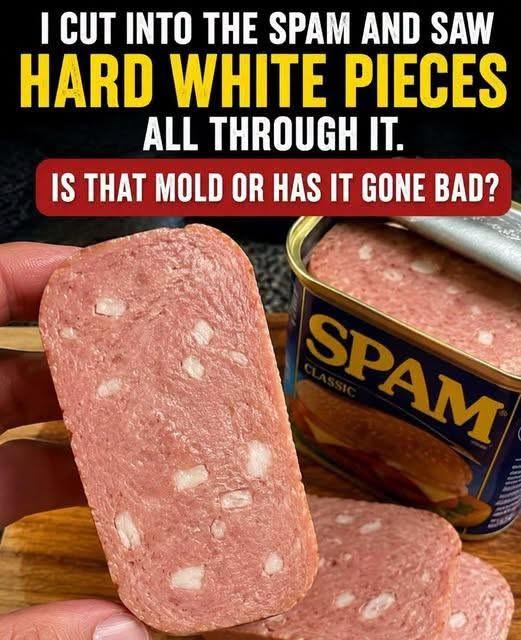
Navigating grocery store staples, inspecting pantry items, and understanding food composition are essential parts of everyday cooking. Canned meats and processed provisions have sustained households for generations with their long shelf life and convenience. When a viral online image circulates featuring a slice of Spam with visible white pieces alongside a worried question about mold or spoilage, home cooks everywhere stop to wonder what those mysterious chunks actually are.
Prioritizing food safety, culinary knowledge, and household well-being requires careful attention to detail and proactive care. Just as individuals carefully structure a financial investment portfolio, consult an attorney for legal services, manage a mortgage, or secure comprehensive health insurance and life insurance policies, protecting your home kitchen and personal nutrition demands meticulous care. Whether you are exploring pantry staples, reviewing food preservation history, or looking to understand viral cooking questions, this comprehensive guide breaks down the facts about canned meat ingredients.
Understanding Processed Canned Meats and Ingredients
Canned lunch meats like Spam are manufactured using specific cuts, curing agents, and binding ingredients:
1. The Reality of Fat Pockets and Gelatin
The hard white pieces commonly found dispersed throughout canned pork products are simply solidified fat deposits and natural pork gelatin that separate and harden during the retorting (canning and pressure-cooking) process.
2. Differentiating Safe Ingredients from Spoilage
Unlike surface mold or bacterial contamination—which typically presents as fuzzy growth, off-odors, or slimy textures—dispersed internal white bits are normal components of the meat mixture.
Practical Tips for Pantry Safety and Food Inspection
Ensuring your canned goods are safe to eat and properly stored involves simple, consistent habits:
- Inspect Canned Goods Carefully: Discard any cans that are deeply dented, bulging, leaking, or spurt liquid upon opening, as these are signs of dangerous bacterial spoilage.
- Store in Cool, Dry Places: Keep your canned pantry items away from extreme heat and moisture to maintain optimal product quality until the expiration date.
- Check Odor and Texture: Trust your senses; if opened meat has a foul, putrid odor or an abnormal slimy coating, discard it immediately regardless of appearance.
- Protect Your Financial and Home Assets: Just as you monitor your kitchen inventory, ensure your home property insurance, grocery budgets, and financial planning remain secure.
- Verify Viral Food Claims: Look to established culinary sources and manufacturer guidelines rather than alarming social media posts when evaluating food safety questions.
Interesting Facts About Canned Food History
The history of food preservation and canned goods features fascinating milestones:
- A Century of Convenience: Mass-produced canned luncheon meats gained immense popularity during the mid-20th century, providing stable protein sources during times of rationing and global conflict.
- The Science of Retorting: Commercial canning uses high-temperature pressure sterilizing (retorting) to cook food inside the sealed container, ensuring long shelf stability without artificial preservatives.
- Viral Food Myths: Social media platforms frequently amplify humorous or alarming posts about everyday food items, turning standard ingredients into viral mysteries.
Conclusion
Uncovering what the white pieces inside canned meat actually are offers a comforting reminder that normal food science is often mistaken for spoilage online. While viral posts use dramatic questions to capture attention, true culinary confidence comes from understanding food manufacturing and safety standards. By combining kitchen awareness with solid personal and financial planning, you can manage your household pantry with total peace of mind.
Frequently Asked Questions (FAQ)
Are the white chunks in Spam safe to eat?
Yes. The white pieces are completely normal bits of rendered pork fat and gelatin that solidify during the canning and cooking process, and they are entirely safe to consume.
How can you tell if canned meat has actually gone bad?
Real spoilage in canned meats is usually indicated by a foul or rancid odor, a slimy or sticky texture on the surface, or visible mold growth, as well as bulging or leaking cans.
Why do fat pockets form inside canned meats?
During the high-heat pressure cooking process used to seal and sterilize canned meats, pork fats melt and mix throughout the product, occasionally cooling into distinct white clusters as the can cools down.
