
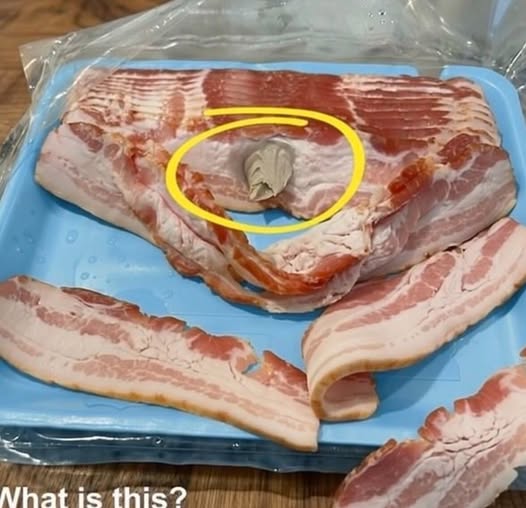
Purchasing meat products from local grocery stores comes with expectations of high quality, cleanliness, and rigorous food safety inspection. A viral food safety image showing raw bacon slices spread out on a blue plastic tray—highlighted by a yellow circle around a mysterious greyish, textured mass embedded deep within the pork belly fat alongside the question “What is this?”—sparks widespread concern among consumers. Finding abnormal textures, cysts, or foreign tissue in packaged meat raises immediate questions about product safety and consumer rights.
Understanding what causes natural abnormalities in pork cuts, evaluating food safety risks, and knowing how to handle defective food purchases ensures kitchen safety and peace of mind.
Identifying Abnormalities in Packaged Bacon and Pork Belly
Unusual masses embedded in raw pork cuts generally stem from natural biological tissues or processing defects.
1. Mammary Glands, Cysts, or Lymph Nodes
Pork bacon is cured and sliced from the pork belly region of swine. In female pigs (sows or gilts) or certain cuts close to the belly surface, underlying mammary gland tissues, milk ducts, benign cysts, or localized lymph nodes can occasionally remain intact during processing. These tissues appear as greyish, fibrous, or sponge-like masses within the surrounding white fat.
2. Injections and Processing Artifacts
Commercial bacon undergoes a curing process where brine (a solution of salt, water, sodium nitrite, and flavorings) is injected into the pork belly through fine needles. In rare cases, localized tissue reactions or mechanical injection artifacts create discolored pockets or textured spots within the fat layers.
Food Safety Standards, Inspection, and Consumer Actions
When encountering unexpected tissues or abnormal spots in raw meat, following standard food safety guidelines is vital.
Is It Safe to Eat Defective Bacon?
Even though many natural tissue abnormalities (like milk glands or benign cysts) are rendered harmless during thorough high-heat cooking, food safety experts strongly advise against consuming meat containing unknown masses. Discolored or textured anomalies alter flavor, affect texture, and pose unverified biological risks.
Returning Defective Food and Reporting Quality Issues
Consumers who discover foreign objects or tissue defects in packaged meat should retain the packaging, receipt, and lot/UPC code. Returning the product to the grocery retailer for a full refund or reporting the batch code directly to the meat producer helps manufacturers maintain quality control standards.
Practical Tips for Handling Meat Quality Concerns
- Do Not Consume Questionable Meat: Avoid eating any portion of a meat package containing unidentified discolored masses or cysts.
- Photograph the Lot Code and Package: Take clear photos of the product packaging, brand logo, and expiration/lot code for refund verification.
- Store Packages Sealed for Returns: Keep the defective meat sealed in a Ziploc bag in the freezer if returning it to the store for a refund or inspection.
Frequently Asked Questions (FAQ)
What is the greyish mass sometimes found in raw bacon fat?
The greyish textured spot is typically a remnant of pig mammary gland tissue, a milk duct, or a localized lymph node located in the pork belly.
Should you trim around the abnormal spot and cook the rest?
It is safest to discard or return the entire package, as cross-contamination or quality degradation may affect the surrounding bacon slices.
Who regulates raw bacon quality and safety in the United States?
The Food Safety and Inspection Service (FSIS), an agency of the USDA, regulates and inspects commercial pork and poultry processing plants.
