
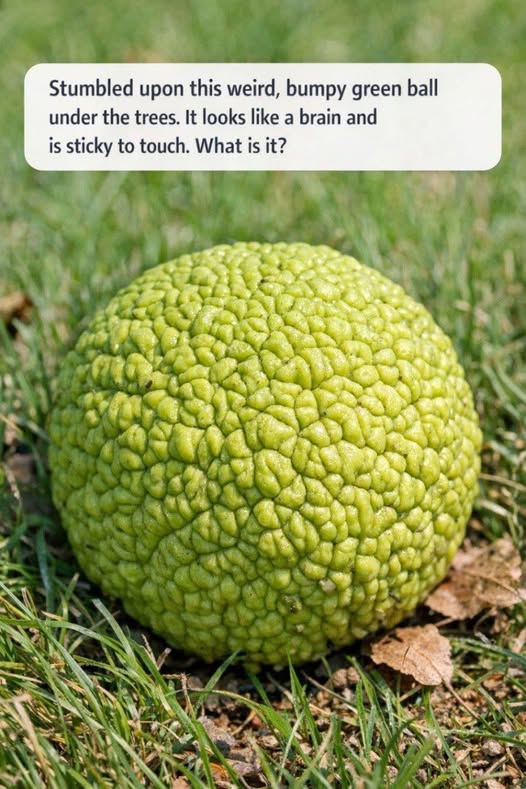
Walking through park trails or backyard woods during early autumn often leads to surprising botanical discoveries. A viral image showing a large, bumpy bright green orb resting on grass—paired with text asking “Stumbled upon this weird, bumpy green ball under the trees. It looks like a brain and is sticky to touch. What is it?”—sparks curiosity among nature lovers. This unique, brain-like fruit is known as an Osage orange (also commonly called a hedge apple, monkey ball, or horse apple), produced by the Maclura pomifera tree.
Understanding Osage orange tree biology, exploring traditional folklore uses, and learning handling precautions helps demystify this fascinating North American tree species.
What Is an Osage Orange? Botanical Profile and Characteristics
Despite its common name and grapefruit-like size, the Osage orange is not a true orange or citrus fruit.
1. Distinctive Physical Features
The Osage orange fruit is a composite fruit, roughly 3 to 6 inches in diameter, characterized by a brain-like, bumpy textured rind and a vibrant yellowish-green color. When punctured or cut, the fruit releases a thick, sticky white latex juice that leaves a firm residue on hands and clothing.
2. The Maclura Pomifera Tree
Native to North America—particularly the Red River basin regions of Texas, Oklahoma, and Arkansas—the Osage orange tree is a hardy hardwood species belonging to the mulberry family (Moraceae). The tree features stout thorns, dense wood, and glossy green leaves.
Historical Uses, Insect Myths, and Safety Precautions
The Osage orange tree carries a rich history in agriculture and rural folklore.
Natural Living Fences and Dense Timber
Historically, farmers planted Osage orange trees closely together to form impenetrable “living fences” or hedge rows to contain livestock before the invention of barbed wire. The wood itself is extremely dense, rot-resistant, and flexible, making it a prized choice for Native American bow making, fence posts, and firewood.
Do Hedge Apples Repel Spiders and Pests?
A popular midwestern folk belief claims that placing fresh hedge apples in basements or near doorways deters spiders, roaches, and mice. While researchers have identified natural repellent compounds called isoflavones within the fruit, raw hedge apples do not release enough concentrated chemical to effectively eliminate pest infestations.
Practical Tips for Handling Osage Oranges
- Wear Gloves When Handling: Wear disposable gloves when picking or cutting hedge apples to prevent sticky white latex sap from staining your hands.
- Keep Away from Domestic Livestock: While not dangerously toxic to humans, eating large chunks can present a choking hazard for cattle or horses.
- Use Fallen Wood for Long-Burning Fires: If harvesting downed wood, Osage orange timber produces exceptionally high heat and long-burning embers.
Frequently Asked Questions (FAQ)
Are Osage oranges edible for humans?
No, Osage oranges are generally considered inedible for humans due to their tough texture, bitter taste, and sticky latex sap.
Why is it called a “monkey ball” or “hedge apple”?
The names stem from its round shape, historical use in planting hedge rows, and visual resemblance to apples or tropical fruits.
Does placing an Osage orange in your basement get rid of spiders?
While traditional folklore suggests it keeps insects away, scientific testing shows raw fruits lack a high enough chemical concentration to act as a reliable pest repellent.
