
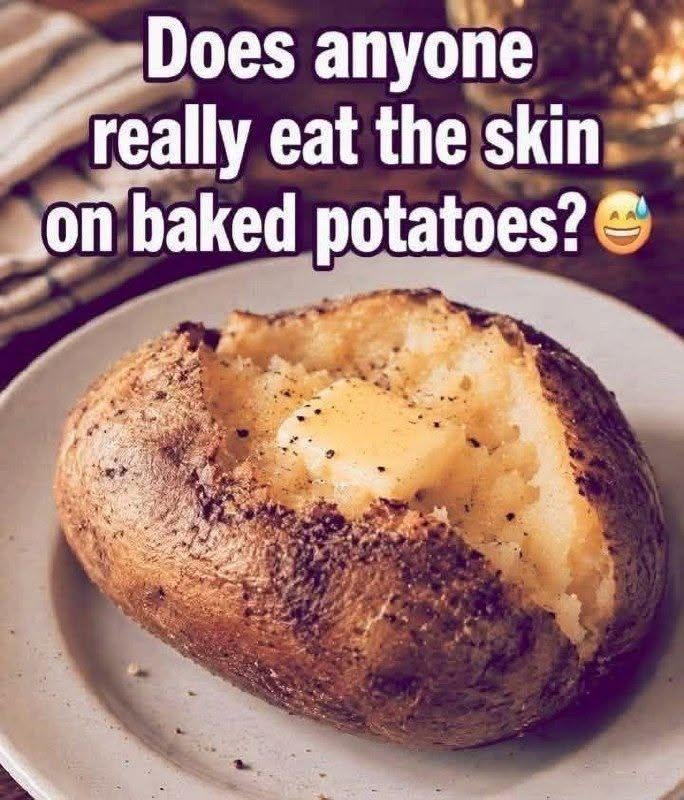
Baked potatoes are a timeless comfort food staple, prized for their fluffy interior and versatile topping options. A viral culinary image displaying a hot, split baked potato topped with melting butter and black pepper—accompanied by the question “Does anyone really eat the skin on baked potatoes?😅”—sparks lively debates among food enthusiasts. Eating potato skins is not only common practice, but it also delivers significant dietary benefits when prepared correctly.
Understanding the nutrition contained in potato skins, mastering techniques for achieving a crispy exterior, and practicing proper cleaning safety elevates simple baked potatoes into a flavorful dish.
Nutritional Value of Potato Skins
Discarding potato skins means missing out on a concentrated source of essential vitamins, minerals, and dietary fiber.
1. High Fiber and Essential Nutrients
The skin of a potato contains roughly half of the total dietary fiber found in the vegetable. Fiber supports healthy digestion, promotes satiety, and helps regulate blood sugar levels. Additionally, potato skins are rich in potassium, vitamin C, B vitamins, and iron.
2. Powerful Antioxidants
Potato skins house potent plant compounds and antioxidants, including chlorogenic acid and flavonoids. These antioxidants help combat oxidative stress in the body and support cardiovascular health.
Crisping Techniques, Cleaning Safety, and Solanine Awareness
Proper preparation turns tough potato skins into a delicious, crispy treat while ensuring food safety.
Mastering the Crispy Baked Potato Skin
To achieve a golden, flavorful skin, rub scrubbed Russet or Yukon Gold potatoes with olive oil or melted butter and season generously with sea salt before baking directly on the oven rack at high temperatures (around 400°F to 425°F). Avoid wrapping potatoes in aluminum foil during baking, as trapped steam softens the skin and makes it soggy.
Scrubbing and Avoiding Green Skins
Because potatoes grow underground, thoroughly scrubbing away dirt under cold running water with a vegetable brush is essential. Avoid eating potato skins that display a greenish tint or sprouted eyes, as green areas contain solanine—a naturally occurring toxic glycoalkaloid that causes stomach distress and a bitter taste.
Practical Tips for Baking Perfect Potato Skins
- Scrub Thoroughly Before Baking: Use a firm vegetable brush under running water to remove all residual soil from the skin texture.
- Oil and Salt the Exterior: Coat the outer skin lightly with high-heat oil and coarse kosher salt to build a flavorful, crispy crust.
- Skip the Foil Wrapper: Bake potatoes bare on an oven rack to allow moisture to evaporate and create a crisp exterior.
Frequently Asked Questions (FAQ)
Is it healthy to eat baked potato skins?
Yes, potato skins are loaded with fiber, potassium, iron, and antioxidant compounds that enhance overall nutritional intake.
Why shouldn’t you eat green potato skins?
Green skin indicates the presence of solanine, a natural plant compound that can cause nausea, stomach pain, and headaches if consumed in quantity.
Which potato variety makes the best crispy skin?
Russet potatoes have thicker, starchier skins that crisp up exceptionally well when baked at high heat.
