
Introduction
Air travel can be a thrilling experience, whether you’re embarking on a long-awaited international vacation, heading out on a critical business trip, or visiting family across the country. However, navigating airport security checkpoints can quickly turn into a stressful ordeal if you aren’t familiar with current transportation security regulations. One of the most frequent points of confusion for travelers centers around food: What can you pack in your carry-on bag, and what will get confiscated at the security line?
With rising airport dining costs and changing inflight meal policies, packing your own travel snacks and meals has become a smart financial strategy and a great way to maintain your personal diet. Yet, many passengers are shocked to discover that items like hummus, salad dressings, creamy cheeses, or even certain fresh fruits can be turned away by security officers. The line between a “solid food” and a “liquid or gel” isn’t always obvious to the average traveler, leading to lost money, wasted food, and unnecessary security delays.
In this comprehensive travel guide, we will break down official airport security guidelines for carry-on foods, explain the science and logic behind liquid limitations, detail permitted versus prohibited items, and provide essential travel hacks to ensure your journey through the airport security checkpoint is smooth, efficient, and hassle-free.
1. Demystifying the 3-1-1 Rule for Carry-On Food
To understand airport food regulations, you must first master the fundamental rule governing liquids, aerosols, and gels in carry-on luggage: the 3-1-1 liquids rule.
The Core Mechanics of the 3-1-1 Rule
Security agencies worldwide enforce strict volume limits on liquid-like substances brought into the aircraft cabin. The rule breaks down as follows:
- 3.4 Ounces (100 Milliliters) or Less: All liquids, gels, pastes, and creams must be held in containers with a total capacity of 3.4 ounces or less.
- 1 Quart-Sized Bag: All small liquid containers must fit comfortably inside a single clear, sealable, quart-sized plastic bag.
- 1 Bag per Passenger: Each traveler is permitted only one quart-sized liquids bag through the security screening lane.
What Defines a “Liquid, Gel, or Spreadable” Food?
The most common trap for travelers is assuming that “liquid” only refers to pourable drinks like water, juice, or soda. From a security standpoint, any food item that can be spilled, spread, smeared, sprayed, or pumped is classified as a liquid or gel.
If you can spread it on bread (like peanut butter, cream cheese, or hummus) or if it conforms to the shape of its container (like yogurt or soup), it falls strictly under the 3.4-ounce rule. If the container exceeds 3.4 ounces—even if it is half-empty—security officers will require you to surrender the item before entering the gate area.
2. Permitted Foods: What You CAN Bring in Your Carry-On
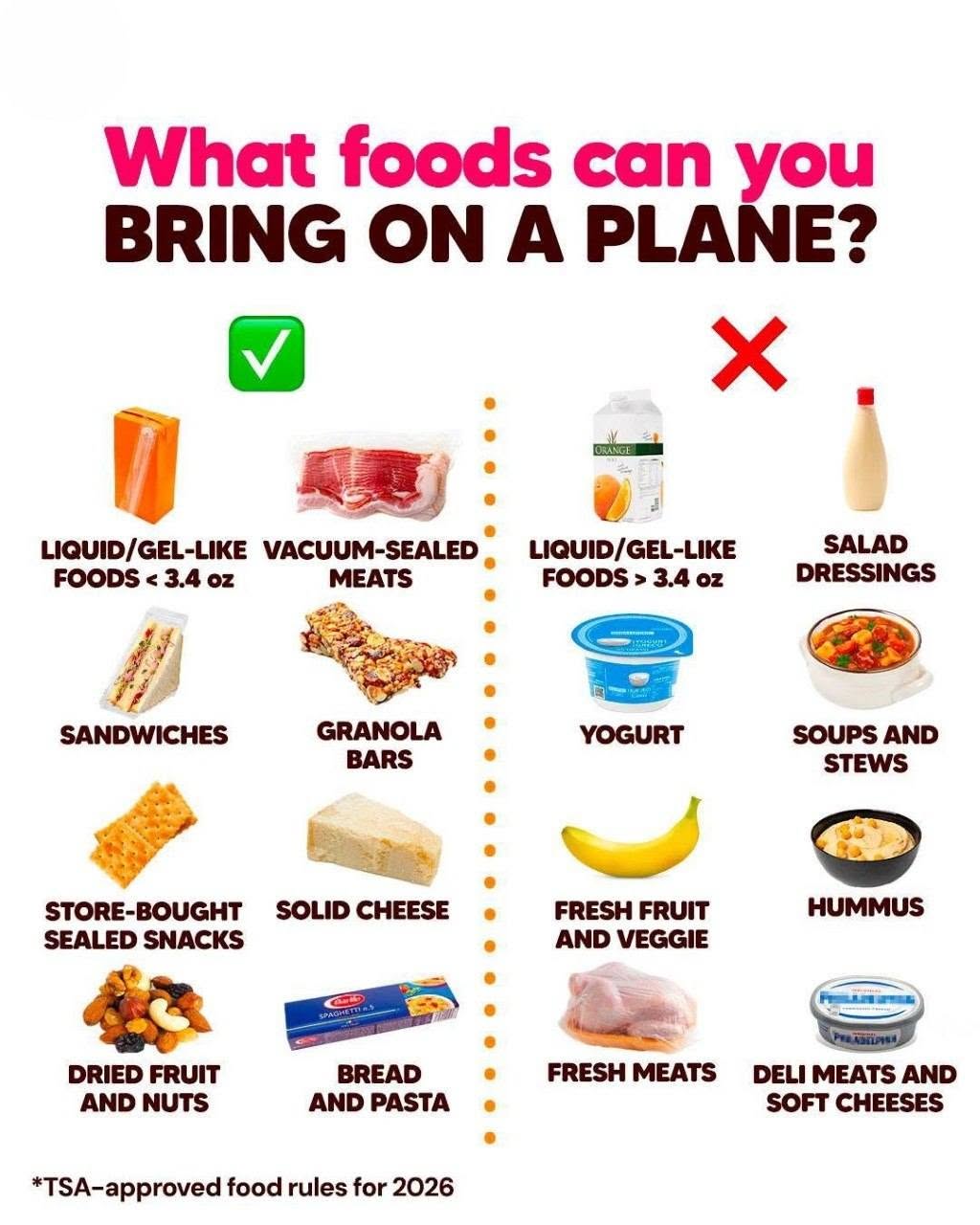
Fortunately, a wide variety of delicious, nutrient-dense foods are fully allowed in your carry-on bag without any volume restrictions, provided they are solid and free of excess liquids.
+---------------------------------+-------------------------------------------------------+
| Permitted Food Category         | Security Status & Requirements                        |
+---------------------------------+-------------------------------------------------------+
| Solid Prepared Foods            | Allowed (Sandwiches, wraps, solid burgers, pizza).    |
+---------------------------------+-------------------------------------------------------+
| Dry Packaged Snacks             | Allowed (Granola bars, crackers, pretzels, chips).    |
+---------------------------------+-------------------------------------------------------+
| Vacuum-Sealed & Cured Meats     | Allowed (Vacuum-packed bacon, jerky, hard salami).    |
+---------------------------------+-------------------------------------------------------+
| Hard & Solid Cheeses            | Allowed (Cheddar, Swiss, Parmesan, Gouda blocks).     |
+---------------------------------+-------------------------------------------------------+
| Dry Carbohydrates               | Allowed (Uncooked pasta, dry rice, bakery bread).     |
+---------------------------------+-------------------------------------------------------+
| Dried Fruits & Nuts             | Allowed (Almonds, trail mix, dried cranberries/figs). |
+---------------------------------+-------------------------------------------------------+
Solid Snacks and Baked Goods
Dry foods are the safest bet for air travel. Items like store-bought sealed snacks, crackers, cookies, chips, and granola bars can be brought through security in unlimited quantities for personal consumption. Dry bread, rolls, bagels, and dry pasta packages are also fully compliant.
Sandwiches and Solid Meals
You are welcome to bring fully constructed sandwiches, wraps, or cooked solid meals through security. However, exercise caution with condiments: a sandwich pre-spread with mayonnaise or mustard is permitted, but bringing a separate 8-ounce bottle of salad dressing or hot sauce will result in confiscation.
Hard Cheeses and Vacuum-Sealed Meats
Solid, hard cheeses (such as aged cheddar, Swiss, or block Parmesan) are permitted in any quantity. Similarly, fully cured or vacuum-sealed meats—such as beef jerky, prosciutto, or sealed dry sausages—are carry-on friendly. These items provide high protein to keep you satiated during long flights without violating fluid limits.
3. Prohibited Foods: What Will Get Confiscated at Security
Many travelers are surprised when seemingly healthy or solid items are flagged by screening officers. Understanding these restricted categories will save you time and money.
Soups, Stews, and Liquified Meals
Any canned or containerized soup, stew, broth, or chili that exceeds 3.4 ounces is strictly prohibited in carry-on bags. Even if a stew contains substantial solid meat and vegetables, the surrounding liquid triggers the restriction.
Spreads, Dips, and Soft Dairy
A major point of confusion involves soft dairy and spreadable dips:
- Yogurt and Cottage Cheese: Because of their viscous, gel-like consistency, tubs of yogurt, pudding, and cottage cheese larger than 3.4 ounces cannot go through carry-on screening.
- Hummus, Guacamole, and Salsa: These popular party dips are classified as spreads/gels. Standard grocery store containers (typically 8 to 16 ounces) are not allowed.
- Deli Meats and Soft Cheeses: While hard cheeses are allowed, soft, creamy, or spreadable cheeses (such as Brie, Camembert, ricottas, and tub cream cheese) are treated as gels. Unsealed or wet deli meats dripping with brine or juices may also receive extra scrutiny.
Condiments and Dressings
Bottles of salad dressing, ketchup, barbecue sauce, oil, vinegar, and marinades must follow the 3-1-1 rule. If you want to enjoy a salad onboard, buy your dressing after passing through security or carry single-serve packets under 3.4 ounces inside your quart-sized liquids bag.
Fresh Fruits, Vegetables, and Raw Meats (Agricultural Rules)
While a single apple or banana is usually permitted through domestic security checkpoints, fresh fruits, vegetables, and raw unsealed meats face significant restrictions—especially when traveling internationally or to specific regions like Hawaii, Puerto Rico, or international destinations. Agricultural security protocols aim to prevent the spread of invasive pests and plant diseases. Furthermore, raw meats carrying ice packs or excess fluids will be turned away if the ice packs have thawed into liquid.
4. Financial and Travel Smart Tips for Inflight Dining
Planning your travel nutrition isn’t just about security compliance—it’s also about smart personal finance and travel efficiency.
Saving Money on Airport Dining
Airport food vendors mark up prices significantly due to high terminal operating costs. A simple family meal at an airport restaurant can easily exceed $60 to $80. By preparing your own travel sandwiches, trail mixes, and solid snacks at home, you save substantial money that can be reallocated toward your vacation itinerary, hotel upgrades, or travel insurance policies.
Insurance and Delays: Staying Prepared
Flight delays, tarmac waits, and missed connections are an unfortunate reality of modern aviation. Having a supply of non-perishable, high-protein snacks (like nuts, dried fruit, and granola bars) in your carry-on ensures you won’t be left stranded without food during unexpected layovers when terminal restaurants are closed. If you hold comprehensive travel insurance or premium credit card protections, food expenses during long delays may be reimbursable—but keeping immediate snacks on hand prevents hunger emergencies.
Conclusion: Master Your Airport Snack Strategy
Navigating airport security with food doesn’t have to be a guessing game. By remembering the fundamental rule—if you can spill, spread, smear, or pour it, it must be 3.4 ounces or less—you can pack your carry-on with complete confidence. Stick to solid cheeses, dry snacks, vacuum-sealed meats, sandwiches, and dry baked goods for a seamless security experience.
By planning your travel meals in advance, you’ll breeze through security lanes, save money, and enjoy a comfortable, delicious journey to your destination. Safe travels!
Practical Tips for Packing Food in Carry-Ons
- The Tilt Test: If you tilt the food container and the contents shift or slump to one side, security will classify it as a liquid or gel. Pack it in checked luggage or leave it at home.
- Keep Ice Packs Completely Frozen: You are allowed to bring gel ice packs to keep food cool, but they MUST be 100% frozen solid when passing through security. If they are partially thawed, slushy, or liquid, they will be confiscated.
- Separate Your Food at Screening: Place your food bag in a separate bin during security screening. This allows TSA officers to inspect it easily without digging through your entire carry-on bag.
- Bring an Empty Water Bottle: Avoid paying $5 for airport bottled water. Bring a reusable, empty water bottle through security and fill it up at an airport hydration station before boarding.
- Pack Decluttered, Clear Bags: Place your sandwiches and snacks in clear zip-top bags so officers can quickly identify the contents without opening every package.
- Check Destination Agricultural Laws: If traveling internationally or to agricultural zones, eat all fresh fruits and meats before landing to avoid heavy customs fines at your destination.
FAQ Section
Q: Can I bring a fully cooked hot meal through security?
A: Yes, provided the meal does not contain excess free-floating liquids or sauces. For example, a cooked steak with roasted potatoes in a container is fine, but a container filled with pasta swimming in loose marinara sauce may be flagged.
Q: Are baby food, formula, and breast milk subject to the 3.4-ounce limit?
A: No. Medically necessary liquids, breast milk, formula, toddler drinks, and baby food pouches are exempt from the 3-1-1 liquids rule. You are allowed to bring them in quantities greater than 3.4 ounces, but you must declare them to officers for separate screening at the checkpoint.
Q: Can I pack peanut butter or nutella in my carry-on?
A: Only if the jar is 3.4 ounces (100ml) or smaller and fits inside your single quart-sized liquids bag. Full-sized jars of peanut butter or hazelnut spread will be confiscated.
Q: Is solid chocolate allowed on a plane?
A: Yes. Solid chocolate bars, truffles, and cocoa powders are completely permitted in carry-on bags. Liquid chocolate sauce or molten chocolate jars, however, must follow the liquid rules.
Q: What happens if security flags my food?
A: If an item violates liquid/gel regulations or triggers an alarm on the scanner, you will be given the option to surrender the item, return to the check-in counter to put it in a checked bag, or step outside security to eat it before re-screening.
