
10 Genius Ways to Use Dishwasher Pods Beyond Cleaning Dishes
Dishwasher pods are household cleaning powerhouses. Packed with concentrated detergents, grease-cutting enzymes, water softeners, and bleaching agents, they are formulated to dissolve stubborn, baked-on food particles without aggressive scrubbing.
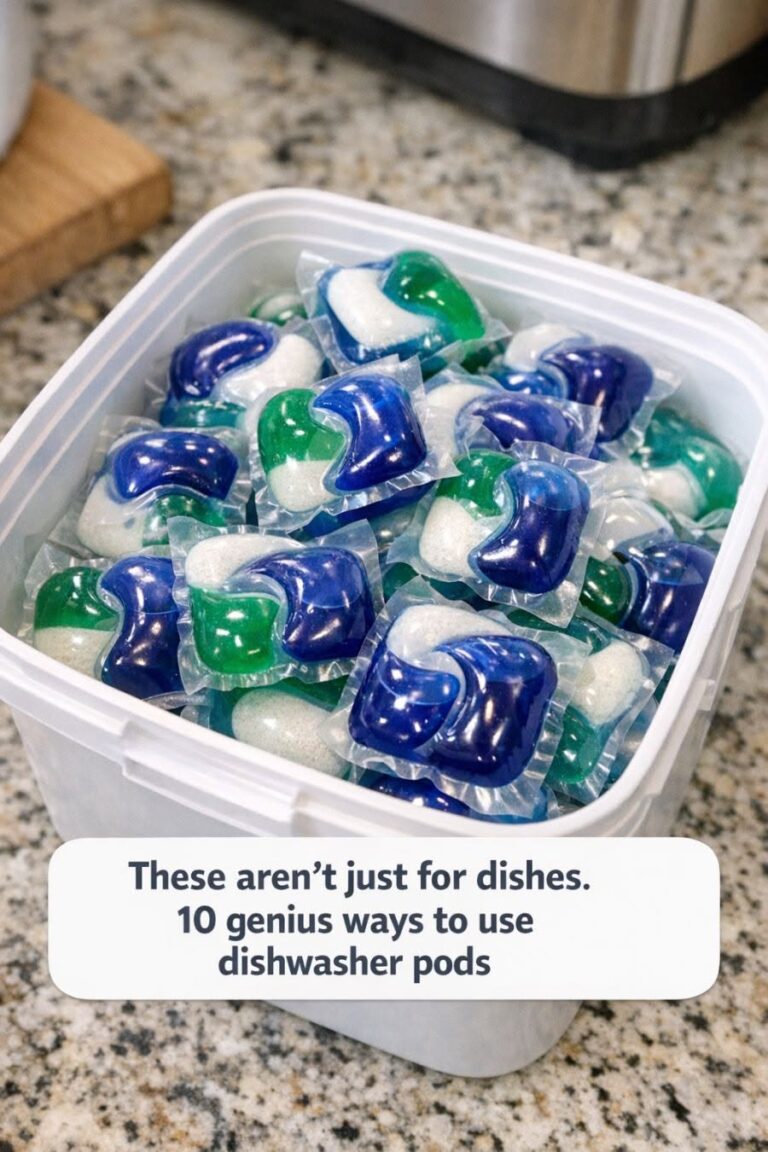
A viral social graphic showing a square tub filled with blue, green, and white multi-chamber detergent packets highlights the caption: “These aren’t just for dishes. 10 genius ways to use dishwasher pods.”
Because dishwasher detergent is engineered to cut through heavy grease and organic residue, dissolving a pod in hot water creates a versatile, heavy-duty cleaning solution for tasks across the entire home.
Here is a full breakdown of 10 clever alternative uses for dishwasher pods, safety precautions, and cost-saving cleaning tips.
10 Unexpected Cleaning Uses for Dishwasher Pods
+-----------------------------------------------------------------------------------+
|                        DISHWASHER POD CLEANING HACKS COMPARISON                   |
+-------------------+----------------------------+----------------------------------+
| Application Area  | Method                     | Key Benefit                      |
+-------------------+----------------------------+----------------------------------+
| Baked-On Cookware | Dissolve pod in hot water, | Lifts stubborn carbonated crust  |
|                   | soak overnight             | without scratching enamel        |
| Oven Door Glass   | Rub wet pod directly over  | Cuts through baked grease glaze  |
|                   | glass surface              | instantly                        |
| Washing Machine   | Run hot cycle with 1 pod   | Eliminates soap scum, buildup,   |
| Maintenance       | in empty drum              | and mildew odors                 |
+-------------------+----------------------------+----------------------------------+
1. Removing Baked-On Grease from Oven Glass
Glass oven doors accumulate thick, baked-on grease layers that standard sprays cannot dissolve. Dip a dishwasher pod lightly into warm water and scrub the flat side directly onto the glass. The mild abrasives and concentrated degreasers break down carbonized buildup within minutes.
2. Restoring Burnt Pots, Pans, and Dutch Ovens
For scorched stainless steel or enamel cookware, drop one dishwasher pod into the pot, fill it with hot water, and bring it to a gentle simmer for 10 minutes (or leave it to soak overnight). The active enzymes loosen burnt food so it wipes away effortlessly.
3. Deep-Cleaning Sink Basins and Drain Strainers
Fill your porcelain or stainless steel kitchen sink with hot water, toss in a pod, and let it dissolve for 30 minutes. The solution sanitizes the sink, removes tea or coffee stains, and refreshes grease traps inside the drain when unplugged.
4. Refreshing Stained Trash Cans
Outdoor garbage cans and indoor kitchen bins absorb unpleasant odors and sticky spills over time. Fill the bottom of the bin with boiling water, drop in a pod, let it sit for an hour, then swish and rinse for an odor-free bin.
5. Cleaning Patio Furniture and Resin Chairs
Melted pollen, sap, and mildew coat outdoor plastic and resin furniture every season. Dissolve a pod in a bucket of hot water and use a scrub brush to wipe down chairs, restoring white plastic without harsh chemical fumes.
6. Deodorizing and Washing the Washing Machine Drum
Front-load and top-load washers develop soap scum, fabric softener buildup, and musty odors over time. Toss two dishwasher pods into the empty washer drum and run a hot self-cleaning cycle to strip mold spores and internal residue.
7. Degreasing Range Hood Filters
Metal mesh range hood filters become clogged with airborne cooking oil. Submerge dirty filters in a sink basin filled with hot water and a dissolved dishwasher pod for 20 minutes to melt grease out of fine wire mesh.
8. Whiten and Brighten Grout Lines
Dissolve a pod in a cup of hot water to form a thick cleaning paste. Apply it to discolored tile grout lines in kitchens or entryways, let it sit for 15 minutes, and scrub lightly with a toothbrush for instant brightening.
9. Removing Stubborn Stains from Plastic Storage Containers
Tomato-based sauces and oils leave persistent red stains inside plastic food containers. Fill stained containers with hot water, add half a pod (or 1 full pod for large tubs), and soak for a few hours to lift discolored oil residue.
10. Deep-Cleaning Toilet Bowls
Drop a single pod directly into the toilet bowl water and let it dissolve for 15 to 30 minutes. The bleaching agents and water softeners loosen stubborn mineral rings and limescale before you scrub with a toilet brush.
Safety Precautions and Materials to Avoid
While dishwasher pods are highly effective, their concentrated formulas require safe handling:
- Always Wear Gloves: Dishwasher pods contain concentrated alkaline detergents designed to cut grease, which can irritate sensitive skin upon direct contact.
- Avoid Delicate Surfaces: Do not use dishwasher pods on natural stone surfaces (like marble or granite), bare wood, or cast iron, as the alkaline components can strip protective sealants or seasoning.
- Keep Out of Reach of Children: Store pods securely in locked cabinets or child-proof containers to prevent accidental ingestion or chemical eye irritation.
Financial Impact: Replacing Specialty Cleaners
Utilizing multi-purpose dishwasher pods simplifies your household cleaning routine and household budget:
- Eliminating Niche Specialty Products: Instead of buying separate oven cleaners, grout brighteners, washing machine cleaners, and degreasers, a single tub of dishwasher pods covers multiple deep-cleaning projects.
- Reducing Manual Scrubbing Time: The enzymatic action does most of the heavy lifting, saving hours of scrubbing labor during seasonal house cleaning.
Fascinating Facts About Dishwasher Pod Technology
- PVOH Dissolving Film: The outer casing of dishwasher pods is made from Polyvinyl Alcohol (PVOH)—a water-soluble, biodegradable polymer engineered to dissolve rapidly in water temperatures above 100°F (38°C).
- Multi-Chamber Separation: The separate liquid and powder chambers keep enzymes, oxygen bleaches, and surfactants isolated until dissolved, ensuring peak chemical reaction power when mixed with water.
Conclusion: A Multi-Surface Deep-Cleaning Essential
Beyond washing dinner plates, dishwasher pods offer an effective, time-saving solution for lifting carbonized grease, removing mineral stains, and refreshing high-use household surfaces.
Frequently Asked Questions
Q1: Can dishwasher pods ruin natural stone countertops?
A1: Yes. Dishwasher detergents are alkaline and can etch, dull, or strip protective sealants on natural granite, marble, or quartzite surfaces.
Q2: Do you need hot water to activate a dishwasher pod?
A2: Hot water is recommended because it quickly dissolves the outer PVOH casing and activates cleaning enzymes for maximum grease-cutting power.
Q3: Can you use dishwasher pods in a clothes washing machine?
A3: They are great for running empty maintenance clean cycles, but should not be used regularly on clothing, as high-alkaline detergents can damage delicate fabric fibers.
Q4: How long should you let a pod soak on burnt pans?
A4: Soaking for 30 minutes to two hours is sufficient for most cookware, though overnight soaking works best for heavily carbonized grease layer buildup.
Q5: Are dishwasher pods safe for septic tanks?
A5: Most major brand dishwasher pods are septic-safe when used as directed, but opt for phosphate-free formulas to protect water quality.
