
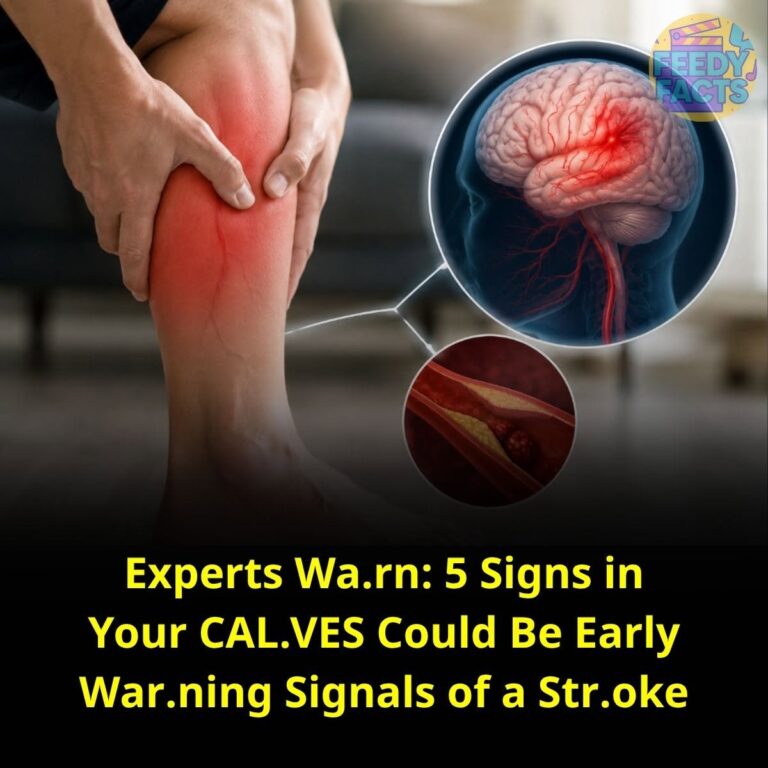
A stroke often feels like something that happens suddenly, without warning. But in some people, the body may show earlier signs that circulation is not working as well as it should. These signs do not always appear in the head or chest. Sometimes, they can show up in the legs, especially in the calves.
The calves are far from the heart, and blood has to travel down to the legs and then return upward through the veins. When circulation is poor, when arteries are narrowed, or when a clot forms in a vein, the lower legs may show changes before a person realizes something more serious is developing.
This does not mean every calf cramp or swollen leg is a stroke warning. Calf symptoms can come from exercise, dehydration, muscle strain, varicose veins, medication effects, sitting too long, or many other causes. But some calf changes should not be ignored, especially if they are sudden, one-sided, painful, persistent, or happen in someone with high blood pressure, diabetes, high cholesterol, smoking history, heart disease, or a previous clot.
Here are five calf symptoms that may deserve medical attention.
1. Sudden Swelling in One Calf
One of the most important warning signs is swelling in only one calf. This is different from mild swelling in both legs after standing all day. A concerning pattern is when one calf suddenly looks larger than the other, feels tight, painful, warm, or tender, or leaves an indentation when you press the skin.
One-sided calf swelling can sometimes be linked to deep vein thrombosis, also called DVT. DVT happens when a blood clot forms in a deep vein, often in the leg. The CDC explains that DVT can cause swelling, pain, tenderness, and redness of the skin, although some people may have no symptoms at all.
A blood clot in the leg is not something to handle at home. If part of the clot breaks loose, it can travel through the bloodstream and cause serious complications, especially in the lungs. If swelling is sudden, painful, or only on one side, medical evaluation is important.
2. Calf Pain That Feels Different From Normal Soreness Calf pain after exercise or walking more than usual is common. But pain that appears suddenly, feels deep, keeps getting worse, or affects only one leg should be taken seriously.
Pain linked to a clot or circulation problem may feel like cramping, tightness, heaviness, tenderness, or a deep ache. The calf may also feel warm or look red. If the pain appears after long sitting, travel, surgery, injury, or illness, it becomes more concerning.
Calf pain can also happen when arteries in the legs are narrowed. This may cause pain while walking that improves with rest, a symptom known as claudication. Poor artery circulation in the legs can be a sign of broader vascular disease, which may also increase the risk of heart and brain circulation problems.
3. Skin Color Changes on the Lower Leg
Changes in skin color can be a clue that blood flow is not normal. Warning signs may include bluish-purple skin, unusual redness, dark patches, pale or grayish skin, or a net-like purple pattern under the skin.
Color changes may happen when blood is not moving properly through the veins or arteries. In some cases, the skin may also feel warmer or colder than the other leg.
A temporary mark from pressure or cold weather is not always dangerous. But color changes that are new, persistent, painful, one-sided, or linked with swelling should be checked.
If the foot or lower leg suddenly becomes pale, cold, numb, or extremely painful, that can be urgent and needs immediate medical care.
4. Repeated Calf Cramps, Especially at Night
Nighttime calf cramps are common, and many people experience them from dehydration, overuse, low minerals, or sitting in one position. However, repeated cramps that do not improve, especially when combined with cold feet, leg pain while walking, numbness, or skin changes, may suggest a circulation problem.
When muscles do not receive enough oxygen-rich blood, they may become more likely to cramp, ache, or feel weak. Poor circulation in the legs may be linked to peripheral artery disease, which is more common in people who smoke, have diabetes, high blood pressure, or high cholesterol.
Do not assume every cramp is a mineral deficiency. If cramps are frequent, one-sided, severe, or associated with walking pain, it is safer to ask for a medical check.
5. Cold Calves or Feet That Do Not Warm Up Easily A persistent cold feeling in the calves or feet can sometimes point to reduced blood flow. This is especially important if one leg feels colder than the other or if the coldness comes with numbness, pain, color changes, or weak pulses in the feet.
Cold feet can also come from weather, thyroid problems, anemia, nerve issues, or certain medications. But when the symptom is new, one-sided, or combined with other circulation signs, it deserves attention.
Artery narrowing often does not affect only one part of the body. A person with circulation problems in the legs may also have a higher chance of circulation problems affecting the heart or brain.
What Do Calf Symptoms Have to Do With Stroke?
Stroke happens when blood flow to the brain is blocked or when a blood vessel in the brain bursts. Calf symptoms do not directly diagnose a stroke. However, they may signal vascular problems, clotting issues, or poor circulation.
Some circulation problems affect the whole body. Atherosclerosis, for example, can narrow arteries in the legs, heart, neck, and brain. Blood clots can also become dangerous if they move or if a person has underlying clotting risk.
That is why calf symptoms should be understood as possible signs of circulation trouble, not as a guaranteed stroke prediction.
Who Should Be Extra Careful?
You should be more cautious if calf symptoms appear and you also have:
high blood pressure
diabetes
high cholesterol
smoking history
obesity
heart disease
atrial fibrillation
previous blood clot
previous stroke or mini-stroke
recent surgery
recent long travel or long sitting
family history of clotting problems
In these situations, sudden or unusual leg symptoms should not be ignored.
When to Seek Urgent Help
Seek urgent medical care if you notice:
sudden swelling in one calf
calf pain with redness or warmth
one leg becoming much larger than the other
sudden chest pain or shortness of breath
coughing blood
fainting
sudden weakness on one side of the body
face drooping
trouble speaking
sudden vision changes
sudden severe headache
sudden trouble walking or loss of balance
Chest pain, shortness of breath, and stroke-like symptoms are emergencies. Do not wait to see if they pass.
How Doctors May Check Circulation Problems Depending on your symptoms, a healthcare professional may check your legs, compare both calves, feel for pulses, review medications, ask about travel or surgery, and order tests.
Possible tests may include:
ultrasound of the leg veins
blood tests
blood pressure checks in the legs
ankle-brachial index
heart rhythm testing
cholesterol testing
blood sugar testing
The right test depends on the pattern of symptoms.
Daily Habits That Support Circulation
Healthy habits cannot replace medical care if you have symptoms, but they may support better circulation over time.
Helpful steps include:
walk regularly if your doctor says it is safe
avoid sitting still for long periods
drink enough water
stop smoking
manage blood pressure
manage blood sugar
check cholesterol
maintain a healthy weight
follow prescribed medication correctly
attend regular checkups
If you sit for long periods, stand up and move your legs regularly. Gentle walking can help the calf muscles support blood return through the veins.
Final Thoughts
Calf symptoms are often harmless, but some changes should not be dismissed. Sudden swelling in one calf, unusual calf pain, skin color changes, repeated cramps, and persistent coldness may point to circulation problems that need medical attention.
These signs do not prove that a stroke is coming. But they may reveal problems in the blood vessels or clotting system, especially in people with risk factors.
The safest rule is simple: if a calf symptom is sudden, one-sided, painful, persistent, or appears with chest symptoms or stroke-like symptoms, seek medical help quickly.
Disclaimer: This article is for general educational information only and does not replace medical advice, diagnosis, or treatment. If you suspect a stroke, blood clot, chest emergency, or serious circulation problem, seek urgent medical care immediately.
