
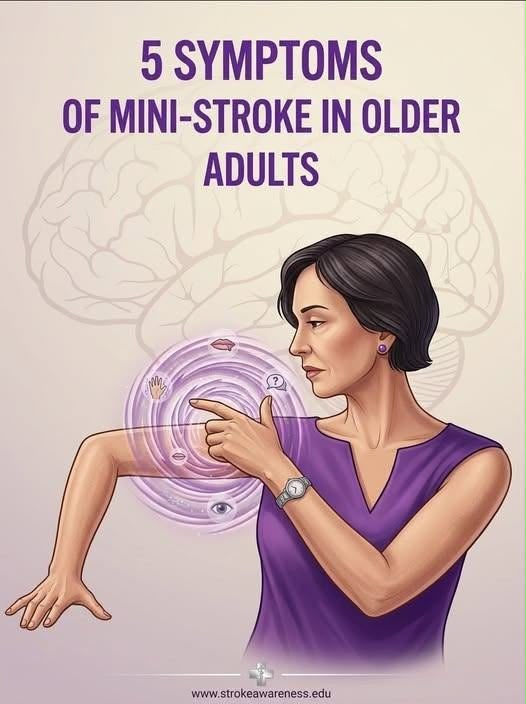
Recognizing early warning signs of cardiovascular and neurological events can be lifesaving. Social media educational graphics, such as those highlighting “5 Symptoms of Mini-Stroke in Older Adults,” serve as important reminders that temporary bodily changes should never be ignored.
A mini-stroke, medically known as a Transient Ischemic Attack (TIA), occurs when blood flow to a part of the brain is temporarily blocked or restricted. While TIA symptoms often resolve within minutes or hours without causing permanent brain damage, a TIA is a major medical warning sign—nearly 1 in 5 individuals who experience a mini-stroke suffer a full ischemic stroke within 90 days. In this comprehensive guide, we detail the 5 key symptoms of a mini-stroke, emergency response protocols, health insurance coverage for neurological care, and proactive prevention strategies.
What Is a Mini-Stroke (TIA)?
A Transient Ischemic Attack occurs when a temporary clot or vascular spasm reduces blood supply to a portion of the brain. Unlike a full ischemic stroke, blood flow restores naturally before permanent tissue necrosis (brain cell death) takes place. However, because TIA symptoms are identical to the onset of a full stroke, a mini-stroke must always be treated as a medical emergency.
The 5 Symptoms of Mini-Stroke in Older Adults
1. Sudden Numbness or Weakness on One Side of the Body
- Physical Manifestation: Sudden, unexpected weakness, heaviness, or complete numbness affecting the face, arm, or leg—typically isolated to one side of the body.
- Functional Warning: An individual may suddenly drop an object, lose grip strength, or experience leg weakness causing sudden loss of balance.
2. Sudden Speech and Language Difficulty
- Physical Manifestation: Difficulty articulating words clearly (slurred speech) or trouble recalling simple, familiar words (aphasia).
- Comprehension Issues: Sudden confusion or inability to understand what others are saying during a normal conversation.
3. Sudden Visual Disturbances
- Physical Manifestation: Temporary loss of vision in one or both eyes, often described as a dark shade falling over the field of vision (amaurosis fugax).
- Perceptual Changes: Blurred vision, double vision, or difficulty focusing suddenly without an obvious external cause.
4. Sudden Loss of Balance and Coordination
- Physical Manifestation: Sudden onset of dizziness, loss of bodily equilibrium, or unsteadiness while walking.
- Motor Control Impairment: Difficulty coordinating basic physical movements, such as reaching for objects or navigating steps.
5. Sudden, Severe Unexplained Headache
- Physical Manifestation: An abrupt, severe headache with no clear cause, sometimes accompanied by neck stiffness, facial pressure, or sudden nausea.
- Vascular Strain: Caused by localized vascular changes and altered cerebral perfusion pressures.
Emergency Protocol: The B.E. F.A.S.T. Assessment
If you or someone around you displays any of these symptoms, act immediately using the B.E. F.A.S.T. protocol:
- B – Balance: Is there a sudden loss of balance or coordination?
- E – Eyes: Is there sudden vision loss, blurring, or double vision?
- F – Face: Is one side of the face drooping or numb when smiling?
- A – Arms: Does one arm drift downward when both arms are raised?
- S – Speech: Is speech slurred, strange, or difficult to understand?
- T – Time: Call emergency services (911) immediately! Do not wait to see if symptoms disappear.
Health Insurance, Neurological Care, and Diagnostic Testing
Seeking immediate medical evaluation following a TIA is critical for long-term health, and utilizing healthcare coverage ensures comprehensive diagnostic care:
- Emergency Room and Diagnostic Coverage: Emergency room evaluation, urgent consultations, CT scans, and brain MRIs following suspected TIAs are covered under major health insurance plans and Medicare Part B.
- Specialist Consultations: Health insurance policies cover follow-up consultations with neurologists and cardiologists to identify the underlying cause of arterial blockages.
- Diagnostic Screening Procedures: Carotid artery ultrasounds, echocardiograms, and continuous Holter heart monitoring are standard covered diagnostic tools used to detect blood clot risks or arterial narrowing.
Proactive Strategies for Stroke and TIA Prevention
Up to 80% of secondary strokes can be prevented through medical management and healthy lifestyle habits:
- Control Blood Pressure: High blood pressure (hypertension) is the single leading risk factor for both TIAs and strokes. Keep blood pressure within target ranges.
- Manage Cholesterol and Blood Sugar: Elevated LDL cholesterol and unmanaged diabetes contribute to arterial plaque buildup (atherosclerosis).
- Adopt a Heart-Healthy Diet: Emphasize Mediterranean-style eating rich in vegetables, lean proteins, whole grains, and healthy fats while minimizing sodium and ultra-processed foods.
- Engage in Regular Moderate Exercise: Aim for 150 minutes of weekly aerobic exercise, such as brisk walking or swimming, to support vascular elasticity.
- Follow Prescribed Medications: Take blood-thinning medications, antiplatelet therapy (such as aspirin or clopidogrel), or statins exactly as prescribed by your doctor.
Fascinating Facts About Brain Health and TIA Recovery
- Brief Duration: Most mini-stroke symptoms last between 1 to 10 minutes, though they can occasionally persist for up to 24 hours.
- Crucial Opportunity: A mini-stroke acts as an early warning system, giving medical professionals an opportunity to treat arterial blockages before permanent brain tissue damage occurs.
- High Brain Oxygen Demand: Despite making up only about 2% of total body weight, the human brain consumes roughly 20% of the body’s oxygen supply at rest.
Frequently Asked Questions (FAQ)
Can a mini-stroke go away on its own without treatment?
While TIA symptoms do resolve on their own as blood flow resumes, the underlying cause (such as an arterial clot or heart condition) remains untreated. Immediate emergency evaluation is essential to prevent a major stroke.
What is the primary difference between a TIA and a full stroke?
A TIA involves a temporary blockage that dissolves without leaving permanent brain tissue damage. A full stroke involves prolonged blockage or bleeding that results in permanent neural damage.
Should you take an aspirin immediately if you suspect a mini-stroke?
Do not take aspirin without direct medical instruction from emergency responders or doctors, as aspirin can worsen bleeding if the symptoms are caused by a hemorrhagic stroke rather than a ischemic blockage.
Conclusion
Understanding the 5 symptoms of a mini-stroke empowers older adults and family members to act swiftly during a neurological emergency. By treating TIAs with immediate medical urgency, scheduling routine diagnostic screenings, utilizing health insurance coverage, and adopting cardiovascular health habits, you can significantly reduce stroke risks and protect your long-term health.
