
Introduction
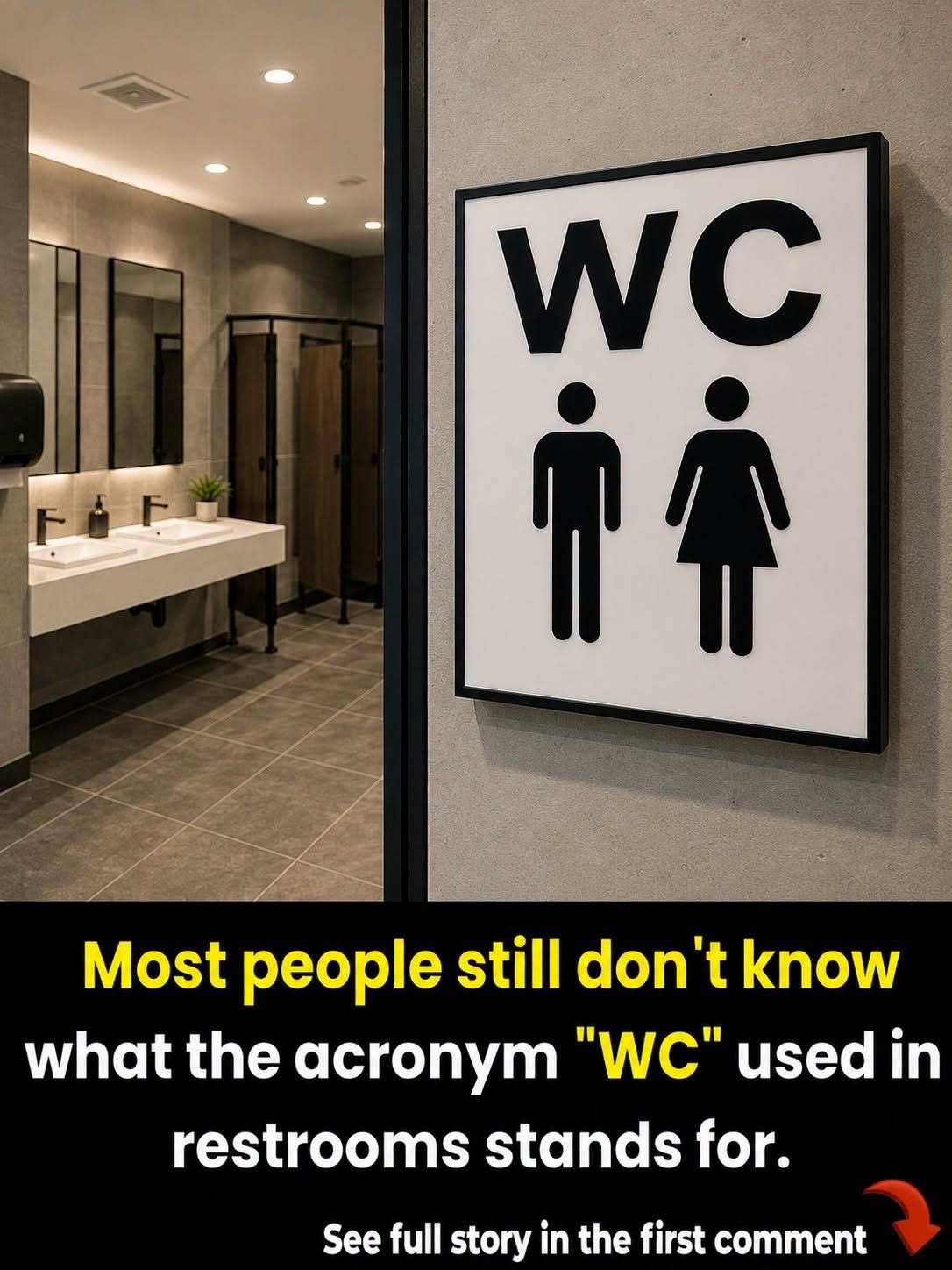
If you have ever traveled internationally, visited public venues across Europe, or stayed in modern hotels, you have almost certainly seen the letters “WC” prominently displayed on restroom doors alongside traditional male and female pictograms.
While most people recognize the abbreviation as a universal indicator for a toilet, surprisingly few know what the letters actually represent or how a Victorian-era term became a globally recognized symbol for public sanitation.
In this cultural history guide, we will reveal the exact meaning of “WC,” trace its origins during the birth of indoor plumbing, explain its widespread international adoption, and answer frequently asked questions.
1. What Does “WC” Stand For?
The letters “WC” stand for Water Closet.
+--------------------------+------------------------------------------------------+
| Property                 | Historic & Architectural Context                     |
+--------------------------+------------------------------------------------------+
| Full Term                | Water Closet                                         |
| Historical Origin        | 19th-century Victorian Britain (1880s)               |
| Original Definition      | A small room/closet featuring a flushable toilet.    |
| Modern Meaning           | Universal symbol for a public restroom or toilet.    |
+--------------------------+------------------------------------------------------+
The Origins of the Term
- 19th-Century Innovation: During the 19th century, indoor plumbing began replacing traditional outdoor outhouses, pit latrines, and indoor chamber pots in wealthy European homes.
- Repurposing Closets: Early indoor toilets were frequently installed inside small converted storage closets or small spare rooms. To distinguish these rooms equipped with running water from standard storage closets, homeowners named them “water closets.”
- A Polite Euphemism: In Victorian society, discussing bodily functions directly was considered impolite. Calling the room a “water closet” provided a polite, genteel euphemism that quickly caught on across all social classes.
2. Why “WC” Became an International Symbol
Although the term originated in English-speaking Britain, it gained massive traction across non-English speaking nations around the world.
+--------------------------+------------------------------------------------------+
| Region                   | Common Terminology Usage                             |
+--------------------------+------------------------------------------------------+
| United Kingdom / Europe  | "WC" or "Loo" (widely recognized on public signage)  |
| United States / Canada   | "Restroom" or "Bathroom" ("WC" is rarely spoken)     |
| Latin America / Asia     | "WC" on international signage and airports           |
+--------------------------+------------------------------------------------------+
Key Reasons for Global Adoption
- Euphemistic Neutrality: As indoor plumbing expanded globally in the late 19th and early 20th centuries, many European languages adopted “WC” directly as a neutral, non-explicit loanword.
- Standardized Signage: International transit hubs, hotels, and tourist venues embraced “WC” as a brief, universally recognizable abbreviation to assist travelers across different language barriers.
- Plumbing Terminology: Early plumbing codes, architectural blueprints, and engineering standards standardized “WC” to designate flush toilet installations.
3. Difference Between “Water Closet,” “Bathroom,” and “Restroom”
Regional variations in vocabulary often reflect differing cultural attitudes toward plumbing facilities.
Common Regional Variations
- Restroom (North America): The standard American term for public facilities, emphasizing a clean place to refresh oneself.
- Bathroom (North America): Commonly used for home facilities containing a toilet and sink (and originally, a bathtub or shower).
- Toilet / Lavatory (International): Direct and widely used in British English and global aviation, though “toilet” is used more directly in Europe than in North America.
Conclusion: A Small Acronym with Big History
The “WC” sign on restroom doors is much more than a convenient abbreviation—it is a living piece of architectural and social history. From 19th-century Victorian homes converting tiny storage closets into sanitary flush rooms to modern international airports, “WC” remains one of the world’s most recognizable symbols.
Share this fun history fact with your fellow travel enthusiasts today!
Practical Travel & Etiquette Tips
- Look for the Letters When Traveling: In many European, Asian, and Latin American countries, searching for “WC” on directional signs is the fastest way to locate public facilities in train stations and museums.
- Know the Local Terminology: When asking for directions verbally in North America, ask for the “restroom” or “bathroom,” as many native speakers may not be familiar with the spoken phrase “water closet.”
- Carry Small Change: In many European countries where public WCs are marked with signage, facilities often require a small coins fee (0.50 to 1.00 Euro) for entry and maintenance.
FAQ Section
Q: Who invented the modern flush water closet?
A: Sir John Harington designed an early flush toilet for Queen Elizabeth I in 1596, but Alexander Cumming patented the critical “S-trap” (which keeps sewer gases out) in 1775, paving the way for the modern water closet.
Q: Is Thomas Crapper the person who invented the toilet?
A: No. While plumber Thomas Crapper popularized high-quality valves, flush mechanisms, and bathroom showrooms in Victorian London, he did not invent the flush toilet.
Q: Why isn’t “WC” commonly used in the United States?
A: American English evolved toward terms like “washroom,” “restroom,” and “bathroom,” while European and international signage leaned heavily into “WC” as a concise acronym for cross-border travelers.
