
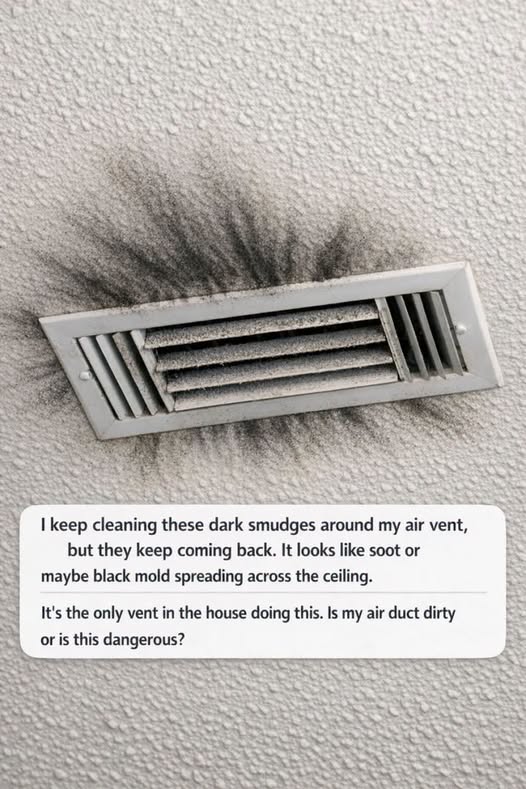
Few things are as concerning for a homeowner as looking up at the ceiling and spotting dark, soot-like stains creeping out from behind an air register. You wipe the area clean, paint over the marks, or scrub the grill, only to find the mysterious shadow returning weeks later.
As captured in the viral image, where a homeowner asks: “I keep cleaning these dark smudges around my air vent, but they keep coming back. It looks like soot or maybe black mold spreading across the ceiling. It’s the only vent in the house doing this. Is my air duct dirty or is this dangerous?”—this phenomenon affects thousands of homes every year.
Is this dark, fan-shaped ring toxic black mold spores spreading into your living room? Is your furnace or HVAC system blowing hazardous soot into your indoor air? Or is it something far simpler, related to airflow physics and static electricity?
Understanding what causes these frustrating ceiling marks, how to differentiate between harmless dust tracking and dangerous fungal growth, and how to fix the root cause can save you thousands in unnecessary remediation costs while keeping your family safe.
The Primary Culprit: What Is “Ghosting” or Thermal Tracking?
In the heating, ventilation, and air conditioning (HVAC) industry, these dark, feather-like smudges around ceiling vents are known as ghosting, thermal tracking, or soot deposition.
While many homeowners automatically panic and assume toxic black mold (Stachybotrys chartarum) is colonizing their drywall, the vast majority of dark vent stains are actually caused by a physical phenomenon where fine airborne particles stick to condensation or static charges around the register.
How Thermal Tracking Happens Step-By-Step
- Gaps in the Duct Connection: When a ceiling air register is installed, the metal boot (the duct bringing air from your HVAC system) connects to the drywall opening. If this connection is not tightly sealed with mastic tape or silicone, air from your attic or wall cavity leaks out around the edges of the vent register.
- Temperature Differential: During hot summer months or cold winter days, the metal vent boot becomes significantly colder or warmer than the surrounding ceiling drywall. This creates localized temperature differences right around the perimeter of the vent.
- Micro-Condensation: Cold conditioned air blowing against warm, humid ceiling drywall creates microscopic moisture droplets on the textured paint surface, making it sticky.
- Electrostatic Particle Trapping: As air rushes out of the register louvers at high velocity, it creates a vacuum effect (Venturi effect) that pulls ambient room air up toward the ceiling. Tiny microscopic particles suspended in your home’s air—such as pet dander, candle soot, cooking grease, and microscopic dust—are drawn toward the damp, statically charged ceiling surface, where they stick and build up into dark, feathery smudges over time.
Mold vs. Soot vs. Dust: How to Tell the Difference
Because air quality directly impacts health and home value, identifying whether your vent stains are caused by simple dust tracking, candle soot, or active mold growth is crucial.
1. Simple Dust Tracking (Thermal Ghosting)
- Appearance: Appears as smooth, gray or charcoal, feather-like smudges fanning outward across the ceiling texture in the direction of the air currents.
- Texture: Dry, powdery, or slightly greasy to the touch.
- Odor: Odorless.
- Primary Cause: Poor duct sealing, high indoor dust levels, and static charges pulling household dust to the cold ceiling surface.
2. Candle or Fireplace Soot Deposition
- Appearance: Extremely dark, jet-black, greasy rings spreading widely across the ceiling and walls around multiple registers.
- Texture: Greasy, easily smudges, and stains fingers immediately upon contact.
- Odor: May carry a faint burnt or chemical scent.
- Primary Cause: Burning scented paraffin wax candles, running gas fireplaces with clogged burners, or idling oil furnaces. Paraffin candles produce ultra-fine elemental carbon soot particles that float in the air and stick aggressively to cold HVAC registers.
3. Active Mold Growth
- Appearance: Raised, splotchy, circular dots or clustered green, dark brown, or velvety black spots that grow directly on the metal grill or the surrounding drywall edge.
- Texture: Damp, fuzzy, raised, or slimy.
- Odor: Strong, musty, damp basement-like smell when the HVAC fan runs.
- Primary Cause: High indoor humidity (over 60%), leaking roof or condensation pan, or uninsulated ductwork sweating excessively inside the ceiling cavity.
Why Is Only One Vent Doing This?
A common question asked by homeowners is why one specific vent in the house develops dark smudges while all others remain perfectly clean. This localized behavior usually points to specific structural causes:
- Unsealed Boot at That Location: The drywall opening for that specific room may have been cut too large or left unsealed during home construction, allowing unconditioned attic air to leak into that room.
- Lack of Duct Insulation: The ductwork feeding that particular room may be running through an unconditioned attic space where insulation has slipped off or deteriorated, causing the metal boot to sweat profusely compared to others.
- Airflow Velocity: Registers located closest to the main HVAC blower motor experience the highest air pressure. This increased velocity pulls significantly more room air and floating particles into contact with the ceiling surface.
- High-Humidity Rooms: Vents in or near bathrooms, kitchens, or laundry rooms encounter elevated moisture levels, making the surrounding drywall far more prone to microscopic condensation and dust adhesion.
How to Fix and Prevent Dark Stains Around Air Vents
Cleaning the dark smudges off your ceiling with soap and water will temporarily improve appearances, but unless you fix the underlying airflow and moisture issue, the marks will return within weeks. Follow this step-by-step repair guide:
Step 1: Remove and Clean the Register Grill
Turn off your HVAC system at the thermostat. Unscrew the metal vent cover from the ceiling, take it outside or to a sink, and wash it thoroughly with warm water and degreasing dish soap. Allow it to dry completely.
Step 2: Seal the Duct Boot Connection (Crucial Step)
Inspect the gap between the metal duct boot and the sheetrock ceiling cutout:
- Purchase a tube of 100% silicone caulk or HVAC mastic sealant.
- Apply a continuous bead of caulk along the gap where the metal boot meets the drywall cutout. This prevents attic air from leaking through and stops the thermal differential that creates sticky micro-condensation.
Step 3: Insulate the Ductwork
Check the attic or crawlspace directly above the problem vent. Ensure that fiberglass insulation completely wraps the metal boot and ducting without any exposed bare metal. Bare metal in an unconditioned attic will sweat, creating moisture on the ceiling drywall below.
Step 4: Clean and Seal the Ceiling Drywall
- Clean the dark ceiling smudges with a mixture of warm water and a small amount of mild detergent or a tri-sodium phosphate (TSP) substitute.
- If the drywall is discolored, apply a coat of stain-blocking primer (such as an oil-based or shellac-based primer like Kilz or Zinsser) before repainting with high-quality ceiling paint. Standard latex paint without a stain-blocking primer will allow soot and oil stains to bleed through almost immediately.
Step 5: Improve Indoor Air Quality and Reduce Soot
- Upgrade HVAC Air Filters: Replace cheap fiberglass filters with pleated MERV 8 to MERV 11 filters to capture fine airborne dust before it circulates through your registers.
- Limit Paraffin Candles: Switch from traditional paraffin wax candles (which emit heavy carbon soot) to clean-burning soy or beeswax alternatives.
- Control Humidity: Maintain indoor relative humidity levels between 30% and 50% using a home dehumidifier or air conditioner to eliminate surface sweating.
Financial and Real Estate Considerations
Addressing thermal ghosting and duct leaks is not just a matter of cosmetic preference—it directly impacts your home’s energy efficiency and financial valuation.
Energy Loss and High Utility Bills
Gaps between duct boots and ceiling drywall allow conditioned indoor air to escape into the attic while pulling unconditioned outdoor air into your living spaces. According to energy audit studies, leaky duct connections can waste up to 20% to 30% of a home’s heating and cooling energy, raising monthly utility bills substantially.
Real Estate Appraisal Impact
When selling a home, home inspectors and potential buyers who see dark streaks around air vents frequently flag them as signs of active mold or severe HVAC neglect. This can lead to costly inspection repair demands or buyer hesitation. Resolving thermal ghosting quickly protects your property’s resale value and reassures potential buyers during home inspections.
Interesting Facts About Indoor Air and HVAC Systems
- The Dust Composition: Over 50% of typical household dust consists of dead human skin cells, fabric fibers, carpet shed, and outdoor pollen tracked inside on footwear.
- The Candle Effect: A single heavily scented paraffin candle burned for several hours can generate thousands of microscopic soot particles that travel through your entire HVAC return system and deposit around supply vents.
- Static Electricity in Winter: Cold, dry winter air increases static charges on synthetic carpet fibers and painted drywall, accelerating the speed at which dust particles are pulled toward metal air registers.
Conclusion: Take Control of Your Indoor Air
Seeing dark, soot-like smudges around your ceiling air vents can certainly cause a moment of worry, but understanding the science behind thermal ghosting eliminates the mystery.
In most cases, these frustrating marks are not toxic black mold or a ruined furnace, but rather a simple physical combination of unsealed duct boots, temperature differences, and static dust collection.
By sealing the gap between your duct boot and drywall, upgrading your air filters, controlling indoor humidity, and applying a stain-blocking primer, you can eliminate dark vent smudges permanently. Taking these proactive home maintenance steps keeps your ceilings pristine, reduces monthly energy costs, improves indoor air quality, and ensures your home remains a healthy, safe environment for your family.
Frequently Asked Questions
Q1: Is the black dust around my air vent toxic to breathe?
A1: Ordinary thermal ghosting dust consists of typical household particulates (skin flakes, fabric fibers, fine soil, and minor candle soot) and is generally non-toxic for healthy individuals. However, high levels of fine airborne particulates can irritate allergy or asthma sufferers.
Q2: How can I definitively test if the dark stain is mold or just soot?
A2: You can purchase a simple DIY surface mold test kit or swab from a home improvement store, or apply a drop of diluted household bleach to the dark spot. If the color bleaches light within a few minutes, it is likely fungal/organic material. If it remains dark and greasy, it is inorganic carbon soot or dust tracking.
Q3: Will professional air duct cleaning eliminate these vent stains?
A3: Duct cleaning clears built-up dust inside the metal pipes, but it will not stop thermal ghosting on the ceiling unless you also seal the physical gap between the metal boot and the drywall cutout.
Q4: Can I use standard latex paint to cover up vent smudges?
A4: No. Fine soot and oil-based dust particles will bleed through standard water-based latex paint within weeks. You must apply a dedicated stain-blocking oil- or shellac-based primer first before applying your topcoat.
Q5: How often should I change my HVAC air filters to prevent dust buildup?
A5: Standard 1-inch pleated filters should be replaced every 60 to 90 days. If you have pets, live in a dusty area, or have family members with respiratory conditions, replacing filters every 30 to 45 days is recommended for optimal air filtration.
