
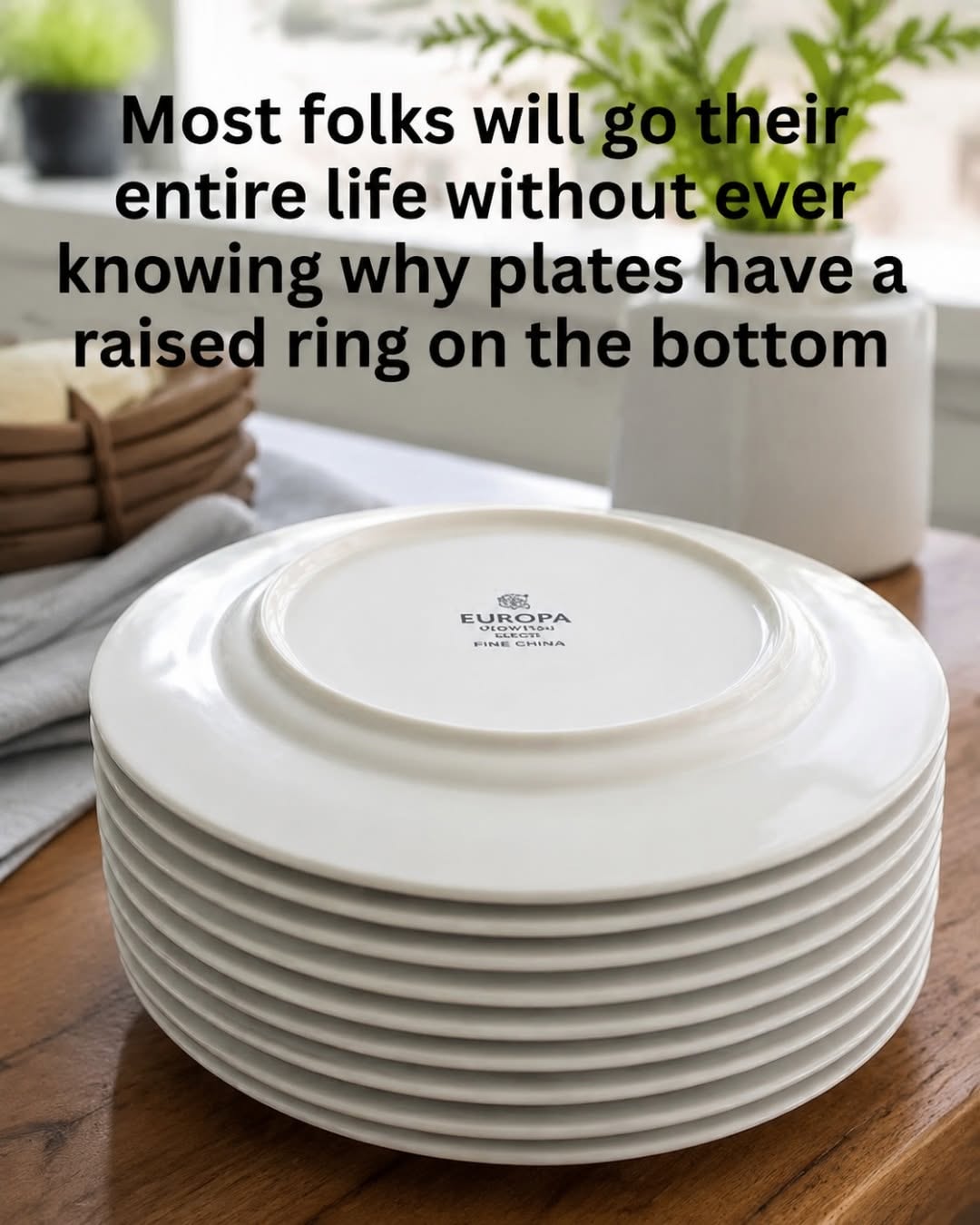
Every single day, billions of people around the world sit down to enjoy a meal. Whether you are dining at a high-end restaurant, eating dinner at the kitchen island, or grabbing a quick snack, you interact with ceramic plates constantly. Yet, almost no one ever stops to flip a plate over and examine its underside.
If you do turn a standard dinner plate upside down, you will immediately notice a distinct feature: an unglazed, raised circular ridge running around the base.
As highlighted in the viral image circulating online with the caption “Most folks will go their entire life without ever knowing why plates have a raised ring on the bottom,” this design detail is ubiquitous across fine china, porcelain, stoneware, and earthenware alike.
Is this circular ridge merely a decorative choice by pottery manufacturers? Is it designed simply to display brand logos and hallmarks, such as the fine china stamp visible in the photograph? Or is there a brilliant engineering secret hidden right under our dinnerware?
The truth is that the raised ring—known in the ceramics industry as the foot ring or footing—is a masterclass in functional design, materials science, and manufacturing efficiency. Understanding why this ring exists gives us a fascinating glimpse into the ancient art of pottery, thermal dynamics, and smart consumer home care.
The Engineering Purpose: How Kiln Firing Shapes Dinnerware
To fully appreciate why every ceramic plate features a raised ring on its base, one must first understand how plates are made. Ceramics are created by shaping moist clay, drying it, and firing it inside high-temperature kilns where temperatures frequently exceed 2,200°F (1,200°C).
During this intense heating process, critical chemical and physical transformations occur. Liquid glazes melt into smooth, glass-like protective coats, while the raw clay vitrifies, solidifying into hard, durable ceramic.
1. Preventing Plates from Fusing to Kiln Shelves
The absolute primary engineering reason for the foot ring comes down to glaze application and kiln firing.
When ceramic pieces are decorated, a liquid glaze containing powdered glass, minerals, and colorants is applied to the surface. During the firing stage in the kiln, this glaze melts completely into a sticky, molten glass liquid before cooling into a smooth, hygienic finish.
If a plate were glazed completely flat across its entire bottom surface and placed directly onto a ceramic kiln shelf, the molten glaze would run down, contact the shelf, and permanently fuse or weld the plate to the kiln during cooling. Attempting to pry the plate off would shatter both the plate and the shelf.
To solve this problem, potters wipe the glaze off the bottom surface of the raised ring—an operation known as “sponging” or “dry-footing.” Because the raised foot ring is the only part of the plate touching the kiln shelf during firing, keeping it unglazed prevents any sticking, allowing the plate to be easily removed once cooled.
2. Structural Stability and Thermal Shock Management
Plates subjected to extreme temperatures during kiln firing undergo significant expansion and contraction. Flat surfaces are inherently prone to warping, bowing, or sagging under intense heat when resting on a surface.
- Weight Distribution: The raised ring acts as a structural perimeter beam. It elevates the flat center portion of the plate slightly off the kiln shelf, allowing heat and hot air to circulate evenly beneath the dish.
- Thermal Expansion: By lifting the center disk off direct contact with the shelf, the foot ring reduces thermal shock and prevents tension cracks from forming while the ceramic cools and shrinks.
- Preventing Sagging: Without the structural rim support, larger dinner plates would buckle in the middle under their own weight as the raw clay softens at peak temperatures inside the kiln.
Practical Everyday Benefits of the Foot Ring in the Kitchen
While the foot ring was originally created to solve complex pottery manufacturing challenges, it also provides several indispensable benefits during daily home use.
Eliminating Table Wobble
No table, countertop, or wooden dining surface is perfectly flat. Similarly, even high-precision ceramic manufacturing can result in tiny imperfections on the base of a plate.
If a plate had a completely flat bottom, any microscopic bump or warping in the center would cause the plate to spin, rock, or wobble constantly while you try to cut food. The raised foot ring creates a stable, three-dimensional contact perimeter. By reducing the contact area to a controlled narrow circle near the outer edges, the plate sits firm and wobble-free on virtually any dining surface.
Heat Insulation and Surface Protection
Plates are routinely used to serve piping-hot meals fresh from the stove, oven, or microwave.
Because the foot ring lifts the central floor of the plate a fraction of an inch off the table, it creates a small trapped air pocket beneath the dish. Air is an excellent natural insulator. This air gap prevents direct conductive heat transfer from hot food into delicate wooden dining tables, marble countertops, or tablecloths, significantly reducing the risk of heat rings, scorch marks, or varnish damage.
Easy Stacking and Space-Saving Storage
Cabinet storage relies heavily on stacking plates vertically in towers. The foot ring plays a critical role in keeping stacked dishes secure:
- Interlocking Stability: The unglazed foot ring of a top plate nests naturally against the smooth, slightly dished upper surface of the plate beneath it. This prevents stacks of ten or twelve plates from sliding around or tipping over inside kitchen cabinets.
- Scratch Prevention: Interestingly, because the foot ring is unglazed, it can be slightly abrasive. However, because it rests along the reinforced shoulder of the plate below rather than directly grinding across the flat center, it minimizes surface scratching on decorative glazes when stacked properly.
Smart Consumer Hacks: Using the Foot Ring at Home
Beyond manufacturing and dining stability, knowledgeable home cooks use the unglazed foot ring on ceramic plates for clever everyday household tasks.
1. The Emergency Knife Sharpener
Because the bottom of the foot ring is deliberately left unglazed, it exposes raw, vitrified ceramic material. High-fired ceramic is extremely hard—significantly harder than standard stainless steel kitchen knives.
If you ever find yourself with a dull chef’s knife or paring knife while prepping food and don’t have a wet stone or honing steel nearby, you can use the bottom of a ceramic plate:
- Flip a sturdy ceramic plate upside down on a flat kitchen counter over a damp towel (to keep it from slipping).
- Angle your dull knife blade at approximately 15 to 20 degrees against the unglazed ceramic ring.
- Gently pull the blade across the ring from heel to tip several times on each side.
- Wipe the metal dust off the blade with a clean towel. The microscopic abrasive texture of the unglazed ring acts as a fine honing stone to restore a sharp edge in seconds!
2. Temperature Retention Trick for Serving
If you want to keep hot meals warm longer during family dinners or outdoor gatherings, warm your plates beforehand. The air pocket created by the foot ring helps retain that stored heat when placed on a cold granite counter or outdoor patio table, ensuring your food stays hot from the first bite to the last.
Quality and Craftsmanship: How to Read the Bottom of Your Dish
The underside of a plate contains a wealth of financial and historical information for antique collectors and savvy shoppers alike.
Glazed Feet vs. Unglazed Feet
While mass-market everyday stoneware features coarse, completely unglazed foot rings, ultra-luxury fine china (such as bone china or high-fire porcelain) often undergoes specialized manufacturing processes:
- Stilt Marks: Some delicate historic china pieces are glazed on the foot and placed on tiny three-pointed ceramic tripods called “stilts” in the kiln. After firing, the stilts are broken off, leaving three tiny pinprick unglazed marks on the bottom rather than a full bare ring.
- Polished Foot Rings: High-end tableware brands diamond-grind and polish the raw ceramic foot ring after firing until it is silky smooth. This extra manufacturing step prevents the unglazed ceramic from scratching delicate table finishes or other plates during stacking.
Manufacturer Hallmarks and Stamps
As seen in the post’s featured image displaying a “EUROPA Fine China” hallmark, the clean center circular space created inside the foot ring serves as the ideal canvas for manufacturer branding, country of origin stamps, microwave/dishwasher safety symbols, and collectible maker signatures.
Interesting Facts About Ceramics and Tableware
- Ancient Origins: The pottery wheel was invented over 5,000 years ago in Mesopotamia, but foot rings became standardized during the Chinese Song Dynasty (960–1279 AD) to enhance porcelain production quality.
- Bone China Strength: True bone china contains at least 30% phosphate derived from animal bone ash. This additive creates an exceptionally strong, translucent ceramic that allows for thinner, lighter foot rings without sacrificing structural integrity.
- The Physics of Glaze: Ceramic glazes and clay bodies must be engineered with matching thermal expansion rates. If the glaze shrinks faster than the clay during cooling after kiln firing, it creates thousands of tiny cracks—a defect known as “crazing.”
Conclusion: Engineering Hiding in Plain Sight
The simple raised ring on the bottom of a dinner plate is a classic example of practical engineering that most people take for granted every day.
Far from being an accidental byproduct or a purely aesthetic design detail, the foot ring is an ingenious solution that solves critical manufacturing challenges during kiln firing, prevents wobbly dining experiences, protects household furniture from heat damage, and enables safe cabinet stacking.
The next time you sit down for a meal or unload the dishwasher, take a quick moment to appreciate the centuries of ceramic history and material science built right into the underside of your everyday tableware. Becoming a savvier consumer means understanding the purpose behind everyday design, allowing you to choose durable, high-quality home products that deliver lasting value for your household budget.
Frequently Asked Questions
Q1: Why is the raised ring on the bottom of my plate rough instead of smooth?
A1: The roughness comes from raw, unglazed ceramic. Liquid glaze is wiped off the foot ring before firing so the plate does not melt and permanently fuse to the kiln shelf. Higher-end dinnerware brands often polish this bare ring after firing to make it smoother.
Q2: Can the unglazed ring on plates scratch my dining table?
A2: Yes, rough unglazed ceramic foot rings can scratch delicate hardwood or glass tables if dragged. To prevent scratches, use placemats, tablecloths, or trivets, or gently sand a rough foot ring smooth with high-grit wet-or-dry sandpaper.
Q3: Why do some plastic or melamine plates also have a raised ring on the bottom?
A3: Although plastic plates are molded rather than fired in a high-temperature kiln, manufacturers copy the foot ring design to provide weight distribution, prevent table wobbling, reduce sliding, and allow plates to stack securely.
Q4: Is it safe to sharpen knives on the bottom of any ceramic plate?
A4: Yes, as long as the foot ring is unglazed raw ceramic (stiff and slightly abrasive) rather than smooth glazed glass. However, this trick is best used for quick emergency honing on utility knives rather than high-end specialty cutlery.
Q5: What should I look for on the bottom of a plate when shopping for quality tableware?
A5: Look for a smooth, finely ground foot ring that won’t scratch surfaces, clear manufacturer hallmark stamps indicating dishwasher/microwave safety, and a balanced weight that doesn’t feel brittle or overly heavy.
