
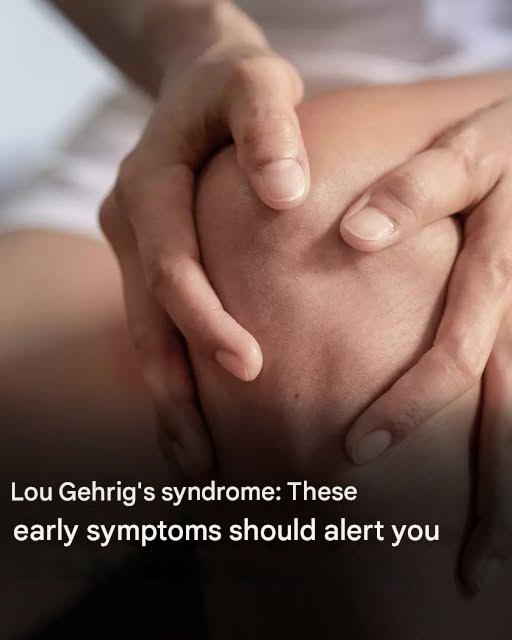
# Lou Gehrig’s Disease: Early Symptoms of ALS You Should Know
Amyotrophic lateral sclerosis, better known as **ALS or Lou Gehrig’s disease**, is a progressive neurological condition that damages the motor neurons responsible for controlling voluntary muscle movement.
ALS patient care
ALS can be difficult to recognize in its early stages because symptoms may begin subtly and can resemble many other conditions. Early signs often involve **progressive muscle weakness, twitching, cramping, clumsiness, speech changes, or difficulty swallowing**. ([Mayo Clinic][1])
Having one of these symptoms does **not** mean someone has ALS. Diagnosis requires a neurological examination and testing to rule out other possible causes.
## 1. Increasing Weakness in One Hand or Arm
Lou Gehrig’s syndrome
ALS may begin with weakness in a single limb.
A person might notice that they:
* Drop objects more often
* Have difficulty turning keys
* Struggle to button clothing
* Cannot grip objects as firmly
* Have trouble writing or using utensils
The weakness typically becomes progressively more noticeable rather than appearing once and disappearing. Hand weakness and clumsiness are among recognized early symptoms of ALS. ([Mayo Clinic][1])
## 2. Weakness in the Foot, Ankle, or Leg
For some people, ALS starts in the lower limbs.
Neurological Conditions
Possible early signs include:
* Difficulty lifting the front of the foot
* Repeatedly catching the toes while walking
* An ankle that feels unusually weak
* Increasing difficulty climbing stairs
Mayo Clinic lists weakness in the legs, feet, or ankles among common early presentations. ([ Mayo Clinic][1])
## 3. Frequent Tripping or Falling
Psychology
Unexplained trips and falls can occur when leg or foot muscles become weaker.
Someone who previously walked normally may begin:
* Stumbling on flat surfaces
* Catching a foot on rugs or steps
* Losing balance more often
* Having trouble with routine walking
ALS is only one of many possible causes of frequent falls. Joint problems, medications, vision changes, inner-ear disorders, peripheral neuropathy, and
