
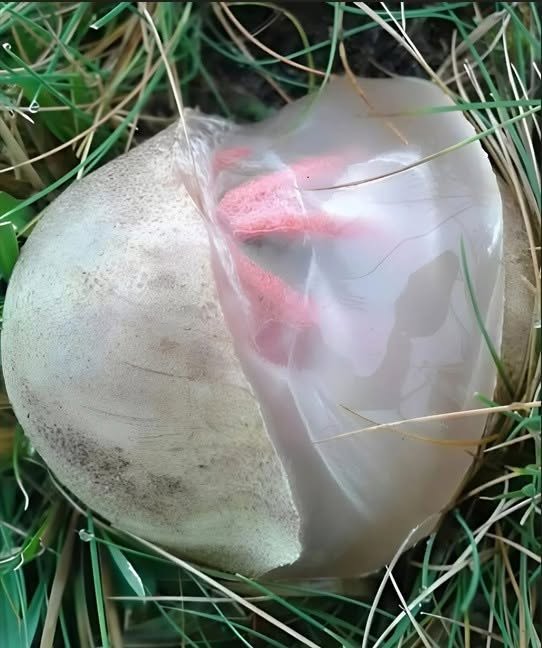
Imagine walking across your backyard or exploring a local park on a damp morning, only to stumble upon a strange, alien-looking object resting in the grass. It looks like a soft, leathery egg with a translucent, jelly-like outer membrane. Peering through the gel, you can see bright pink or red tendrils waiting to burst out.
This striking phenomenon—captured in the viral image of an egg-like fungal structure nestled in the lawn—has left thousands of homeowners and nature lovers fascinated, unnerved, and filled with questions. Is it an alien pod? A dangerous reptile egg? A poisonous mold that will ruin your lawn?
If you have encountered these gelatinous spheres growing out of the soil or mulch, there is no need to worry. What you are looking at is one of the fungal kingdom’s most extraordinary life forms: the immature “egg” stage of a stinkhorn fungus (most notably from the family Phallaceae, such as the Clathrus or Mutinus species).
Understanding what this gelatinous egg actually is, how it transforms, why it emerges in residential lawns, and whether it poses any threat to your family or pets will clear up the mystery and help you manage your garden with confidence.
The Biology of the Stinkhorn “Egg”
To make sense of this strange organism, it helps to understand the unique lifecycle of stinkhorn fungi. Unlike traditional mushrooms that pop up out of the ground fully formed with a stem and cap, stinkhorns develop inside a protective, multi-layered subterranean structure called a peridium.
The Anatomy of the Gelatinous Sphere
When you slice open or inspect one of these fungal eggs, you reveal a carefully engineered natural protective capsule:
- Outer Membrane (Volva): A tough, leathery, or rubbery outer skin that protects the developing fungus from dry weather, cold temperatures, and soil pests.
- Gelatinous Middle Layer: A thick, clear, jelly-like substance (glebal mucilage). This gel serves two vital functions: it retains immense amounts of water to keep the developing fungus hydrated and acts as a hydraulic cushion to protect the inner tissues.
- Inner Embryonic Structure: Suspended within the clear gel are the vibrant red, pink, or orange arms, lattice webs, or stalks of the unexpanded mature stinkhorn.
As the fungus absorbs water from surrounding soil and organic matter, hydrostatic pressure builds up inside the gel layer. Eventually, the outer skin splits open, and the colorful fungal structure expands rapidly—sometimes emerging fully within just a few hours!
What Happens When the “Egg” Hatches?
Once the protective peridium splits open, the true nature of the stinkhorn is revealed. Depending on the exact species, the mature mushroom will take on one of several bizarre forms:
- Octopus Stinkhorn (Clathrus archeri): Also known as “Devil’s Fingers,” this species hatches into long, bright red or pink tentacles that spread outward, closely resembling a sea creature or alien hand.
- Basket Stinkhorn (Clathrus ruber): Hatches into a hollow, lattice-like geodesic sphere of bright red or orange branches.
- Dog Stinkhorn (Mutinus caninus): Forms a slender, upright orange or pink stalk topped with a dark olive-green tip.
The Smell and the Spores: Nature’s Unique Pollination System
Once fully expanded, the stinkhorn produces a dark, slimy substance on its inner surfaces called gleba. This slime emits a potent, foul odor reminiscent of rotting meat, carrion, or garbage.
While humans find the scent unpleasant, flies, beetles, and other carrion-seeking insects are irresistibly drawn to it. Flies land on the slimy gleba, feast on the nutrient-rich coating, and pick up microscopic fungal spores on their feet and bodies. As they fly away, they disperse the spores throughout your yard and nearby forests, completing the reproductive cycle.
Why Is It Growing in Your Lawn or Garden?
Stinkhorns do not appear by accident; their presence is a direct indicator of healthy, biologically active soil.
1. Saprophytic Role in Decomposition
Stinkhorns are saprophytic fungi, meaning they feed exclusively on dead and decaying organic material. They play a critical role in the ecosystem by breaking down complex organic compounds—such as wood cellulose and lignin—and converting them into rich, nutrient-dense humus that feeds surrounding plants.
2. Common Triggers in Residential Yards
You are most likely to encounter stinkhorn eggs in your yard due to specific environmental factors:
- Fresh Wood Mulch: Commercial hardwood mulch, wood chips, and bark beds are prime feeding grounds for stinkhorn mycelium.
- Decaying Roots and Organic Debris: Old buried tree stumps, decaying leaf litter, or thick thatch layers in lawns provide a steady food supply.
- Warm, Damp Weather: Heavy rain followed by warm, humid days creates the exact hydraulic pressure required for the subterranean mycelium to form and inflate these gelatinous eggs.
Is It Dangerous to Humans, Pets, or Your Lawn?
When strange, egg-like pods sprout in the grass, safety is naturally a top concern for homeowners.
Risk to Pets (Dogs and Cats)
Stinkhorns are generally considered non-toxic to humans and animals. They do not contain the lethal toxins found in dangerous mushroom species like the Death Cap (Amanita phalloides). However:
- Digestive Upset: If a curious dog ingests the tough, gelatinous egg or the slimy mature fungus, the rich organic compounds and rotting odor may trigger mild stomach upset, vomiting, or diarrhea.
- Prevention: It is always wise to clear these fungi from areas where young pets or children play unsupervised.
Risk to Your Lawn and Plants
Stinkhorn fungi are completely harmless to living vegetation. They do not attack green grass, healthy roots, flowers, or garden crops. In fact, by decomposing buried wood and organic matter, they enrich the soil with valuable nitrogen and organic nutrients that help your lawn thrive.
How to Manage and Eliminate Stinkhorn Eggs in Your Yard
If the sight of these gelatinous spheres bothers you, or if you want to avoid the foul odor of fully opened mature stinkhorns, follow these practical removal and control methods:
1. Physical Removal (Before They Hatch)
The easiest way to deal with stinkhorns is to catch them while they are still in the egg stage:
- Put on a pair of disposable gardening gloves.
- Use a small hand trowel or spade to dig slightly under the egg, lifting the entire gelatinous sphere along with the underlying soil base.
- Seal the eggs inside a plastic trash bag and discard them in your regular household waste. Do not compost them, as the spores will survive and spread throughout your compost pile.
2. Environmental Controls
To discourage stinkhorn eggs from returning in future seasons:
- Reduce Moisture: Avoid overwatering lawn areas and adjust automatic sprinkler schedules to allow the top layer of soil to dry out between waterings.
- Aerate and Rake Mulch: Fluff up wood mulch beds periodically with a rake to increase airflow and expose hidden fungal structures to drying sunlight.
- Switch Ground Covers: If stinkhorns repeatedly colonize hardwood mulch, consider replacing it with cedar mulch, pine straw, or decorative gravel and river rock, which hold less moisture and break down far more slowly.
Financial and Property Considerations
While encountering a stinkhorn egg might seem like a minor gardening quirk, understanding landscape biology can actually save you money on home maintenance:
- Avoiding Unnecessary Chemical Costs: Fungicides are largely ineffective against stinkhorn fungi because the underground root network (mycelium) lives deep within soil and wood debris. Attempting to spray chemical fungicides wastes money and can harm beneficial soil microbes.
- Protecting Curb Appeal: Clearing mature stinkhorns before they open prevents unpleasant odors during open houses or outdoor family gatherings, keeping your outdoor spaces inviting and clean.
Fascinating Facts About Stinkhorn Fungi
- Rapid Growth Champions: Certain species of stinkhorn can grow up to 4 to 6 inches per hour once they break out of their gelatinous egg, making them among the fastest-growing organisms in the plant and fungal kingdoms.
- Culinary History: In some culinary cultures (particularly in parts of Asia), stinkhorns in their unhatched “egg” stage are harvested, peeled, and cooked as a delicacy before the foul-smelling slime develops!
- Natural Soil Aerators: As stinkhorn mycelium pushes through compacted lawn soil to form these large eggs, it creates natural channels that improve water infiltration and oxygen movement down to grass roots.
Conclusion: Nature’s Bizarre Recycler
Finding a translucent, gelatinous egg in your lawn can certainly give you a moment of shock, but understanding its place in nature transforms a scary mystery into a fascinating biological lesson.
These gelatinous pods are simply the protective egg stage of the stinkhorn fungus—a harmless, non-toxic, and highly effective natural recycler. By breaking down decaying wood and organic matter, stinkhorns help build healthy, fertile soil for your garden.
Whether you choose to leave them as a curious natural marvel or scoop them into the trash before they hatch and smell, you can rest easy knowing your lawn, family, and home remain completely safe. Staying informed about natural yard phenomena allows you to maintain a healthy, beautiful outdoor space while making smart, cost-effective landscaping decisions.
Frequently Asked Questions
Q1: Is the jelly inside the stinkhorn egg poisonous to touch?
A1: No. The clear gel inside the egg is non-toxic and consists mostly of water, polysaccharides, and protective proteins. However, wearing gloves is recommended to keep your hands clean.
Q2: Why do stinkhorns suddenly appear after heavy rains?
A2: Stinkhorn eggs rely on absorption of water to build internal hydraulic pressure. Heavy rainfall triggers the underground mycelium to rapidly absorb moisture and inflate the egg structures above the soil line.
Q3: Will boiling water kill stinkhorns in my lawn?
A3: Pouring boiling water over the egg will destroy the immediate fruiting structure, but it will not eliminate the underground mycelium feeding on buried wood. Physical removal of the egg and organic wood debris is far more effective.
Q4: Can stinkhorn spores ruin my garden soil?
A4: No. Stinkhorn spores do not harm soil quality; in fact, the decomposition process performed by the fungus improves soil structure and nutrient availability for surrounding plants.
Q5: How long does a stinkhorn mushroom last after hatching?
A5: Most mature stinkhorns collapse and wither within 24 to 48 hours after hatching, especially once insects have consumed the spore slime and daytime temperatures rise.
