
We spend roughly one-third of our lives in bed. After a long, exhausting day, nothing quite compares to the luxurious feeling of slipping into a bed made with fresh, clean sheets. Yet, despite being one of the most frequent laundry tasks in every household, bed sheet care remains widely misunderstood.
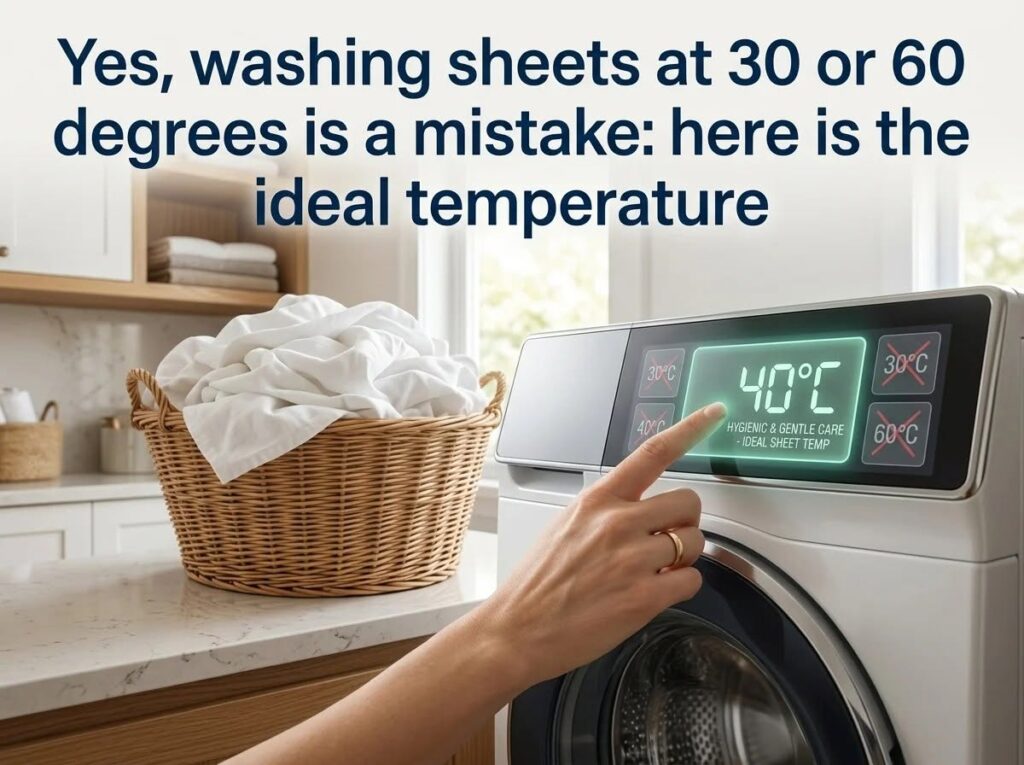
A viral debate recently sparked online after a graphic circulated with the bold claim: “Yes, washing sheets at 30 or 60 degrees is a mistake: here is the ideal temperature.” Featuring a washing machine display highlighted at 40°C with the label “Hygienic & Gentle Care – Ideal Sheet Temp,” it left homeowners questioning their laundry habits.
For decades, householders have split into two opposing camps: those who wash bed linens at cold temperatures like 30°C (86°F) to save on electric bills and protect delicate fabric fibers, and those who crank their washing machines up to 60°C (140°F) or higher to sanitize fabrics and kill dust mites.
Is washing at 30°C actually too cold to clean properly? Is 60°C unnecessarily damaging your expensive bed sheets? Why is 40°C (104°F) widely considered the absolute sweet spot for laundering bed linens?
This comprehensive guide breaks down the science of water temperature, fabric care, energy efficiency, and hygiene so you can maximize the lifespan of your bedding while keeping your home healthy and your energy bills low.
The Great Laundry Dilemma: Cold vs. Hot Water Washing
To understand why 30°C and 60°C can be problematic for regular bedding care, it helps to examine what happens to different fabrics at extreme temperature settings.
The Problem with Washing Sheets at 30°C (86°F)
Cold-water washing has gained immense popularity in recent years, driven by eco-friendly laundry campaigns and energy-saving initiatives. While washing at 30°C works remarkably well for lightly worn clothing, delicate lace, or dark garments prone to color fading, it falls short when it comes to bed linens.
- Inadequate Body Oil Dissolution: Humans shed roughly 1.5 grams of skin flakes per night and produce up to a liter of sweat, body oils (sebum), and drool. Cold water at 30°C is often incapable of fully breaking down embedded lipid and oil buildup in cotton fibers.
- Detergent Residue Trapping: Modern laundry detergents are engineered to work in cooler temperatures, but heavy cotton weaves like percale or sateen often retain microscopic detergent films when washed at 30°C, leading to stiff, dingy-looking fabric over time.
- Ineffective Dust Mite Control: Dust mites thrive in warm bedding environments. Water at 30°C may wash away loose debris, but it lacks the thermal energy to effectively neutralize dust mite allergens or deep-set bacteria without heavy chemical additives.
The Problem with Washing Sheets at 60°C (140°F)
On the opposite end of the spectrum, many home caregivers believe that higher heat automatically equals better cleaning. While 60°C is undoubtedly powerful at sanitizing fabrics, using it repeatedly on standard bed sheets causes significant long-term structural damage.
- Premature Fiber Breakdown: High heat subjects natural cotton, linen, and bamboo fibers to intense mechanical and thermal stress. Over time, washing regularly at 60°C weakens the threads, leading to thinning, piling, loss of softness, and unexpected tears.
- Elastic Band Destruction: Fitted sheets rely on synthetic elastic bands running around the edges to maintain a snug fit over mattresses. Water at 60°C degrades latex and rubber elastic fibers quickly, causing fitted sheets to sag, stretch out, and become useless long before the main fabric wears out.
- Excessive Shrinkage and Fading: High temperatures cause natural cotton yarns to contract significantly, resulting in shrinkage that makes fitting sheets onto your mattress an exhausting struggle. Colored or patterned bedding will also suffer from rapid color bleeding and fading at 60°C.
- Surging Energy Bills: According to energy efficiency studies, heating water accounts for roughly 75% to 90% of the electricity used by a washing machine cycle. Running regular 60°C cycles dramatically increases home utility costs without offering additional practical benefits for non-contaminated, everyday bedding.
Why 40°C (104°F) Is the Ultimate “Goldilocks Zone” for Bedding
As highlighted on the digital washing machine interface in the viral image, 40°C (104°F) represents the perfect middle ground—the ideal balance between hygienic cleansing, energy conservation, and fabric longevity.
+-----------------------------------------------------------------------+
|                       TEMPERATURE COMPARISON MATRIX                   |
+-------------+----------------------+--------------------+-------------+
| Temp (°C/°F)| Cleaning Power       | Fabric Protection  | Energy Use  |
+-------------+----------------------+--------------------+-------------+
| 30°C / 86°F | Low (Oils Remain)    | High               | Very Low    |
| 40°C / 104°F| High (Ideal Balance) | High (Preserves)   | Moderate    |
| 60°C / 140°F| Very High (Sanitizes)| Low (Causes Wear)  | High        |
+-------------+----------------------+--------------------+-------------+
1. Optimal Thermal Activation for Modern Detergents
Laundry detergents contain specific biological enzymes (such as lipases, proteases, and amylases) designed to break down body proteins, oils, and organic stains. These enzymes reach peak efficiency in water temperatures between 35°C and 40°C. At this temperature, the water is warm enough to liquefy hardened skin oils and emulsify grime so detergent can carry it away efficiently.
2. Preserves Thread Count and Fiber Integrity
At 40°C, high-thread-count Egyptian cotton, organic linen, micro-modal, and bamboo sheets remain structural intact. The mild warmth allows the weave to relax and release trapped dust without causing the severe thermal contraction or fiber snapping associated with 60°C water.
3. Protects Color and Fitted Sheet Elastic
Laundered at 40°C, dye molecules remain locked within the textile matrix, preserving vibrant colors and delicate floral prints wash after wash. Furthermore, synthetic elastic bands on fitted sheets retain their stretch memory, ensuring your fitted sheet stays secure on the mattress for years.
Exceptions to the Rule: When Should You Wash at 60°C or Higher?
While 40°C is the gold standard for routine weekly maintenance of everyday sheets, there are specific, crucial scenarios where boosting the temperature to 60°C (or even higher) is necessary:
- Illness or Infection in the House: If a family member has been sick with a contagious virus, flu, stomach bug, or skin infection, wash their bed linens immediately at 60°C to sanitize the fabric and prevent cross-contamination to other household members.
- Severe Allergy Sufferers: Individuals with severe dust mite allergies or respiratory conditions may require periodic 60°C hot water washes (or specialized anti-allergen laundry additives at 40°C) to eliminate microscopic allergens completely.
- Infant and Elderly Care: Linens used by newborns or elderly individuals dealing with incontinence or skin fragility benefit from the higher thermal sanitization of a 60°C wash cycle.
- White Heavy-Duty Cotton: Pure white, 100% heavy cotton hospital-grade or hotel-grade sheets without elastic bands can occasionally tolerate 60°C washes to remove stubborn yellowing or grease marks.
Essential Best Practices for Washing Bed Sheets
To maximize your household budget and keep your bed sheets feeling like a 5-star hotel luxury every night, incorporate these professional laundry tips into your routine:
1. Establish a Regular Wash Schedule
Wash your bed sheets once every 7 to 14 days. During hot summer months or if you sweat heavily at night, increase this frequency to once a week to prevent oil buildup from setting deeply into the fabric fibers.
2. Never Overload the Washing Machine
Sheets require room to circulate freely through the water and detergent solution. Stuffing multiple sets of heavy sheets, comforters, and towels into a single drum cycle creates mechanical strain, leads to uneven washing, and leaves soap residue trapped in tight folds. Wash sheets as an independent load.
3. Choose the Right Cycle and Detergent
Select a Normal, Cotton, or Gentle Cycle with a medium spin speed (around 800 to 1000 RPM). Excessive spin speeds twist long sheet fabric into tight ropes, breaking fibers and causing severe creasing. Use a mild liquid detergent rather than harsh powder detergents, which can leave abrasive undissolved granules behind.
4. Skip the Chemical Fabric Softeners
Commercial liquid fabric softeners work by coating fabric fibers with a thin layer of silicone or wax. Over time, this coating builds up on cotton sheets, making them significantly less breathable and far less absorbent. Instead, add 1/2 cup of plain white distilled vinegar to the fabric softener dispenser drawer during the rinse cycle. Vinegar naturally breaks down soap residue, softens fabric fibers, and neutralizes odors completely without leaving a vinegary scent.
5. Smart Drying Techniques
Excessive drying heat in tumble dryers causes as much damage as hot water washing.
- Line-drying sheets outdoors in sunlight is the absolute best option; direct UV light acts as a natural disinfectant and brightener.
- If using a clothes dryer, select a Low Heat or Tumble Dry Gentle setting. Remove sheets while they are still slightly damp to reduce stubborn wrinkles and prevent thermal fiber damage.
Financial Impact: How Proper Washing Saves You Money
Adopting the 40°C washing method directly affects your long-term household finances and real estate budget in two measurable ways:
Lower Utility Bills
Scaling down from frequent 60°C cycles to 40°C cuts the energy consumption of your washing machine by nearly 50% per load. Over the course of a year, laundering sheets, pillowcases, and duvet covers for an entire family at 40°C translates to noticeable savings on electric and gas utility statements.
Extended Bedding Lifespan
High-quality bed sheet sets made from long-staple cotton or organic linen represent a significant household investment, often costing anywhere from $100 to $300+ per set. Washing at high temperatures degrades these sets within 1 to 2 years. By laundering at 40°C with gentle methods, a quality sheet set can easily last 5 to 10 years in pristine condition, saving hundreds of dollars in replacement costs.
Interesting Facts About Bedding and Hygiene
- The Weight of Dead Skin: The average adult sheds approximately 30,000 to 40,000 dead skin cells every hour, much of which settles directly into mattress pads and sheet weaves while sleeping.
- The History of Water Temperature: Before automated electric washing machines with internal heaters were invented in the mid-20th century, households physically boiled sheets in large copper kettles to scrub out dirt, which contributed to shorter textile lifespans.
- Dust Mite Populations: A typical unwashed mattress and sheet setup can harbor millions of microscopic dust mites (Dermatophagoides pteronyssinus), which feed exclusively on shed human skin scales.
Conclusion: Mastering the Art of Clean Sheets
Washing your bed sheets should not be a game of extreme temperatures. While 30°C cold water cycles fall short in dissolving heavy body oils, 60°C hot water cycles inflict unnecessary wear and tear, ruin elastic bands, and inflate monthly energy bills.
By making 40°C (104°F) your standard laundry setting for household linens, you achieve the perfect harmony between deep biological cleaning, vibrant color retention, and fabric longevity.
Combine this optimal temperature with a bi-weekly washing routine, gentle liquid detergents, a vinegar rinse, and low-heat drying to ensure your bed sheets remain wonderfully soft, hygienic, and long-lasting. Making informed, smart home choices protects your financial investments and guarantees a comfortable, restful night’s sleep every single night.
Frequently Asked Questions
Q1: Is it safe to wash colored and white bed sheets together at 40°C?
A1: It is always best to separate dark colors from crisp whites. While 40°C minimizes dye bleeding compared to 60°C, new or brightly colored sheets can still transfer dye onto white cotton sheets during the wash cycle.
Q2: What should I do if my care label says “Wash at 30°C”?
A2: Always respect manufacturer care tags, especially for delicate luxury fabrics like 100% mulberry silk, fine satin, or delicate wool blends. If the label specifies 30°C, use a delicate cycle with a specialized silk/gentle liquid detergent.
Q3: Can vinegar in the rinse cycle damage my washing machine?
A3: Diluted white vinegar (1/2 cup) added to the fabric softener compartment during the rinse cycle is completely safe for modern washing machines. It dissolves mineral deposits and soap scum without harming rubber hoses or door seals.
Q4: How do I remove yellow sweat stains from white pillowcases?
A4: Soak yellowed pillowcases in a basin of warm water mixed with 1 cup of baking soda and 1 cup of oxygen bleach (sodium percarbonate) for 2 to 3 hours before running them through a standard 40°C wash cycle.
Q5: Should I wash brand-new bed sheets before using them for the first time?
A5: Yes. Brand-new sheets often contain manufacturing starches, sizing agents, and chemical finishes used during factory packaging. Washing them at 40°C before first use softens the fabric and removes residual processing chemicals.
