
In today’s fast-paced, hyper-connected world, smartphone technology allows us to stay in touch with people thousands of miles away. However, it often comes at the quiet, subtle expense of the person lying right next to us.
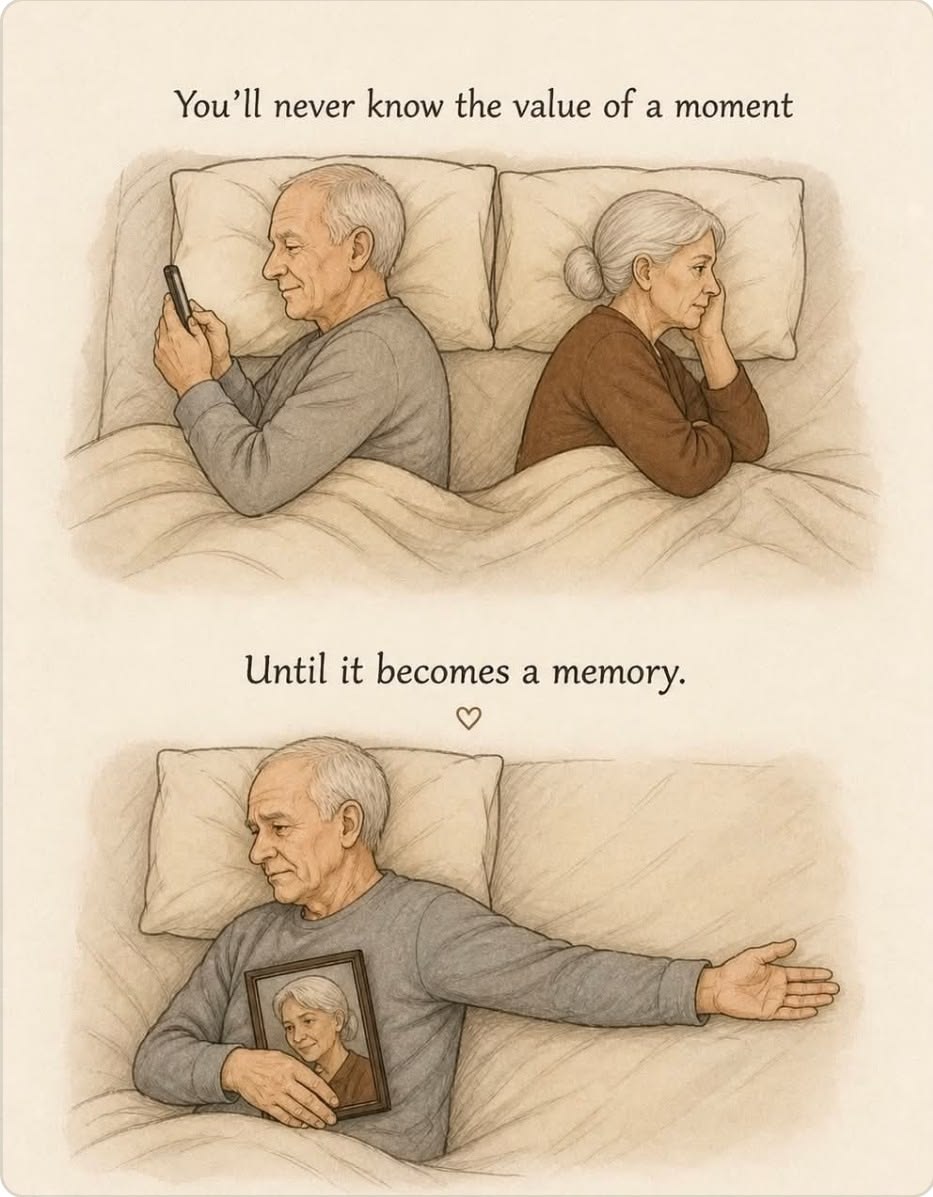
An emotional and thought-provoking viral illustration—captioned “You’ll never know the value of a moment… Until it becomes a memory”—depicts a powerful two-panel scene. In the top panel, an elderly man lies in bed looking at his smartphone while his wife sits turned away, looking lonely and neglected. In the bottom panel, time has passed: the man reaches his arm across an empty pillow, holding a framed photograph of his late wife, filled with visible grief and regret over missed presence.
This bittersweet reminder highlights the growing phenomenon known as “phubbing” (phone snubbing) and underscores the importance of cherishing real-time presence with loved ones before it is too late.
Here is a deep look into how digital distraction impacts adult relationships, the psychology of presence, and actionable habits to build intentional connection.
The Hidden Cost of “Phubbing” in Relationships
The term phubbing—a combination of “phone” and “snubbing”—refers to the act of ignoring a companion in favor of a smartphone or digital device. While it often feels harmless to quickly check notifications or scroll social media in bed, research shows that chronic phone distraction repeatedly sends a subtle message to partners: the screen is more important than you.
+-----------------------------------------------------------------------------------+
|                        PRESENCE VS. DIGITAL DISTRACTION IN RELATIONSHIPS          |
+-------------------+----------------------------+----------------------------------+
| Dynamic           | High Screen Distraction    | Intentionally Present            |
+-------------------+----------------------------+----------------------------------+
| Emotional Tone    | Isolation & Neglect        | Connection & Validation          |
| Bedtime Routine   | Separate Digital Bubbles   | Shared Conversation & Warmth     |
| Long-term Effect  | Regret & Distance          | Deep Cherished Memories          |
+-------------------+----------------------------+----------------------------------+
1. The Loss of Micro-Moments
Relationships are not built solely on grand vacations or major milestones; they are sustained through thousands of small, everyday interactions—sharing a quick laugh before sleep, holding hands, or simply enjoying quiet togetherness. Constant screen use steals these micro-moments.
2. Emotional Disconnection and Solitude
When one partner consistently retreats into a digital world, the other often experiences emotional loneliness despite being physically in the same room. Over time, this creates silent emotional barriers between couples.
4 Healthy Habits to Reclaim Bedtime Connection
Creating small digital boundaries at home can transform relationships and help restore real human warmth:
- Establish a “Screen-Free Bedroom” Rule: Keep smartphones away from the nightstand or set a hard rule to put devices away 30 to 60 minutes before bedtime.
- Practice Active Eye Contact: When your partner speaks, physically drop your phone face-down to show full, undivided attention.
- Replace Evening Scrolling with Conversation: Spend 10 minutes at the end of the day asking simple, open-ended questions about each other’s thoughts and daily experiences.
- Create Analog Morning and Evening Routines: Use a traditional alarm clock instead of your phone so the first and last thing you reach for each day is not a glowing screen.
Financial and Wellness Impact: Digital Balance Yields Long-Term Well-Being
Prioritizing human connection over endless digital scrolling yields significant physical, emotional, and practical benefits:
- Improved Sleep Quality: The blue light emitted by screens suppresses melatonin production, disrupting sleep cycles. Removing screens from the bedroom promotes deeper, more restorative rest.
- Enhanced Mental Health: Reducing passive social media intake lowers rates of anxiety, comparison traps, and loneliness, improving overall emotional resilience.
Fascinating Facts About Relationships and Technology
- Phubbing Statistics: Studies show that over 46% of adults report being “phubbed” by their romantic partner, with higher rates of screen distraction correlating directly to lower relationship satisfaction.
- The Power of Touch: Physical contact before sleep—such as holding hands or hugging—releases oxytocin (the “bonding hormone”), which reduces cortisol stress levels and fosters safety.
Conclusion: Honor the Present Before It Becomes the Past
Time moves quietly, and the everyday moments we take for granted today eventually become the memories we hold closest tomorrow.
By putting down our phones, turning toward our loved ones, and embracing the present moment, we ensure that our lives are defined by warmth, connection, and deep fulfillment rather than quiet regret.
Frequently Asked Questions
Q1: What does the term “phubbing” mean?
A1: “Phubbing” is a blend of the words “phone” and “snubbing.” It describes the act of ignoring a person in front of you to look at a smartphone or electronic device instead.
Q2: Why is looking at a phone in bed bad for sleep?
A2: Smartphones emit blue light that tricks the brain into thinking it is still daylight, suppressing the natural release of melatonin needed for falling asleep naturally.
Q3: How can I talk to my partner about their excessive phone use without causing an argument?
A3: Express your feelings using “I” statements focused on connection rather than accusation (e.g., “I miss spending quiet time chatting with you before bed” instead of “You are always on your phone”).
Q4: Are there apps that help limit screen time before bed?
A4: Yes. Built-in operating system features like Apple’s Downtime / Focus Modes and Android’s Digital Wellbeing allow users to automatically lock distracting apps during designated evening hours.
Q5: What quote inspired this artwork?
A5: The artwork illustrates the famous quote attributed to Dr. Seuss and popular motivational literature: “You’ll never know the value of a moment until it becomes a memory.”
