
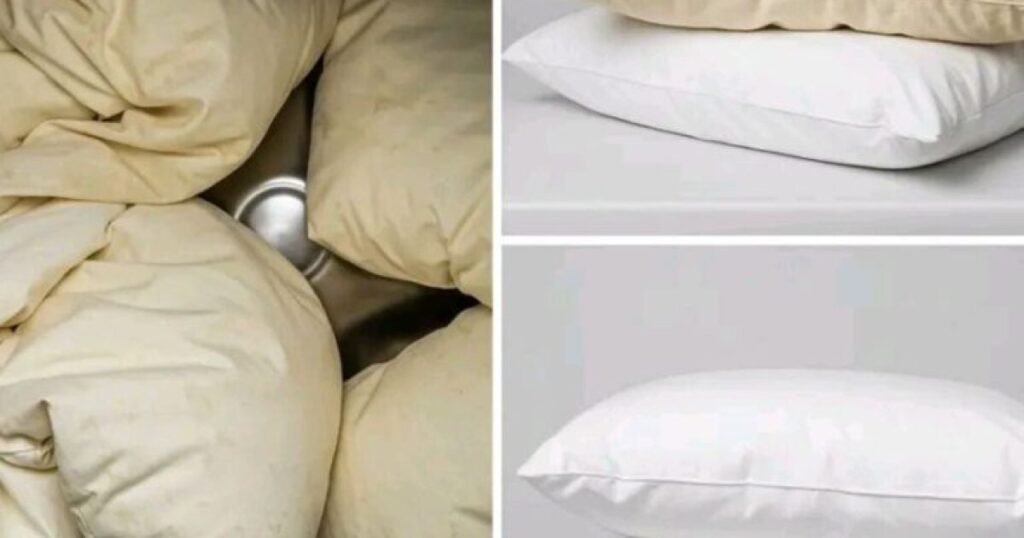
We all know the sinking feeling of stripping the bedsheets on laundry day, only to reveal stubbornly yellowed, stained pillows underneath. Even if you wash your pillowcases weekly, the pillows themselves inevitably absorb the brunt of our nightly sleep habits.
A striking before-and-after home care visual, aptly named say-goodbye-to-yellow-pillows-the-ultimate-guide-to-whitening-and-refreshing-you-1024×538.jpg, perfectly captures this frustrating reality. It shows deeply yellowed, stained pillows crammed into a washing machine drum, juxtaposed against a stack of bright, fluffy, pristine white pillows that look brand new.
Before you toss those dingy pillows into the trash, you should know that they can almost certainly be saved.
Here is a comprehensive breakdown of why pillows turn yellow in the first place, the exact laundry cocktail needed to whiten them, and how to maintain fresh bedding year-round.
Why Do Pillows Turn Yellow?
The yellowing of a pillow is rarely a sign of poor hygiene; rather, it is a natural byproduct of human biology and the materials we sleep on.
- Sweat and Body Temperature: The human body naturally regulates its temperature during sleep by sweating. Over months and years, moisture seeps through the pillowcase and dries into the pillow fibers, leaving behind yellow urea and salt stains.
- Sebum (Body Oils): Natural oils produced by your scalp and face easily penetrate cotton and polyester fabrics, oxidizing over time and causing a distinct yellow or brown discoloration.
- Saliva and Drool: Many people sleep with their mouths open, leading to concentrated spots of dried saliva on the pillow’s surface.
- Wet Hair and Skincare: Going to bed with damp hair, heavy night creams, or hair serums accelerates the staining process as these products are pressed directly into the pillow for 8 hours a night.
The Ultimate Pillow Whitening Solution
Tossing a yellowed pillow into the wash with standard detergent will clean it, but it will not remove the yellow stains. To break down oxidized oils and sweat proteins, you need a specialized laundry stripping approach.
+-----------------------------------------------------------------------------------+
|                        STANDARD WASH VS. PILLOW WHITENING METHOD                  |
+-------------------+----------------------------+----------------------------------+
| Component         | Standard Routine           | Deep Whitening Routine           |
+-------------------+----------------------------+----------------------------------+
| Water Temp        | Cold or Warm               | Extremely Hot (Boiling if safe)  |
| Detergent         | Standard Liquid/Pod        | Powdered Laundry Detergent       |
| Stain Fighter     | None / Color-Safe Bleach   | Oxygen Bleach (OxiClean)         |
| De-greaser        | None                       | Washing Soda or Borax            |
| Odor Neutralizer  | Scent Boosters             | Distilled White Vinegar          |
+-------------------+----------------------------+----------------------------------+
The Step-by-Step Whitening Process
- Check the Care Label: First, ensure your pillow is machine washable. Down, feather, and polyester fiberfill pillows usually are. Never put a solid memory foam pillow in the washing machine, as the agitation will shred the foam.
- The Hot Water Soak: Fill your top-loading washing machine (or a large bathtub) with very hot water. Add 1/2 cup of laundry borax, 1/2 cup of washing soda, and a scoop of oxygen bleach (like OxiClean).
- Agitate and Soak: Submerge the yellow pillows and let them soak in this mixture for at least 2 to 4 hours. You will likely see the water turn a murky brown as the oils are stripped away!
- The Wash Cycle: Drain the dirty soak water. Run a standard wash cycle using hot water, your regular detergent, and a half-cup of white vinegar in the fabric softener dispenser to break down any remaining detergent residue.
- The Tennis Ball Dry: Transfer the pillows to the dryer on a low-heat setting. Toss in 2 or 3 clean tennis balls (or wool dryer balls) wrapped in clean socks. The balls will bounce around, breaking up clumps of filling and restoring the pillow’s fluffiness.
The Danger of Chlorine Bleach
A common mistake people make is pouring liquid chlorine bleach directly onto yellow sweat stains.
Do not use chlorine bleach on sweat stains. Sweat contains proteins, and chlorine bleach chemically reacts with these proteins, often making the yellow stains permanently darker and breaking down the structural integrity of the pillow fibers. Always opt for an oxygen-based bleach or hydrogen peroxide instead.
Financial and Environmental Impact: Save Your Money
Mastering this simple laundry hack offers immediate benefits for your household budget and the environment:
- Stretching Your Budget: High-quality pillows can cost anywhere from $20 to over $100 each. Reviving your existing pillows every 6 months can save a family of four hundreds of dollars a year in replacement costs.
- Reducing Landfill Waste: Millions of pillows are thrown into landfills annually simply because of cosmetic yellowing. Washing and rescuing them significantly reduces unnecessary textile waste.
Fascinating Facts About Your Bedding
- The Weight of a Pillow: It is a widely cited (though slightly exaggerated) sleep hygiene fact that an unwashed pillow can increase in weight over a few years due to the accumulation of dead skin cells, sweat, and microscopic dust mites!
- Pillow Protectors: Using a zippered, waterproof pillow protector beneath your standard pillowcase blocks 99% of sweat and oils from ever reaching the pillow itself, keeping it white for years.
Conclusion: Refresh, Don’t Replace
You don’t have to settle for sleeping on dingy, stained bedding, nor do you have to throw your money away replacing pillows every few months.
By utilizing the power of hot water, oxygen bleach, and a little bit of patience, you can strip away years of sweat and oil, returning your pillows to their original, cloud-like glory.
Frequently Asked Questions
Q1: Can I wash a memory foam pillow in the washing machine?
A1: No. Machine washing and drying will destroy the structure of solid memory foam. Memory foam pillows should only be spot-cleaned with a damp cloth and mild detergent, then air-dried.
Q2: How often should I wash my bed pillows?
A2: It is generally recommended to wash your actual pillows 2 to 4 times a year (every 3 to 6 months) to prevent heavy staining and dust mite buildup.
Q3: Why do I need to use tennis balls in the dryer?
A3: Pillows—especially those filled with down or synthetic fibers—clump together when wet. The tennis balls physically beat the clumps apart during the tumbling process, restoring the pillow’s loft and shape.
Q4: Does baking soda and vinegar actually whiten fabrics?
A4: Yes, but they work best when used separately. Baking soda (a mild alkali) helps lift dirt and grease, while vinegar (a mild acid) acts as a natural fabric softener and removes trapped mineral deposits and detergent residue.
Q5: How do I know when it is finally time to throw a pillow away?
A5: Try the “Fold Test.” Fold your pillow in half. If it springs back to its original flat shape, it is still supportive. If it stays folded like a dead taco, the internal fibers are broken down, and it is time to buy a new one.
