
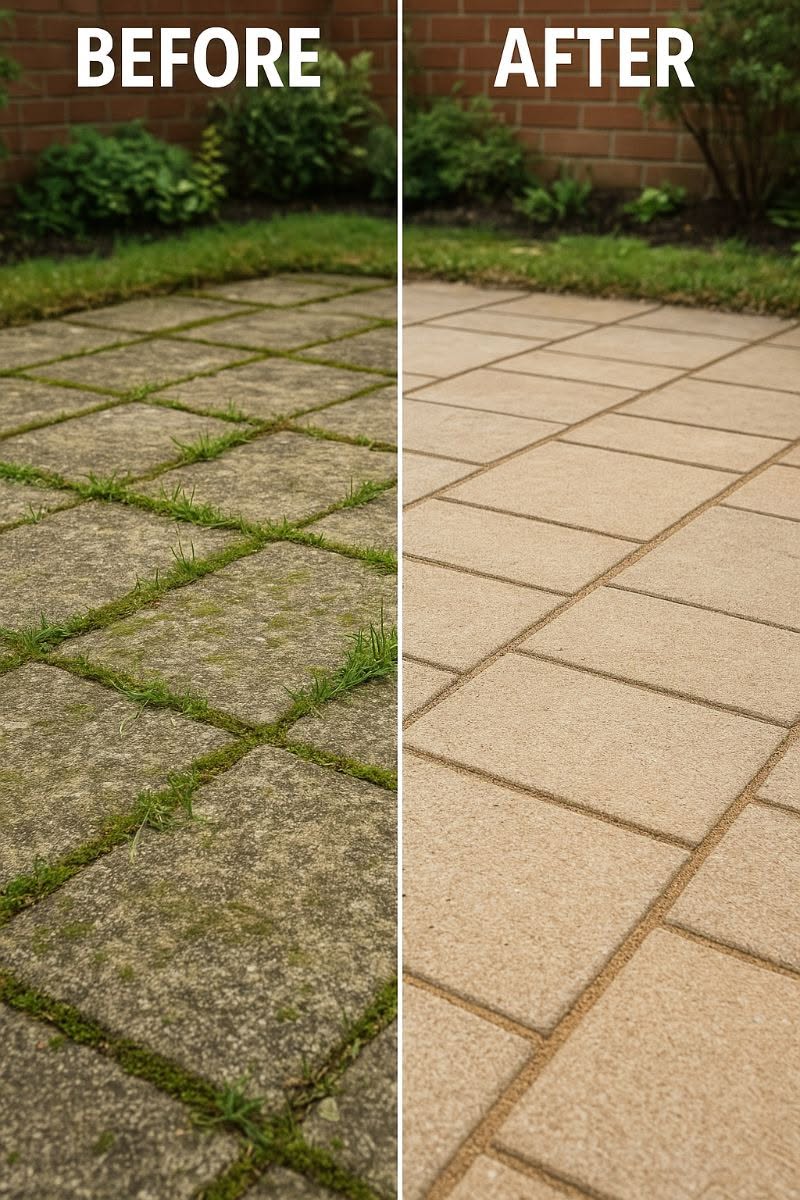
Outdoor stone patios and paver walkways add elegance, structure, and value to any residential property. However, over time, windborne seeds, soil buildup, moss, and algae settle into the joints between pavers. Before long, stubborn weeds sprout up, pavers darken with grimy buildup, and your outdoor space loses its fresh, clean appeal.
While many homeowners struggle with endless weeding or rely on toxic chemical herbicides, restoring dirty patio pavers to like-new condition requires a systematic approach combining proper deep cleaning, joint re-sanding, and long-term weed prevention strategies.
In this comprehensive patio maintenance guide, we examine the biology of weed growth in paver joints, review effective cleaning and weed prevention methods, evaluate financial considerations, and share practical ongoing care tips.
The Root Cause: Why Weeds and Moss Invade Paver Joints
Understanding why weeds grow between pavers makes it easier to prevent them from returning after a deep clean.
Soil and Organic Sediment Accumulation
Weeds rarely grow up from deep below properly installed paver base materials. Instead, airborne dust, dirt, decaying leaves, and organic debris accumulate inside the open spaces between stones over time. Wind carries weed seeds directly into these top nutrient-rich gaps, where rain and sunlight trigger rapid germination.
Moisture Retention and Shade
Patios with poor drainage or areas located under heavy shade create ideal microclimates for moss, lichen, and algae. The damp joint sand provides constant moisture, encouraging fast root growth and green surface staining.
Effective Cleaning and Prevention Strategies
Restoring dirty pavers involves removing organic matter, cleaning surface stains, and locking out future weed growth.
+-----------------------------------+-----------------------------------+-----------------------------------+
| Maintenance Method                | Action Mechanism                  | Recommended Use Case              |
+-----------------------------------+-----------------------------------+-----------------------------------+
| Pressure Washing                  | High-pressure water blasts grime  | Deep surface & joint sand removal |
| Polymeric Sand Installation       | Hardens into a weed-barrier seal  | Joint refilling after cleaning    |
| Eco-Friendly Boiling Water / Salt | Thermal shock / dehydration       | Quick spot weed treatment         |
| Surface Sealer Application        | Locks out moisture & organic oil  | Long-term paver protection        |
+-----------------------------------+-----------------------------------+-----------------------------------+
1. High-Pressure Washing and Joint Deep Cleaning
A pressure washer equipped with a $25\text{ or }40\text{-degree}$ nozzle effectively strips away surface moss, algae, and ground-in dirt. During the cleaning process, intentionally wash out the top $1\text{ to }1.5\text{ inches}$ of old, weed-infested joint sand to eliminate trapped seeds and organic matter completely.
2. Polymeric Sand Stabilization
Standard joint sand washes away easily during heavy rain, leaving gaps open for weeds. Replacing old sand with polymeric sand—a specialized mixture of calibrated sand and polymer binders—is the most effective way to block weeds. Once swept into dry joints and activated with a mist of water, polymeric sand hardens like flexible mortar, preventing seed germination and insect burrowing.
Common Myths vs. Landscaping Reality
Navigating DIY lawn and patio advice requires distinguishing between quick fixes and permanent solutions.
+------------------------------------+-----------------------------------------------------------+
| Popular Myth                       | Landscaping Reality                                       |
+------------------------------------+-----------------------------------------------------------+
| Bleach Is the Best Paver Cleaner   | Bleach harms surrounding lawns and breaks down sealers    |
| Landscape Fabric Blocks All Weeds  | Seeds land from above, making weed fabric ineffective     |
| Salt Is a Safe Daily Weed Killer   | Excess salt damages stone surfaces and ruins nearby soil |
| Pressure Washing Once Fixes It     | Without proper joint sand and sealing, weeds return quickly|
+------------------------------------+-----------------------------------------------------------+
Myth 1: Chemical Weed Killers Solve the Problem Permanently
Chemical herbicides kill existing weeds down to the root, but they do not remove the soil and organic matter trapped between pavers. New windborne seeds will germinate in the exact same spot within weeks unless the joint is cleaned and properly sealed.
Myth 2: Vinegar and Salt Sprays Are Risk-Free
While white vinegar and salt mixtures kill weeds naturally via dehydration, high concentration acetic acid can etch sensitive natural stone surfaces (like limestone or travertine), while salt run-off damages surrounding lawn areas and prevents plant growth where you actually want it.
Financial Considerations: DIY vs. Professional Paver Restoration
Maintaining your outdoor hardscape involves balancing initial investment against long-term durability.
- DIY Restoration Costs: Renting or purchasing a residential pressure washer costs between $30 and $80 per day. Polymeric sand bags range from $25 to $40 per 50 lb bag, allowing curious homeowners to completely restore a standard patio for under $150.
- Professional Hardscape Restoration: Hiring professional pressure washing and sealing contractors typically ranges from $1.50 to $3.50 per square foot, depending on the level of paver repair, joint cleaning, and sealer application required.
- Long-Term Asset Protection: Timely joint maintenance prevents paver shifting, edge collapse, and costly structural rebuilding down the line.
Fascinating Facts About Hardscapes and Weed Growth
- Seed Dormancy: Some common lawn weed seeds, such as crabgrass and dandelion seeds, can remain dormant in dry soil or paver gaps for up to $3\text{ to }5\text{ years}$ before germinating when moisture arrives!
- Flexible Polymeric Sand: Unlike rigid concrete mortar, polymeric sand expands and contracts with seasonal freeze-thaw cycles without cracking, keeping paver joints sealed year-round.
- Sunlight and Algae: Green algae stains on shaded pavers can double in coverage within just 48 hours during warm, humid conditions.
Practical Daily Tips to Keep Your Patio Weed-Free
Incorporate these easy routine maintenance habits to protect your patio year-round:
1. Sweep Your Patio Regularly
Brooming your pavers once a week removes organic dust, grass clippings, and airborne seeds before they can settle into joints and sprout.
2. Rinse Away Spills and Leaves
Never let wet autumn leaves sit on pavers for extended periods. Decaying leaf litter releases tannins that stain stone surfaces and leaves behind rich organic matter that fuels spring weeds.
3. Spot-Treat Early
If a stray weed manages to sprout in a micro-crack, pull it immediately by hand or pour boiling water directly over the root system to destroy it before it flowers and casts thousands of new seeds.
Conclusion
Transforming an overgrown, stained patio into a pristine outdoor living space requires more than just pulling weeds by hand. By deep cleaning paver surfaces, washing out old contaminated dirt, and refilling joints with polymeric sand, you create a durable barrier that stops weeds before they start. Regular sweeping and proper maintenance will keep your patio pavers looking brand new for years to come.
Frequently Asked Questions (FAQ)
1. How long does polymeric sand last in paver joints?
When applied correctly according to manufacturer directions on clean, dry pavers, high-quality polymeric sand typically lasts between 3 and 7 years before requiring touch-ups.
2. Can you pressure wash pavers without ruining the sand?
Pressure washing with high force will blast out joint sand. If you only want to clean the paver surface without removing sand, use a wide-angle spray tip ($40\text{-degree}$) held at a low angle, or use a flat surface cleaner attachment.
3. Should I seal my pavers after cleaning them?
Yes. Applying a breathable outdoor paver sealer protects the stone against oil stains, prevents sun-fading, enhances natural color, and inhibits future algae and moss growth.
4. Can I put new polymeric sand over old standard sand?
No. Polymeric sand requires at least $1\text{ to }1.5\text{ inches}$ of depth to bind properly. You must wash or scrape out old loose dirt and sand before sweeping in fresh polymeric sand.
